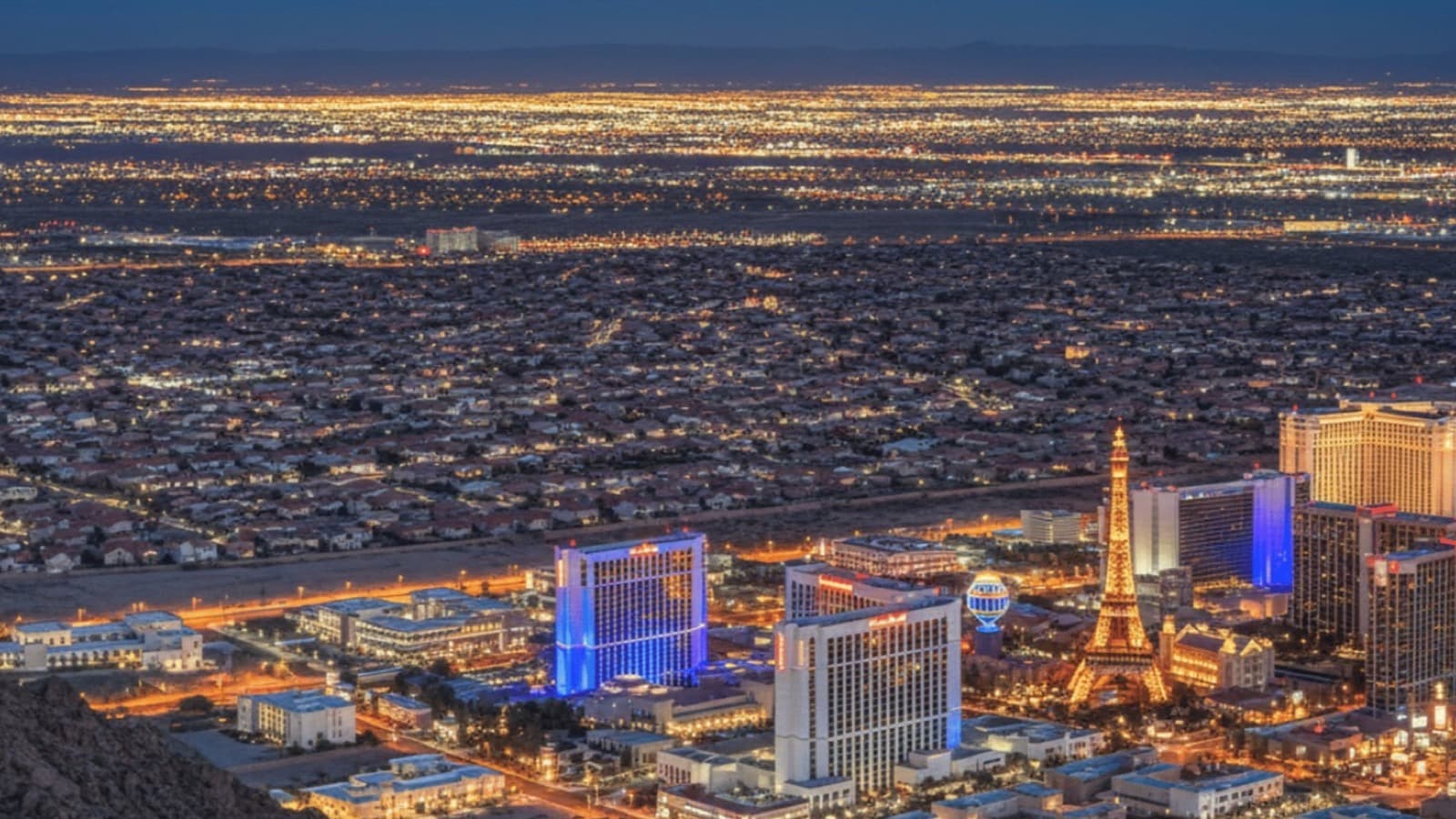

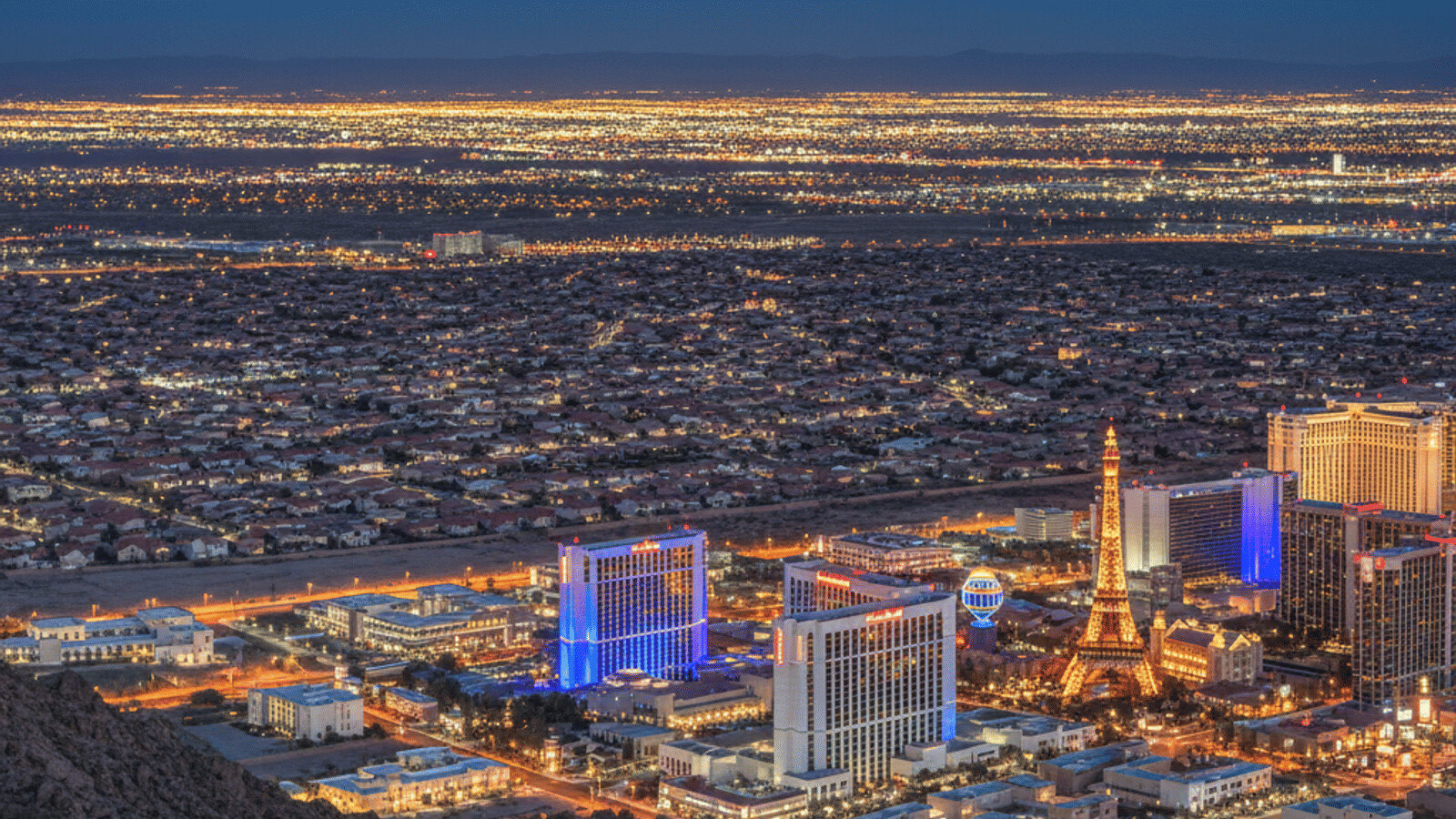
When you’re thinking about moving to Las Vegas, you usually reach a fork in the road pretty quickly. Do you go for the classic, energetic heartbeat of the central valley, where every neighborhood feels a little different? Or do you head to the southwest rim for the manicured, consistent, and quieter life of a master-planned community?
That is the core dilemma when comparing the broader Las Vegas area against Mountain's Edge. To be clear, Mountain's Edge isn't a separate city; it is a massive, 3,500-acre master-planned community sitting right inside the Las Vegas Valley (unincorporated Clark County). But once you cross into it, the vibe shifts dramatically.
As we look at the market in early 2026, things have settled down significantly compared to the frenzy of a few years ago. We are seeing a balanced market where buyers actually have a moment to think. Whether you want the 24/7 accessibility of the city center or the "dark skies" tranquility of the southwest, you have plenty of options. The trade-off really comes down to whether you value proximity to the action or modern suburban consistency.
Vibe & Community Culture: Neon Lights vs. Desert Nights
If you drive through central Las Vegas or areas like Spring Valley and Paradise, you get an eclectic mix. You might find a vintage 1970s ranch style home with a huge backyard on one street and a high-rise condo complex on the next. The energy is higher, the lights are brighter, and you are rarely more than 15 minutes from world-class dining or entertainment.
Mountain's Edge offers a completely different rhythm. It was designed from the ground up to be uniform and cohesive. Because the community adheres to a "dark sky" policy, the streetlights are dimmer and directed downward to reduce light pollution. It feels quieter and significantly more removed from the neon glow of the Strip.
The culture here is very focused on the outdoors and community gathering. The Master Association organizes fairly tight-knit events, like music festivals or holiday gatherings at Exploration Peak Park. In general Las Vegas, your community feel depends heavily on your specific zip code; in Mountain's Edge, that community feel is engineered into the lifestyle.
Real Estate Showdown: Prices, Rents, and Availability
Real estate in 2026 has normalized, meaning inventory is stabilizing and you have some room to negotiate. However, what you get for your money varies wildly between these two areas.
In the broader Las Vegas market, the spectrum is huge. You have everything from custom estates to efficient townhomes. The median home price across the valley is hovering around $480,000. If you are looking for character—like a sunken living room or a non-HOA lot where you can park an RV—central Las Vegas is where you’ll find it.
Contrast that with homes for sale in Mountain's Edge, where almost everything was built after 2005. You won't find fixer-uppers from the '80s here. Most inventory consists of modern stucco single-family homes with open floor plans. Because the stock is newer, the entry point is a bit higher, typically starting in the high $400,000s for a detached home.
If you aren't ready to buy, the rental market tells a similar story. The average two-bedroom rental in Vegas is sitting around $1,850 per month. In Mountain's Edge, landlords often ask for a premium because tenants are paying for access to the parks, trails, and that "new" feel.
The Hidden Costs: HOAs, SIDs, and LIDs
This is the part of the conversation where we need to grab a calculator. If you buy in an older, central Las Vegas neighborhood, you might have zero HOA fees and absolutely no SID/LID assessments. Your monthly payment is just your mortgage, taxes, and insurance.
Mountain's Edge is different. It is a "layered" cost environment. First, every homeowner pays the Mountain's Edge Master Plan fee, which usually runs between $35 and $50 a month. This covers the beautiful common landscaping and major parks.
On top of that, most homes are inside a "sub-association"—a gated or non-gated subdivision within the master plan. These fees vary wildly, anywhere from $40 to over $110 a month depending on if there are gates or a private pool.
Then you have SIDs (Special Improvement Districts) or LIDs (Local Improvement Districts). These are assessments used to pay for the infrastructure (roads, sewers, lights) when the community was built. Many homes in Mountain's Edge still have these balances. If the previous owner hasn't paid it off, you could be inheriting a monthly bill of $30 to $100+ on top of your taxes. Always ask your agent to check the SID/LID balance before you fall in love with a house.
Amenities & Recreation: Parks vs. Entertainment
If your idea of a perfect Saturday is a hike followed by a picnic, Mountain's Edge wins hands down. The community is anchored by Exploration Peak Park, which features a western-themed playground and a trail leading up to a peak with panoramic views of the valley. There is also Mountain's Edge Regional Park, which is massive and focuses on sports fields and fitness stations.
The trail system here is extensive. You can bike or walk for miles without really leaving the "bubble" of the neighborhood.
However, if you want variety in dining or nightlife, the broader city has the edge. In Mountain's Edge, you have convenient local plazas for groceries and basic services, but you don't have the density of incredible ethnic dining found in Spring Valley's Chinatown or the entertainment of Downtown. To get to a museum, a major casino, or a unique restaurant, you are getting in the car and driving out of the neighborhood.
Commute & Connectivity: The Blue Diamond Reality
We have to talk about the drive. Mountain's Edge is located in the far southwest corner of the valley, south of Blue Diamond Road.
Getting to the Strip or Harry Reid International Airport usually takes about 20 to 30 minutes during non-peak times. However, Blue Diamond Road is a major artery, and ongoing construction or rush hour traffic can slow things down significantly.
While access to I-15 is decent, the surface streets leading to the freeway can get congested. Unlike central Las Vegas, where you have a grid of multiple alternative routes to get almost anywhere, getting in and out of the southwest often funnels you onto a few main roads. Also, public transit is sparse out here. If you are living in Las Vegas generally, you might get by with rideshare or the bus in some areas, but in Mountain's Edge, owning a vehicle is practically mandatory.
Schools and Neighborhood Environment
Because Mountain's Edge is a newer development, the educational options infrastructure tends to be newer as well. The schools serving this area were mostly built post-2005, meaning modern facilities and sports fields.
The environment is designed with perception in mind. You’ll see wider sidewalks, consistent landscaping, and many gated subdivisions. For many buyers, this uniformity provides a sense of security and order that can be harder to find in older parts of town.
On the flip side, central Las Vegas offers more established educational options, including some of the city's magnet schools which operate on a lottery system. Living in the far southwest might put you quite a distance from those specialized programs, so it’s worth mapping out your priorities if specific magnet programs are on your radar.
The Verdict: Which is Right for You?
So, where should you plant your flag?
Choose the broader Las Vegas area (Central/Unincorporated) if:
-
You want to avoid HOA fees and SIDs/LIDs.
-
You prefer homes with unique character or larger, non-standard lots.
-
You crave 24/7 energy and want to be less than 15 minutes from the Strip or Chinatown.
-
You work on the north end of the Strip or Downtown and hate long commutes.
Choose Mountain's Edge if:
-
You want a "turnkey" lifestyle where the neighborhood always looks manicured.
-
You love the idea of hiking Exploration Peak right in your backyard.
-
You prefer a quiet, master-planned environment over the hustle of the city core.
-
You are okay with a longer commute in exchange for newer housing stock.
For investors, Mountain's Edge offers consistent rental demand because the homes are newer and require less maintenance. However, central Vegas can often offer better cash-flow potential simply because the purchase prices in non-HOA areas can be lower.
Frequently Asked Questions
Is Mountain's Edge more expensive than the Las Vegas average?
Generally, yes, especially when looking at entry-level pricing. While the Las Vegas median hovers around $480,000, single-family homes in Mountain's Edge typically start in the high $400,000s and go up from there due to the age of the homes (most are 2005 or newer).
How far is Mountain's Edge from the Las Vegas Strip?
It typically takes 20 to 30 minutes to drive to the Strip, depending on where exactly you start and traffic conditions. During rush hour or major events, travel times on Blue Diamond Road can increase, so it's smart to plan ahead.
Does Mountain's Edge have high HOA fees?
It has a layered fee structure that can add up. You will pay a Master Plan fee (around $30–$50/month) plus a sub-association fee for your specific neighborhood, which can range from $40 to over $100. Always verify the total monthly obligation before buying.
Is Mountain's Edge considered a safe place to live?
Mountain's Edge is often perceived as secure due to its master-planned design, well-lit walking trails, and many gated subdivisions. The consistent maintenance and active Master Association contribute to a well-kept environment that many residents value for peace of mind.
Are there SIDs or LIDs in Mountain's Edge?
Yes, many homes in Mountain's Edge have Special Improvement District (SID) or Local Improvement District (LID) assessments attached to them. These are used to pay for infrastructure, and if the balance hasn't been paid in full, you could inherit a monthly payment ranging from $30 to over $100.