
Published February 9, 2026 · Updated June 16, 2026 · By Chris Nevada, Nevada Real Estate Group · NV License S.181401
If you tell someone you are moving to Las Vegas, they probably picture the neon lights of the Strip or the hustle of Fremont Street. But for locals, "Las Vegas" is a big umbrella that covers a lot of different jurisdictions. One of the most common points of confusion -- and biggest decisions for homebuyers -- is choosing between the actual City of Las Vegas and the unincorporated community of Spring Valley.
It might sound like a technicality, but where you draw that line determines your taxes, your commute, your schools, and your Saturday night vibe. I have walked buyers through this exact choice hundreds of times across the 9,600-plus Southern Nevada closings Nevada Real Estate Group has helped close, and I can tell you this: the difference matters far more than most people expect. I have seen buyers choose Spring Valley for its Strip-proximity savings, and others choose the City of Las Vegas for the historic bungalows and urban energy the suburbs simply cannot replicate.
As we settle into 2026, Spring Valley has firmly established itself as the sweet spot for Strip-corridor workers and mid-range buyers. With a population of roughly 215,000 residents, it is not just a suburb -- it is a major residential hub that happens to share a mailing address with the city it borders. The core trade-off looks like this: Spring Valley delivers convenient, modern suburban living just two miles from the resort corridor, while the City of Las Vegas offers historic charm, Arts District energy, and the full range of urban amenities that a true city government provides.
Spring Valley runs $20,000 to $30,000 below the Las Vegas median ($425,000 to $435,000 vs $465,000 metro-wide) and delivers a 5- to 12-minute Strip commute from most addresses. Las Vegas wins on sub-$350,000 inventory, urban walkability, and historic architecture. Neither jurisdiction has a state income tax. Call (702) 637-1759 to model the specific numbers on any address you are considering.
- Spring Valley median is $425,000 to $435,000 in mid-2026 -- roughly $30,000 below the Las Vegas metro median of $465,000.
- Spring Valley is unincorporated Clark County; residents pay no city tax and are policed by LVMPD Metro.
- Both areas use Clark County School District -- school quality depends on your specific address, not jurisdiction name.
- Spring Valley's western corridor near the 215 Beltway is far safer and quieter than its eastern edge near I-15.
- Nevada has zero state income tax in both jurisdictions -- the biggest single financial win for relocators from California.
How Do Home Prices Compare in Las Vegas vs Spring Valley?
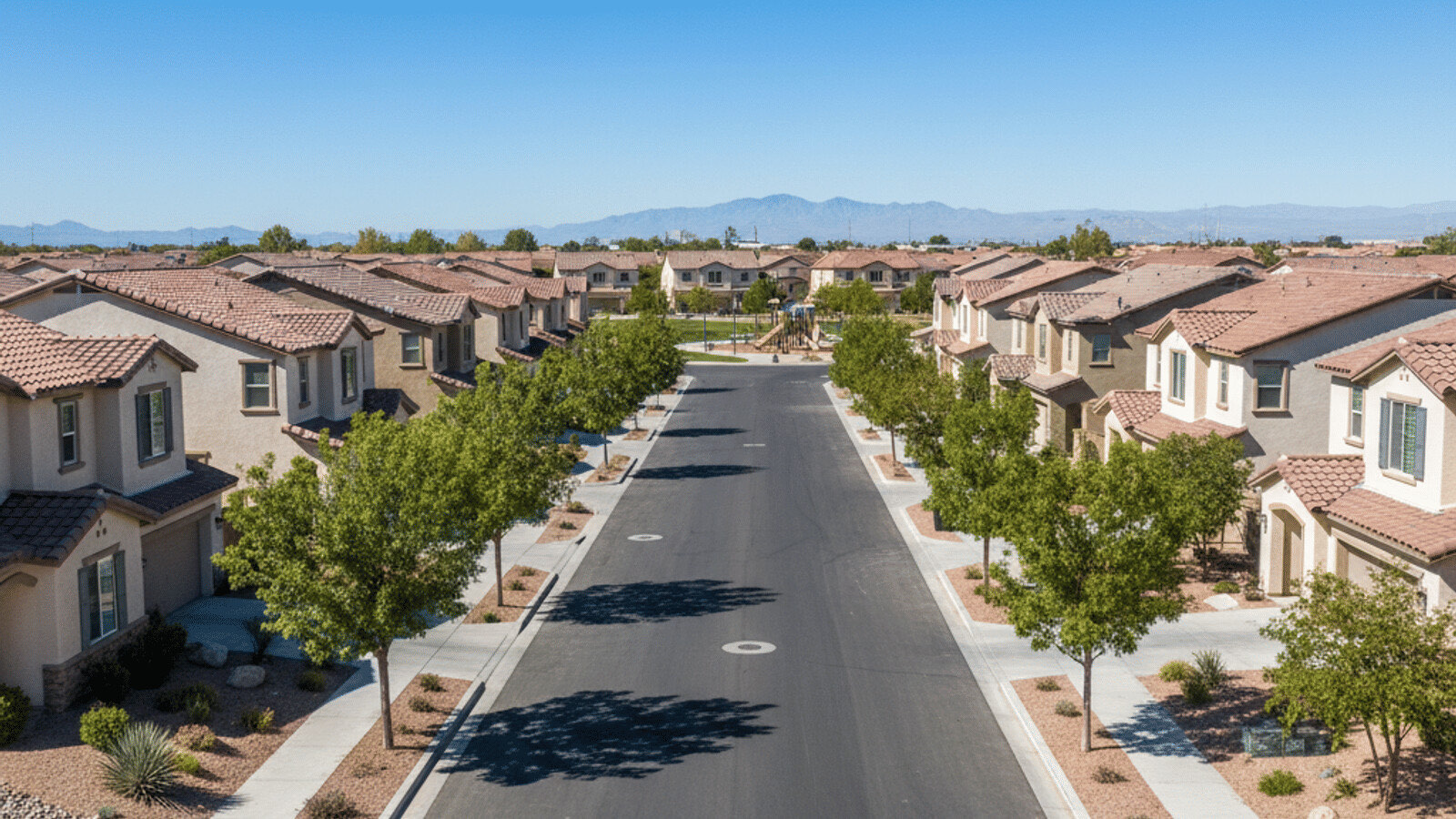
Let's start with the number most buyers care about first: purchase price. According to the Las Vegas REALTORS (LVR/GLVAR), the median existing-home sale price across the broader Las Vegas metro reached approximately $465,000 in the first half of 2026. Spring Valley's median tracks below that mark -- hovering in the $425,000 to $435,000 range -- because the community's housing stock skews toward 1990s-era stucco single-family homes and apartment-heavy corridors rather than the luxury condos and new-construction communities that push the metro-wide number higher.
The City of Las Vegas itself contains enormous price variation. The Downtown and Arts District corridor includes everything from budget condos in the $250,000 range to luxury high-rises approaching $2 million. The far-northwest master-planned corridors (Skye Canyon, Centennial Hills) push the city median up considerably. When you strip those poles out and focus on a typical three-bedroom, two-bath home in an established neighborhood, Spring Valley and the middle-tier City neighborhoods are often within $20,000 to $30,000 of each other.
Entry-level inventory is one area where the City of Las Vegas holds an advantage. According to Las Vegas REALTORS market data, the sub-$350,000 single-family inventory is broader inside the city limits -- particularly in older east and central Las Vegas neighborhoods -- than in Spring Valley, where the minimum for a livable single-family home rarely dips below $370,000 in 2026.
On the rental side, Spring Valley runs a dense apartment corridor along Flamingo Road, Spring Mountain Road, and Tropicana Avenue. Average two-bedroom rents fall in the $1,600 to $1,800 range. Comparable units in the City of Las Vegas vary widely: older central-city complexes can come in under $1,500, while the new urban-core apartments near Downtown Las Vegas command $1,800 to $2,000. For renters, Spring Valley lands in the mid-tier band. For buyers moving to Las Vegas from out of state, Spring Valley's $425,000 median often represents the best value-per-dollar calculation in the first year of ownership.
| Property Type | City of Las Vegas | Spring Valley |
|---|---|---|
| Entry-level single-family | $300,000 -- $360,000 | $370,000 -- $400,000 |
| Median single-family | $465,000 (metro median) | $425,000 -- $435,000 |
| Luxury single-family (top 10%) | $900,000+ | $700,000+ |
| Median condo/townhome | $260,000 -- $320,000 | $240,000 -- $300,000 |
| Typical 2BR apartment rent | $1,450 -- $2,000 | $1,600 -- $1,800 |
What Is Spring Valley Like as a Place to Live?
Spring Valley is unlike any other community in the Las Vegas Valley -- it has the bones of a real working-class suburb, but it sits next door to one of the most famous entertainment corridors in the world. The result is an area that feels simultaneously ordinary and extraordinary depending on which direction you are driving.
The defining geographic feature is I-15. Spring Valley begins almost immediately west of the freeway, meaning that you are simultaneously close to the Strip's back-of-house operations (suppliers, hotels, casinos) and shielded from the tourist foot traffic by the freeway itself. That buffer makes a bigger psychological difference than you might expect. The neighborhood feels residential. People are walking dogs, washing cars, and heading to the gym -- not navigating tourist crowds.
The heart of the Spring Valley lifestyle is Spring Mountain Road, which runs east-west across the community's midsection. This is the backbone of Las Vegas's internationally recognized Chinatown district -- technically located in Spring Valley, not the City of Las Vegas. According to the [U.S. Census Bureau QuickFacts for the Las Vegas metro](https://www.census.gov/quickfacts/lasvegas citynevada), Clark County's Asian-American population has grown steadily over the past decade, and Spring Mountain Road is the culinary and cultural expression of that growth. You have access to hundreds of independent restaurants serving Vietnamese, Korean, Japanese, Thai, and Chinese cuisines, most of them open late and none of them in a casino food court.
The further west you go in Spring Valley -- toward Durango Drive, Rainbow Boulevard, and eventually the 215 Beltway -- the quieter and more suburban it becomes. These western corridors transition into the fringe of Summerlin, where newer construction, wider streets, and more park infrastructure begin to appear. The far-western Spring Valley neighborhoods read almost identically to entry-level Summerlin. The far-eastern edge, by contrast, reads as the Strip's service zone: more retail, more density, more transient activity.
How Do Schools Compare in Las Vegas vs Spring Valley?
Both Spring Valley and the City of Las Vegas fall under the Clark County School District (CCSD), the fifth-largest public school district in the United States, serving roughly 320,000 students across Clark County. Your child's school assignment depends almost entirely on your specific street address -- not which side of the municipal boundary you live on.
That said, local families and real estate agents who have worked this market for years know that school quality clusters in patterns. According to CCSD's own performance data, Spring Valley's western-half schools -- those zoned to neighborhoods near Durango Drive and Rainbow Boulevard -- tend to earn three and four stars on Nevada's statewide school performance framework. Schools in the eastern corridor, closer to the Strip and I-15, tend to score lower due to higher enrollment volatility, higher rates of English Language Learner enrollment, and older facilities.
Spring Valley's notable public high schools include Spring Valley High School and Durango High School. Both are large comprehensive campuses with strong extracurricular programs. Durango High, in particular, draws students from the western corridor and has earned a reputation for competitive athletics. Spring Valley High sits further east and serves a more economically diverse enrollment.
The City of Las Vegas contains some of the district's most selective magnet options. Las Vegas Academy of the Arts -- a nationally recognized performing arts and STEM magnet -- accepts students by audition from across the valley, meaning you do not need to live in the city to attend. West Career and Technical Academy is another high-performing magnet school that draws competitive enrollment from across the region.
For elementary and middle schools, both jurisdictions offer a similar spread: a handful of strong performers, a solid mid-tier majority, and a few underperforming schools that families actively route around. The safest approach in both markets is to look up the specific school ratings at GreatSchools for any specific address you are considering, rather than assuming neighborhood-level generalizations apply to your street.
How Does Safety Compare in Las Vegas vs Spring Valley?
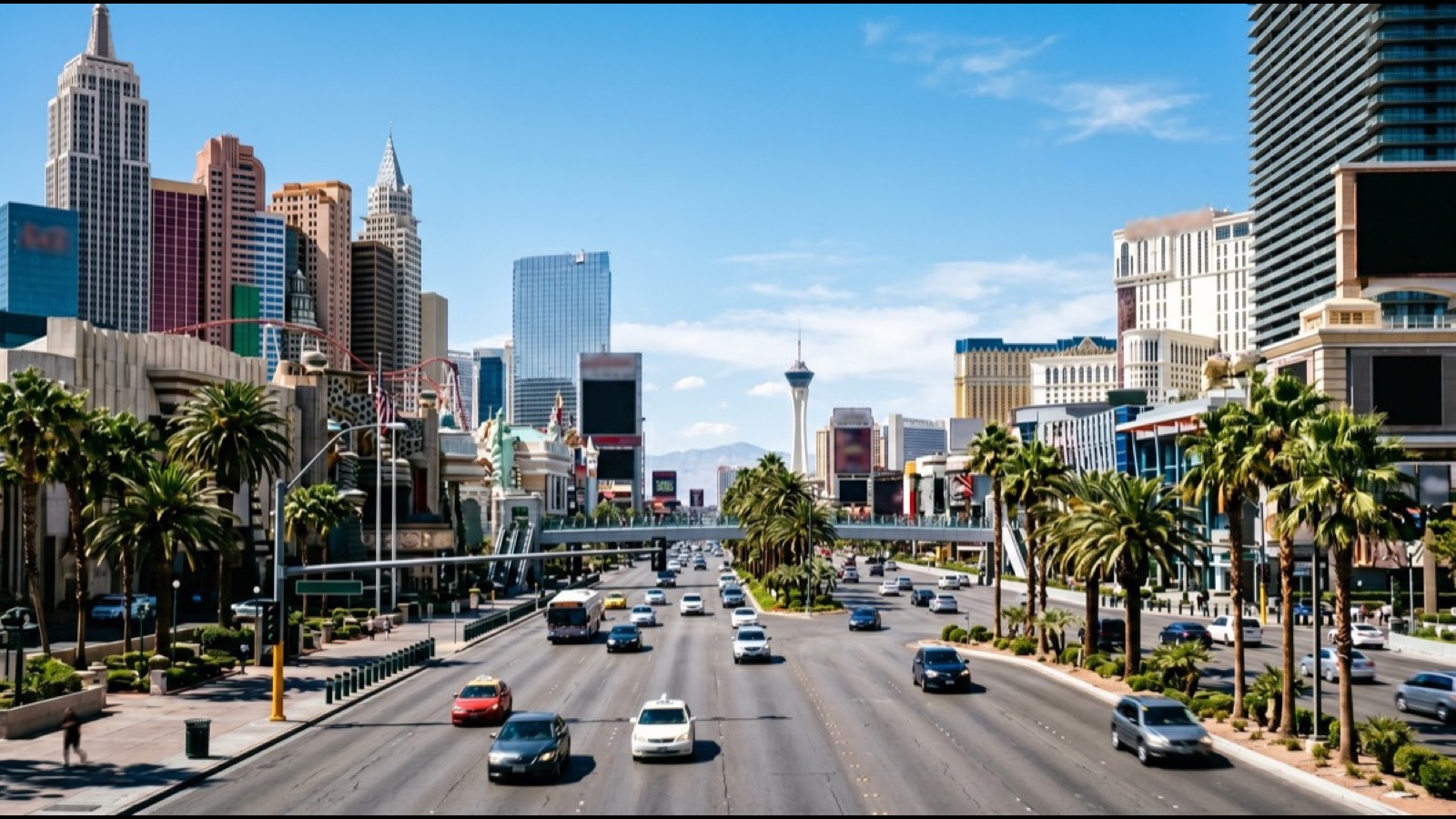
Safety is the question I get asked most often when buyers are comparing these two jurisdictions. In my experience showing properties across both areas, the street-by-street variation is dramatic -- the honest answer is: neither Spring Valley nor the City of Las Vegas has a single safety profile. Both are large, geographically varied areas, and crime statistics vary enormously depending on which part of each community you are looking at.
According to FBI Uniform Crime Reporting data, the broader City of Las Vegas urban core carries higher overall crime rates than most suburban communities in the valley, driven largely by the tourist-corridor and Downtown neighborhoods where property crime and theft are endemic to high foot-traffic environments. The residential neighborhoods well removed from the Strip -- Skye Canyon, Centennial Hills, and the northwest corridor -- tend to run much lower crime rates than the city average.
Spring Valley follows a similar west-to-east gradient. The far-western reaches near the 215 Beltway and Summerlin border are generally stable, quiet, and low-crime. Property values reflect this: the same $450,000 in Spring Valley buys you a lot more peace and quiet on the west side than on the east side, where the density of apartments, proximity to the tourist corridor, and higher transient traffic push property crime numbers up.
Both Spring Valley and the City of Las Vegas are served by the same law enforcement agency: the Las Vegas Metropolitan Police Department (LVMPD). Because Spring Valley is unincorporated Clark County, it does not have its own municipal police force. This is worth understanding for anyone moving from a city where municipal police and county sheriff serve different jurisdictions. In Clark County, LVMPD is the unified agency for both -- there is no separate "Spring Valley Police Department."
The practical takeaway for buyers: run the specific LVMPD crime statistics for the addresses you are comparing, not the neighborhood-level averages. Two blocks can produce meaningfully different results in a community as large and varied as Spring Valley.
How Does the Location and Commute Compare?
Geography is the easiest way to tell these two communities apart -- and it is also where Spring Valley's strongest competitive advantage lives.
Spring Valley begins almost immediately west of I-15 and the Strip. Depending on where in Spring Valley you live, you are looking at a 5- to 12-minute drive to the back of the major resort properties. The major east-west arterials -- Flamingo Road, Tropicana Avenue, and Sahara Avenue -- run straight from Spring Valley into the back of the resort corridor. For the roughly 150,000 Clark County residents who work in hospitality, this commute convenience is worth real money in saved time and gas. No freeway, no interchange bottleneck, just a direct surface-street shot.
The City of Las Vegas covers a much larger geographic footprint. Living near Downtown Las Vegas gives you a different kind of commute advantage: walkability and short transit access to the Las Vegas Arts District, the Fremont Street corridor, and the city government center. But living in the northwestern City corridors -- Skye Canyon, Centennial Hills -- and commuting south to the Strip puts you in the shadow of the "Spaghetti Bowl," the notoriously congested interchange where I-15 meets US-95. According to the Regional Transportation Commission of Southern Nevada, this interchange is consistently one of the highest-congestion points in the state during morning and evening rush hours. A commute that reads as 25 minutes on Google Maps at 10 a.m. can stretch to 50 or 60 minutes during peak traffic.
Public transit exists in both areas via the RTC bus system. Spring Valley's relatively regular grid layout makes bus travel somewhat more predictable than the sprawling northern corridors, but like most of the valley, a car is still the only practical daily-driver for most residents.
For buyers whose primary workplace is Henderson, Boulder City, or the southern suburbs, Spring Valley offers a reasonable midpoint. The I-215 Beltway, accessible from the western edge of Spring Valley, connects south to Henderson and the 95 corridor without touching the Strip or Downtown congestion.
Do Property Taxes Differ Between Las Vegas and Spring Valley?
This is one of the most misunderstood aspects of the Spring Valley vs Las Vegas comparison. Many buyers assume that because Spring Valley is "unincorporated" it must be taxed differently. The reality is more nuanced.
According to the Nevada Department of Taxation, both the City of Las Vegas and unincorporated Clark County (which includes Spring Valley) operate within the same state property tax cap framework established by Nevada Revised Statutes Chapter 361. Nevada law caps property taxes at $3.64 per $100 of assessed value. Both jurisdictions sit well below that ceiling.
The key difference is the absence of a municipal city tax levy for Spring Valley residents. The City of Las Vegas charges a municipal property tax rate in addition to the county base rate. Spring Valley residents pay county taxes but not a City of Las Vegas municipal levy. On a $430,000 home, the effective difference is typically $200 to $400 per year -- not a dramatic spread, but it is a genuine savings.
However, the more important tax advantage for both communities is Nevada's statewide framework. According to the Nevada Department of Taxation, Nevada charges zero state income tax, zero tax on Social Security benefits, zero tax on pension income, and zero estate or inheritance tax. For buyers relocating from California, where the top income tax rate is 13.3%, this difference alone can represent tens of thousands of dollars per year in savings. Both Spring Valley and Las Vegas share this advantage equally.
Nevada also has no capital gains tax at the state level, and no tax on investment income -- a significant advantage for real estate investors comparing Clark County options to competing markets.
Which Side-by-Side Comparison Covers All the Key Factors?
| Factor | City of Las Vegas | Spring Valley |
|---|---|---|
| Median home price | $465,000 (metro median) | $425,000 -- $435,000 |
| Jurisdiction type | Incorporated city (City of Las Vegas) | Unincorporated Clark County |
| Governing body | Las Vegas City Council | Clark County Commission |
| Property tax | County + municipal levy | County only (no city levy) |
| Police service | LVMPD (Metro) | LVMPD (Metro) |
| Strip commute (typical) | 5 -- 40 min (varies by location) | 5 -- 15 min from most neighborhoods |
| School district | Clark County School District (CCSD) | Clark County School District (CCSD) |
| HOA prevalence | Mixed (varies by neighborhood) | Mixed (common in western areas) |
| Housing age / style | Wide range (1940s bungalows to new) | Predominantly 1980s -- 2000s stucco |
| State income tax | None | None |
| Urban walkability | High (Downtown / Arts District) | Low to moderate (car-dependent) |
| Dining / nightlife variety | World-class (Strip + Arts District) | Excellent (Chinatown / Spring Mountain Rd) |
Which Is Better for Families with School-Age Children?
For families with school-age children, the Spring Valley vs Las Vegas decision essentially comes down to which side of the community you land in rather than the jurisdiction itself.
Spring Valley's western neighborhoods -- particularly those zoned to schools along the Durango Drive and Rainbow Boulevard corridors -- consistently deliver three- and four-star performers on Nevada's school ratings framework. Per CCSD's performance data, these western-Spring Valley schools have stable enrollment, higher test score averages, and newer facilities than their eastern-Spring Valley counterparts. If you are buying in the $450,000 to $550,000 range in western Spring Valley, you are likely landing in a solid school zone.
The eastern corridor of Spring Valley, closer to the Strip and I-15, shows more variability. Schools in this corridor serve more diverse enrollment populations with higher shares of English Language Learner students and higher annual turnover -- both factors that correlate with lower state performance scores, regardless of the dedication of individual teachers and principals.
The City of Las Vegas has its own east-west gradient. The far-northwestern City neighborhoods (Skye Canyon, Centennial Hills) feed some of the highest-performing CCSD schools in the region -- but the home prices in those areas are correspondingly high, often $500,000 to $700,000 for a standard family home. The central and eastern City corridors contain a wider range of school performance.
Buyers who want the security of a newer planned community just west of Spring Valley should also consider Spring Valley Ranch, which offers newer construction with an HOA structure at similar price points. For families prioritizing top schools above all else, Henderson is worth modeling as a third option. Henderson's master-planned communities consistently produce the highest CCSD school performance scores in the valley, though the median home price of roughly $520,000 is higher than either Spring Valley or the Las Vegas average.
Which Is Better for First-Time Buyers?
For first-time buyers, the Las Vegas metro's most accessible price band -- $350,000 to $420,000 -- plays out differently in the City of Las Vegas versus Spring Valley.
Inside the City of Las Vegas, the sub-$380,000 single-family market is broader. You will find legitimate three-bedroom, two-bath homes in established neighborhoods for under $380,000 in parts of east Las Vegas, the central corridor, and pockets of the northwest. Many of these homes are older (built in the 1960s and 1970s), require some updating, and sit in neighborhoods that are improving but not yet stabilized.
According to the National Association of REALTORS (NAR), first-time buyers purchase below the local median more than 60% of the time. In the Las Vegas market, that places the average first-timer in a $300,000 to $430,000 range -- a band where Las Vegas proper has more inventory than Spring Valley.
In Spring Valley, the entry floor is higher. The community's density of mid-1990s construction means most livable single-family homes start at $370,000 and above. The trade-off is that Spring Valley homes in this range typically offer larger lots, more consistent neighborhood quality, and lower crime than comparably priced City of Las Vegas homes in older corridors.
First-time buyers who are also Strip workers should weight the Spring Valley commute advantage heavily. Saving $1,200 per year in gas and 20 extra minutes per day in commute time over a five-year ownership period has real household financial value -- it is worth factoring into the total cost of ownership calculation, not just the purchase price comparison.
Which Is Better for Real Estate Investors?
Nevada Real Estate Group has helped investors build portfolios across both jurisdictions. In my own experience managing investor clients, the short version is consistent: Spring Valley offers better gross rental yield consistency, while the City of Las Vegas offers more price-point diversity and a wider tenant pool for the right strategy.
According to the Bureau of Labor Statistics, the Las Vegas-Henderson-Paradise metro employs roughly 1.1 million workers, with the largest single employment category being hospitality and leisure -- the industry centered on the Strip. Spring Valley's proximity to that employment base translates to strong, consistent rental demand from Strip workers who want a short, affordable commute. Two-bedroom apartments along Flamingo Road and Tropicana Avenue run at near-full occupancy throughout most of the year.
The City of Las Vegas offers more investment entry points at the $250,000 to $350,000 price range, which produces higher gross cap rates but also higher management friction in older neighborhoods. The Downtown corridor is in active redevelopment, with several arts-district projects and mixed-use developments that have reshaped block-by-block value over the past five years.
According to the Federal Housing Finance Agency (FHFA), the Las Vegas-Henderson metro has appreciated at roughly 6% annually on a 10-year compounded basis through mid-2026 -- outperforming the national average. Spring Valley, being within the Strip's service zone, has historically tracked at or above the metro average in appreciation due to supply constraints and persistent demand.
For a personalized investor analysis -- including Repliers live MLS data on current cap rates, days-on-market, and absorption rates -- call (702) 637-1759 or explore the Las Vegas housing market guide for current inventory data.
What Amenities and Parks Does Each Area Offer?
If outdoor space is a priority, Spring Valley has a genuine ace: Desert Breeze Park. At roughly 240 acres, it is one of the largest parks in Clark County, operated by Clark County Parks and Recreation. It is not just grass: it includes a full aquatic center, a skate park, multiple soccer and softball fields, basketball courts, and walking paths. For families, having this facility within a 10-minute drive of most Spring Valley addresses is a significant quality-of-life benefit.
Spring Valley also sits adjacent to two major golf corridors -- the Summerlin resort golf zone to the west and the Strip-adjacent courses to the east -- making it a well-located hub for recreational golfers who do not want to pay Summerlin premiums to be near the courses.
Shopping in Spring Valley is notably functional. Target, Walmart, and major grocery anchors (Smith's, Albertsons) appear on almost every major cross-street, and the IKEA flagship is just south of the Spring Valley border in Enterprise Township. The density of dining options along Spring Mountain Road -- the Chinatown corridor -- is genuinely exceptional. This is not chain-restaurant-in-a-strip-mall food; it is one of the most diverse independent dining scenes in the American Southwest, and it is tucked into unassuming storefronts in a residential community.
The City of Las Vegas offers complementary strengths. Parks such as the historic Lorenzi Park near Rancho Drive and the sprawling Floyd Lamb Park at Tule Springs in the northwest -- which includes fishing ponds, picnic shelters, and peacock viewing -- serve the city's residential population. The Las Vegas Arts District, anchored by the First Friday monthly event and dozens of permanent galleries, gives City residents a cultural programming calendar that Spring Valley cannot match.
For shopping, the City hosts the Las Vegas North Premium Outlets at I-15 and Charleston, the Downtown Container Park (an independent retail and dining hub), and the emerging array of local boutiques along Casino Center Boulevard and surrounding streets.
Which Is Better for Retirees?
Both Spring Valley and the City of Las Vegas serve retirees well, with some meaningful differences in the day-to-day experience.
Spring Valley's appeal for retirees is its convenience density: every major medical facility, pharmacy, grocery store, and service business is reachable within 10 to 15 minutes, often without touching a freeway. The Spring Valley area is served by several major hospital networks, including Valley Hospital Medical Center and Summerlin Hospital just to the west. Medical access -- a top concern for retirement-age buyers -- is genuinely strong across the community.
According to the Social Security Administration, Nevada's zero state income tax on Social Security benefits is a particularly powerful advantage compared to states that fully or partially tax retirement income. Both Spring Valley and Las Vegas share this advantage equally, and it often represents $3,000 to $10,000 per year in savings for retirees moving from California or other high-tax states.
The City of Las Vegas has a growing supply of 55-plus master-planned options, particularly in the northwest Las Vegas corridors. If you value the structure of an age-restricted community with organized activities, pools, and a built-in social calendar, the City's northwestern developments (Del Webb-style communities) offer that experience at generally lower prices than the Henderson equivalents.
For retirees who want to stay active and close to entertainment -- dining, shows, sporting events -- both jurisdictions deliver. The Strip's world-class entertainment calendar is accessible from either address. Spring Valley residents may find the 10-minute drive slightly more convenient than those in the City's outer-ring neighborhoods, though the gap narrows for Downtown-adjacent City addresses.
| Buyer Type | Better Choice | Key Reason |
|---|---|---|
| Strip / hospitality workers | Spring Valley | 5 -- 12 min surface-street commute, no freeway required |
| Families prioritizing top schools | Spring Valley (west) or Henderson | Western-corridor schools score 3-4 stars; Henderson is highest in county |
| First-time buyers under $380,000 | City of Las Vegas | Broader sub-$380K single-family inventory in older city neighborhoods |
| Foodies and dining enthusiasts | Spring Valley | Spring Mountain Road Chinatown district -- hundreds of independent restaurants |
| Urban / walkability seekers | City of Las Vegas (Downtown) | Arts District, Fremont, First Friday, walkable blocks within the city core |
| Historic architecture buyers | City of Las Vegas | John S. Park, Rancho Circle, mid-century custom homes not found in Spring Valley |
| Cash-flow rental investors | Spring Valley | High-density apartments near Flamingo and Tropicana, strong hospitality-worker tenant pool |
| Retirees valuing convenience | Spring Valley or City (northwest) | Both offer excellent medical access; Spring Valley slightly closer to Strip entertainment |
Which Sources Inform This Las Vegas vs Spring Valley Guide?
This guide draws on publicly available data from the sources below, current as of mid-2026. Numbers and market conditions change; always verify with a licensed Nevada real estate professional before making a purchase decision.
- [U.S. Census Bureau QuickFacts -- Las Vegas Metro](https://www.census.gov/quickfacts/lasvegas citynevada) -- population, household income, housing tenure, and demographic data
- Las Vegas REALTORS (LVR/GLVAR) -- median home price, days on market, months of supply, and absorption data for Southern Nevada
- Clark County School District (CCSD) -- school performance framework, star ratings, enrollment data, and magnet school information
- Clark County Government -- Parks and Recreation -- Desert Breeze Park acreage, facilities, and county recreation programming
- City of Las Vegas -- Official City Portal -- city services, municipal governance, Arts District programming
- FBI Uniform Crime Reporting Program -- crime rate data and index crime comparisons
- Nevada Department of Taxation -- property tax framework, state income tax status, and tax cap regulations
- Bureau of Labor Statistics (BLS) -- Las Vegas-Henderson-Paradise metro employment, industry composition, and labor market data
- Nevada Revised Statutes Chapter 361 -- property tax rate cap authority and county tax levy framework
- National Association of REALTORS (NAR) -- first-time buyer purchase data, median buyer age, and financing patterns in comparable metro markets
This guide reflects market data current as of mid-2026 and is intended for informational purposes only. Real estate market conditions change; consult a licensed Nevada real estate professional before making any purchase decision. Nevada Real Estate Group · Chris Nevada · License S.181401 · (702) 637-1759 · 8945 W Russell Rd, Suite 170, Las Vegas, NV 89148.
Frequently Asked Questions About Las Vegas vs Spring Valley
Is Spring Valley considered part of Las Vegas?
Technically, no. Spring Valley is an unincorporated community in Clark County, legally distinct from the incorporated City of Las Vegas. However, residents still use "Las Vegas, NV" as their mailing address, which causes persistent confusion for buyers and relocators. The distinction matters for tax levies, governance, and a handful of municipal services -- but in daily life, the communities blend seamlessly.
Is it cheaper to live in Spring Valley or Las Vegas?
Spring Valley's median single-family home price runs approximately $425,000 to $435,000 in mid-2026 -- modestly below the broader Las Vegas metro median of $465,000. However, the City of Las Vegas contains neighborhoods below that range (older central corridors) and well above it (luxury high-rises and master-planned northwest communities). The gap between a typical Spring Valley home and a comparable Las Vegas home in a similar neighborhood tier is usually $20,000 to $40,000, with Spring Valley running slightly lower.
Does Spring Valley have its own police force?
No. Because Spring Valley is unincorporated, it is patrolled by the Las Vegas Metropolitan Police Department (LVMPD, also called "Metro"), which provides unified law enforcement for both the City of Las Vegas and all unincorporated Clark County communities. There is no separate Spring Valley Police Department. Both jurisdictions receive identical Metro coverage.
How far is Spring Valley from the Las Vegas Strip?
Very close. Spring Valley begins just west of I-15, meaning most residents live two to four miles from the major resort properties. That translates to a 5- to 12-minute drive on surface streets -- one of the shortest Strip commutes of any residential community in the valley that does not carry the premium pricing of the resort corridor itself.
Do Spring Valley and Las Vegas use the same school district?
Yes. Both communities fall within the Clark County School District (CCSD), the fifth-largest public school district in the United States. Your child's specific school assignment is determined by your home address, not the jurisdiction name. School quality varies significantly within Spring Valley -- western-corridor schools near Durango Drive tend to perform better than eastern-corridor schools closer to the Strip.
What are property taxes like in Spring Valley versus Las Vegas?
Both jurisdictions operate within Nevada's state-level property tax cap framework, which limits rates to $3.64 per $100 of assessed value. The main difference is that City of Las Vegas residents pay a municipal city tax levy in addition to the county base rate. Spring Valley residents pay county taxes only. The annual dollar difference on a median-priced home is typically $200 to $400 per year. Nevada's zero state income tax, zero Social Security tax, and zero estate tax apply equally to both.
Which is better for Strip workers -- Spring Valley or Las Vegas?
Spring Valley is consistently the top choice for Strip workers. The community sits immediately west of I-15, giving most residents a 5- to 15-minute door-to-door drive to the back-of-house areas of the major resort properties -- no freeway required for most addresses. Workers on late-night or early-morning shifts particularly value the ability to reach the Strip quickly without navigating freeway interchange traffic. According to the Las Vegas REALTORS (LVR/GLVAR), Spring Valley consistently sees strong absorption from hospitality-sector buyers for this exact reason.
Ready to compare specific addresses in Spring Valley and Las Vegas? Nevada Real Estate Group's agents live and work in both communities. We will pull the live MLS data, run the commute math, and walk you through the school zone specifics for any address you are considering. Call (702) 637-1759 or visit Nevada Real Estate Group to start the conversation.
Looking for a broader Southern Nevada comparison? Read our full Las Vegas vs Henderson breakdown or explore the best neighborhoods in Las Vegas to see how Spring Valley stacks up against the valley's other major residential communities.