
Published January 22, 2026 · Updated June 16, 2026 · By Chris Nevada, Nevada Real Estate Group · NV License S.181401
When you tell people you are thinking about moving to Las Vegas, they picture you living in a hotel high-rise on the Strip, dodging tourists on your way to work, and eating overpriced buffets every night. I have heard every variation of that joke since I started helping buyers relocate here 16 years ago — and I understand why it exists. Las Vegas markets itself as an escape from ordinary life, so people naturally assume the residents must be living some version of that escape, too.
They are not. For the 2.3 million people in the greater metro area, the Strip is just a place you visit when out-of-town guests arrive. The real Las Vegas is a sprawling, functional metropolitan area with tight-knit master-planned suburbs, spectacular outdoor access to Red Rock Canyon and Lake Mead, and the financial relief of living in a zero-income-tax state. Across our 9,600-plus closings, the families who relocate here are overwhelmingly pleasantly surprised. The chaos is for visitors; the suburbs are for residents.
This guide is written for future residents, not weekend tourists. I will walk you through climate, housing costs, neighborhoods, job market, schools, outdoor recreation, and the honest pros and cons of calling Las Vegas home in 2026. If you have specific questions, call Nevada Real Estate Group at (702) 637-1759 — our agents have all lived the transition themselves.
Living in Las Vegas in 2026 means a $425,000 median home price, zero state income tax, and 294 sunny days per year. Red Rock Canyon is 17 miles from the Strip, Lake Mead is 30 miles east, and Mount Charleston offers skiing 45 minutes away. Summers are extreme (107-degree average July high), but residents adapt. Las Vegas runs 15 to 20 percent cheaper than California. Call (702) 637-1759 to start your search.
- Las Vegas median home price is $425,000 in mid-2026 — roughly half of Los Angeles for the same square footage.
- Nevada's zero income tax saves a $120,000 household $6,000 to $9,000 annually versus California.
- Red Rock Canyon is 17 miles west, Lake Mead 30 miles east, and Mount Charleston skiing 45 minutes away.
- CCSD's top-rated campuses concentrate in Summerlin and Henderson; research school zones before buying.
- Summer electric bills hit $300 to $500 in July and August — budget annually, not monthly.
What Is It Like Living in Las Vegas?
Life here has a rhythm that surprises almost every newcomer. Because Las Vegas is a 24-hour city, you have access to amenities most Americans cannot fathom — a full-service grocery store, a gym, a high-quality restaurant, a pharmacy — at 2:00 AM on a Tuesday if that is when your schedule demands it. The infrastructure built to serve 40 million annual tourists produces extraordinary convenience for the residents who actually live here.
Once you move into a master-planned community — and most buyers do — the vibe shifts completely. Summerlin feels like Scottsdale with better views. Henderson feels like a well-organized Southern California suburb without the traffic. The Strip hum fades into background noise that eventually you stop noticing entirely, the same way New Yorkers tune out sirens.
The city is genuinely diverse. According to the U.S. Census Bureau QuickFacts for Clark County, Clark County is roughly 42 percent Hispanic/Latino, 31 percent White non-Hispanic, 11 percent Black/African American, and 10 percent Asian — a demographic profile that drives the exceptional restaurant diversity that locals brag about. You can eat genuinely excellent Vietnamese, Korean, Japanese ramen, Peruvian ceviche, Filipino, or Salvadoran food all within a 15-minute drive of any residential neighborhood. Strip prices are for tourists; Spring Mountain Road in Chinatown is for residents.
What Is the Las Vegas Climate Like?
Let me give you the honest version before the sales pitch version. The summers are extreme. From June through September, daily high temperatures consistently sit between 100 and 115 degrees Fahrenheit. The average July high in Las Vegas is 107 degrees Fahrenheit. That is not a fluke — that is every single July day. You will learn to run errands early in the morning or after sunset, to keep your car shaded, and to treat your air conditioning system with the same respect you would give a vital organ.
The good news: it is genuinely a dry heat. With average relative humidity around 20 percent in summer, 107 degrees in Las Vegas feels meaningfully different from 95 degrees in Houston or Atlanta. Shade is remarkably effective here. A covered patio at 107 degrees is actually tolerable in a way that has no equivalent in humid climates.
According to the National Weather Service Las Vegas Forecast Office, Las Vegas averages 294 sunny days per year, with annual rainfall of only 4.2 inches. The winter months are legitimately wonderful — average January highs of 57 degrees Fahrenheit, rarely below freezing, and you will never own a snow shovel. October through April is arguably the best climate in the continental United States: warm days, cool nights, and endless sunshine.
The valley also experiences a monsoon season from July through September, when moisture from the Gulf of California occasionally triggers dramatic afternoon thunderstorms. These storms produce temporary flash flooding and spectacular lightning displays but typically clear within 90 minutes. They also provide a brief respite from the dry heat. Newcomers are always surprised by how dramatic and beautiful desert thunderstorms can be.
How Much Does It Cost to Live in Las Vegas?
According to the U.S. Bureau of Labor Statistics Consumer Expenditure Survey, the average American household spends approximately $72,900 per year on all goods and services. In Las Vegas, that figure runs roughly 5 percent higher — approximately $76,500 for a comparable household. Against Los Angeles and San Francisco, however, Las Vegas runs 15 to 20 percent cheaper on total cost of living. That gap is why Nevada Real Estate Group closes hundreds of California relocation transactions every year.
Housing is the headline number. According to Las Vegas REALTORS (LVR/GLVAR), the median single-family home price in the greater Las Vegas area sits near $425,000 in mid-2026. Entry-level single-family homes in North Las Vegas and older parts of Las Vegas proper start around $280,000 to $330,000. Move-up buyers looking in Henderson typically budget $450,000 to $650,000 for a well-maintained master-planned community home. Luxury buyers targeting Summerlin guard-gated villages should plan for $700,000 to $1.5 million at the mid-tier, with the top guard-gated estates exceeding $3 million.
The tax picture is the most powerful financial reason to relocate. According to the Nevada Department of Taxation, Nevada levies zero state income tax. That means your wages, remote work income, Social Security benefits, pension income, and investment withdrawals are all free from state-level income tax. For a household earning $120,000 per year relocating from California, that single change typically saves $6,000 to $9,000 annually depending on deductions. Property taxes in Clark County run an effective 0.5 to 0.6 percent of assessed value — one of the lowest rates in the Western United States. On a $425,000 home, that translates to approximately $2,100 to $2,550 per year, or roughly $175 to $210 per month.
The hidden cost that surprises nearly every newcomer is summer electricity. NV Energy's tiered rate structure means consumption charges escalate rapidly as temperatures push indoor cooling demands. A standard 1,800-square-foot home that pays $90 per month on electricity in February may pay $350 to $500 in July and August. Budget on an annualized basis, not month-to-month, and factor $150 to $200 per month on average across the year for electricity alone.
| Expense Category | Low Estimate | Mid Estimate | High Estimate |
|---|---|---|---|
| Rent — 1-bedroom apartment | $1,300 | $1,550 | $2,100 |
| Electricity (annualized monthly) | $110 | $165 | $260 |
| Gas, Water, Trash | $80 | $120 | $165 |
| Groceries | $320 | $400 | $500 |
| Car Insurance | $200 | $335 | $500 |
| Gas and Transportation | $120 | $180 | $280 |
| Dining and Entertainment | $200 | $350 | $600 |
| Total Monthly | $2,330 | $3,100 | $4,405 |
For a comprehensive breakdown of every expense category, see our cost of living in Las Vegas guide which goes deeper on housing, utilities, car insurance, and the specific numbers by neighborhood.
What Is the Job Market Like in Las Vegas?
Not everyone works on a casino floor. The Leisure and Hospitality sector — MGM Resorts, Caesars Entertainment, Wynn Resorts, the Venetian — is still the dominant economic driver and employs approximately 300,000 people across the valley. But the economy has diversified meaningfully over the past decade.
According to the Bureau of Labor Statistics Las Vegas-Henderson-Paradise MSA data, healthcare has become one of the fastest-growing employment sectors. Major hospital systems including HCA Healthcare (Sunrise Hospital), Dignity Health-St. Rose Dominican, and the expanding UNLV School of Medicine complex are adding thousands of jobs. The tech sector has found a foothold in the downtown area, driven partly by the Switch data center campus and an influx of remote workers who discovered Las Vegas during the pandemic and never left.
Logistics and warehousing have boomed as well, anchored by the Henderson and North Las Vegas industrial corridors that serve as distribution hubs for California and the broader Mountain West. Amazon, Prologis, and major e-commerce players have invested heavily here. The Raiders and Golden Knights franchises — plus the soon-to-open A's ballpark in the Tropicana redevelopment area — have added a sports industry cluster employing front office staff, media, and ancillary services.
One category worth calling out: Las Vegas is one of the best cities in the country for remote workers. With no state income tax, earning a salary from a company based in California or New York while living in Las Vegas is a legitimate financial arbitrage strategy. According to the U.S. Census Bureau American Community Survey, remote work penetration in Clark County grew significantly during and after the pandemic and has not fully retreated.
The Las Vegas unemployment rate has historically trended slightly above the national average — partly due to the transient nature of the hospitality workforce and seasonal fluctuations. In mid-2026, the rate is running near 4.5 percent, modestly above the U.S. rate of approximately 4.0 percent. In our practice, buyers from stable-employment industries like healthcare, technology, logistics, and government find strong opportunities and rarely struggle with employment continuity after the move.
What Is There to Do in Las Vegas Beyond the Strip?
This is the question locals love being asked. The entertainment ecosystem built for 40 million annual tourists is accidentally one of the best quality-of-life amenities available anywhere in the country — and locals access it at deep discounts.
Sports and live entertainment. The Vegas Golden Knights NHL franchise has been a cultural phenomenon since 2017, winning the Stanley Cup in 2023 and selling out T-Mobile Arena consistently. The Las Vegas Raiders play at Allegiant Stadium, an architectural landmark that hosts concerts and major events beyond NFL games. The Oakland A's relocated to Las Vegas and will open their permanent stadium near the Strip by the late 2020s, adding a third major professional franchise. Locals discount tickets — available through casino host relationships and entertainment apps — regularly run 30 to 50 percent below face value.
Dining and nightlife. Some of the best dining in the city is not in a casino. Spring Mountain Road (Chinatown) runs from Decatur Boulevard west for nearly 5 miles and contains an extraordinary concentration of Vietnamese, Korean, Filipino, Chinese, and Japanese restaurants charging $15 to $40 per person for genuinely excellent food. Downtown Summerlin hosts chef-driven restaurants with $30 to $60 per-person tabs that rival Strip restaurants charging $100-plus. The downtown Arts District has developed a craft brewery and independent restaurant scene over the past decade.
Arts and culture. The Smith Center for the Performing Arts in downtown Las Vegas hosts Broadway touring productions, the Las Vegas Philharmonic, and major concerts. The Nevada Museum of Art is a 40-minute drive to Reno, but the Las Vegas Arts District has developed into a genuine gallery district with First Friday events drawing thousands of locals monthly.
Outdoor recreation. The valley is surrounded by some of the most accessible, federally protected outdoor recreation in the United States — a fact that surprises newcomers who assume a desert city has nothing to offer the outdoorsy. (More on this in the section below.)
What Outdoor Recreation Is Nearby?
If you love being outside, Las Vegas is genuinely one of the best places in the country to live. Within 75 minutes of the valley, you have access to four distinct federal recreation areas plus a state park.
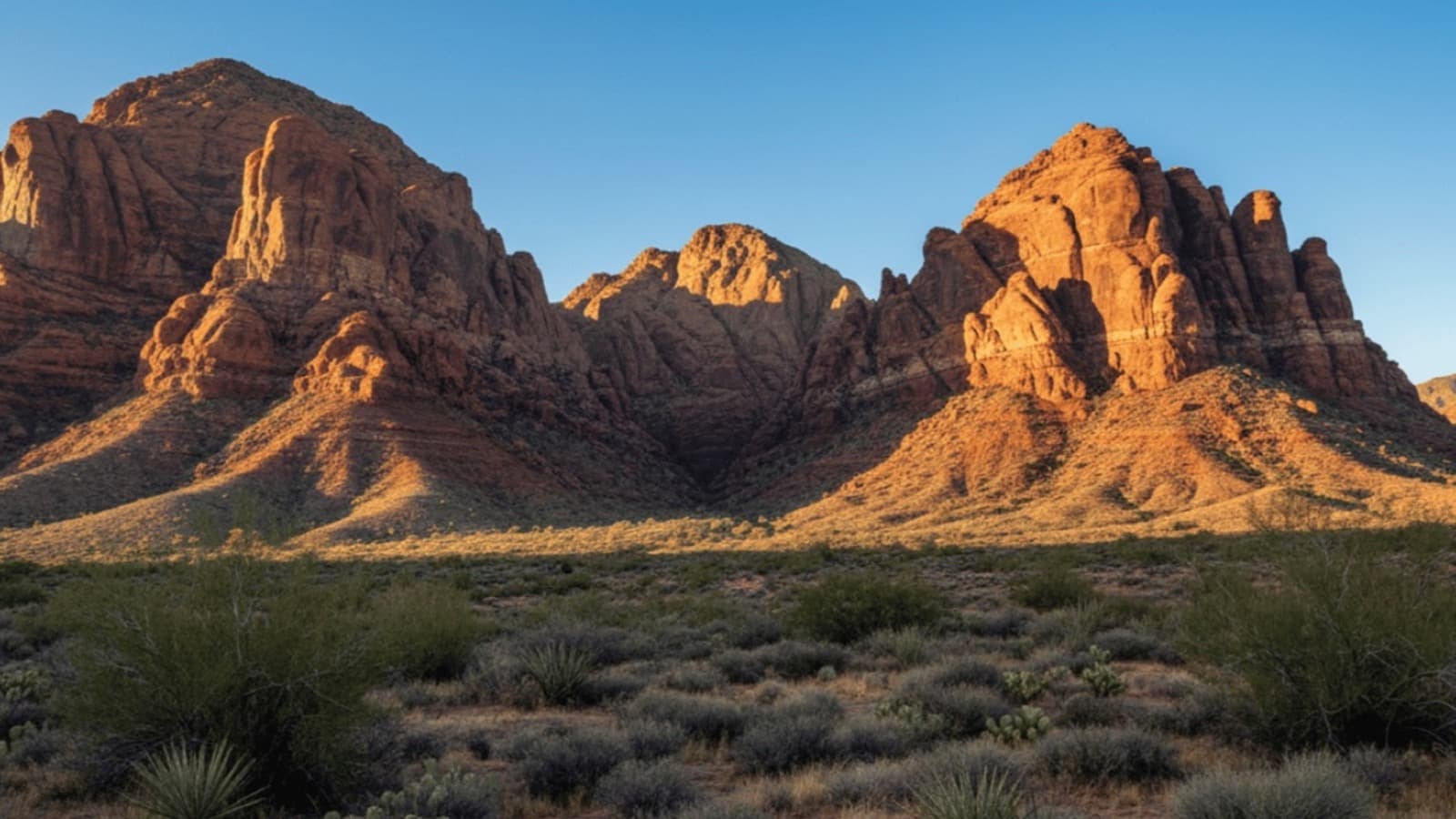
Red Rock Canyon National Conservation Area is 17 miles west of the Strip — about 20 minutes from Summerlin. According to the National Park Service, Red Rock is one of the premier rock climbing destinations in North America, with more than 2,000 climbing routes across the Calico Hills and Main Escarpment. The 13-mile scenic loop drive is suitable for all ages, and more than 50 maintained hiking trails range from short family walks to multi-day wilderness routes. Annual day-use passes run $75 for unlimited access. Las Vegas residents go multiple times per week; it never gets old.
Lake Mead National Recreation Area sits 30 miles east of the Strip on the Nevada-Arizona border and is the largest reservoir in the United States by capacity. According to the National Park Service Lake Mead data, the recreation area offers more than 700 miles of shoreline for boating, kayaking, paddleboarding, and fishing. Water temperatures reach comfortable swimming levels by May and stay warm through October. The Hoover Dam is within the recreation area and is a 45-minute drive from the valley.
Mount Charleston — Spring Mountains National Recreation Area is 45 minutes northwest of the Strip at an elevation of 11,918 feet. In winter, Lee Canyon ski resort offers downhill skiing and snowboarding, typically operating from December through March. In summer, Mount Charleston provides a 20-degree cooler escape from valley heat, with extensive hiking trails through pine forests and alpine meadows. Trailheads start at approximately $10 per vehicle.
Valley of Fire State Park is Nevada's oldest state park, located 50 miles northeast of Las Vegas. The Aztec sandstone formations glow brilliant red and orange at sunrise and sunset — the photography and hiking here is extraordinary. Admission is $15 per vehicle.
What Are the Best Neighborhoods to Live In?
The Las Vegas Valley is enormous — roughly 600 square miles — and where you choose to land will define your daily experience. Here is an honest breakdown of the major residential choices:
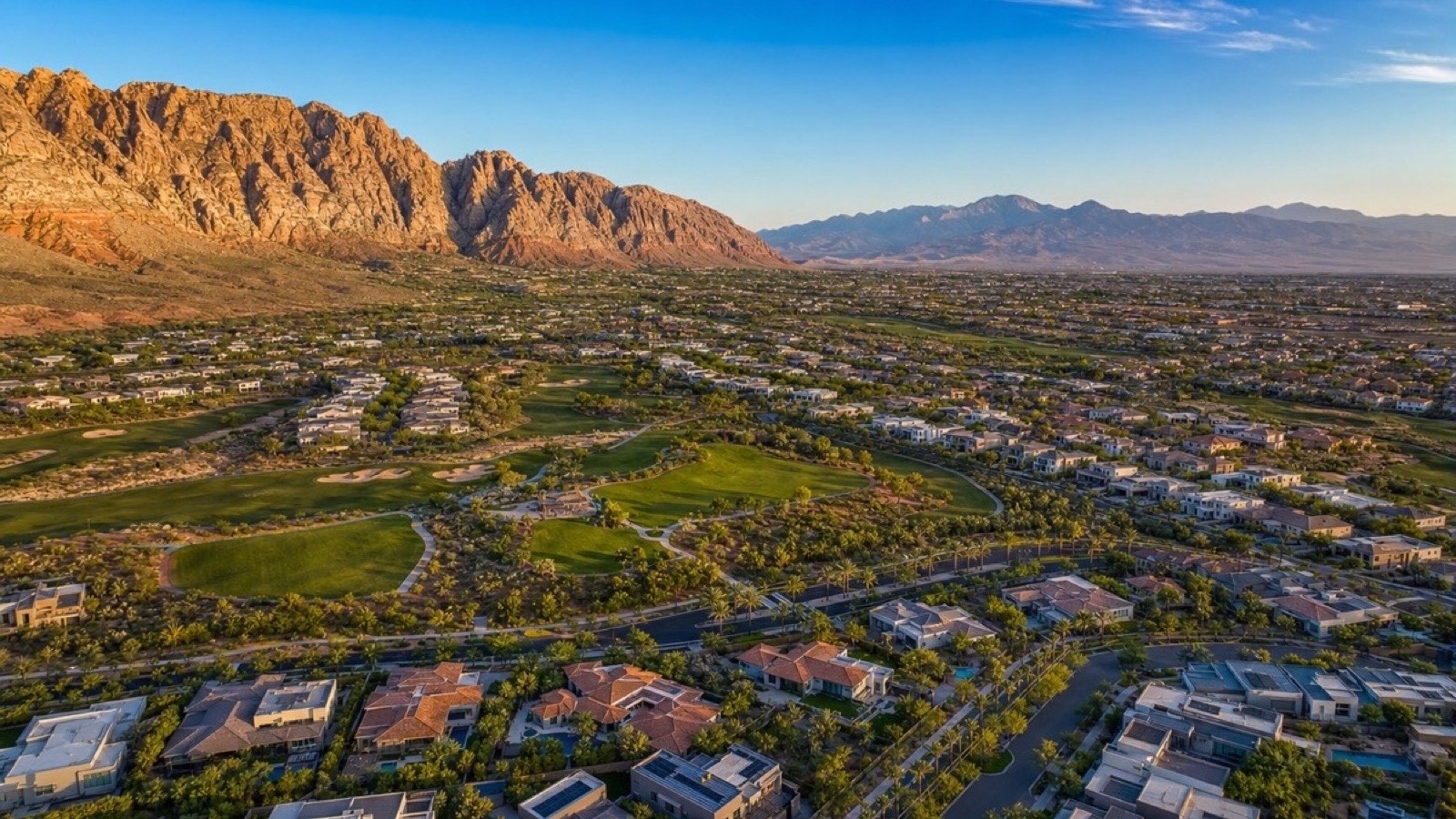
Summerlin. The premier master-planned community, located on the western edge of the valley. Howard Hughes Corporation has been developing Summerlin since 1990, and the result is a polished, high-amenity community with extensive trail systems, parks, and direct access to Red Rock Canyon. Summerlin sits at slightly higher elevation than the valley floor, which means marginally cooler temperatures and better views. According to Las Vegas REALTORS, Summerlin commands a premium — entry-level townhomes start near $450,000 and guard-gated village homes range from $1 million to well above $5 million. The trade-off is excellent: consistently top-rated CCSD schools, low crime, and some of the best master-plan infrastructure in the country. Browse Summerlin homes.
Henderson. Henderson is its own incorporated city — not a Las Vegas suburb — and consistently ranks among the safest cities of its size in the United States. The city proper has approximately 340,000 residents across neighborhoods that range from affordable starter homes in the Pittman area to the ultra-luxury guard-gated estates of MacDonald Highlands, where homes routinely sell for $2 million to $10 million-plus. Green Valley Ranch, Anthem, and Inspirada are the most family-focused master-planned communities, each offering excellent CCSD schools, parks, and community amenities. Henderson median home prices run approximately 5 to 10 percent above the valley-wide median. Browse Henderson homes.
North Las Vegas. North Las Vegas is where value buyers look. As a separate municipality, North Las Vegas has invested heavily in infrastructure improvements over the past decade and is home to several well-regarded newer master-planned communities including Aliante — a Howard Hughes development with a resort-style community center, golf course, and nature preserve. Entry-level single-family homes in established North Las Vegas neighborhoods start around $280,000 to $330,000. The Northwest (Centennial Hills, Lone Mountain) offers newer construction at $400,000 to $580,000. Browse North Las Vegas homes.
Green Valley (Henderson). One of the valley's oldest master-planned communities, Green Valley Ranch offers established neighborhoods with mature desert landscaping, well-regarded schools, and a strong community identity. The Station Casinos Green Valley Ranch resort serves as the de facto community center, with pools, a spa, and multiple dining options. Median prices in Green Valley run $450,000 to $600,000.
Downtown and Arts District. For residents who want walkability and urban energy rather than suburban lawns, downtown Las Vegas and the 18b Arts District offer high-rise condos and lofts in the $250,000 to $600,000 range. This is the cultural hub for independent coffee shops, craft breweries, and gallery events — a distinctly different lifestyle from the master-planned communities and a small but growing segment of the buyer population.
What Are Las Vegas Schools Like?
The Clark County School District is the fifth-largest school district in the United States, serving more than 380,000 students across approximately 370 schools. Size creates variability — school quality in CCSD ranges from genuinely excellent to below state averages, and the specific neighborhood you choose matters enormously.
According to Clark County School District data, the district has earned multiple Blue Ribbon school designations, and schools in Summerlin and Henderson consistently score in the top tiers statewide on achievement metrics. The Magnet and Advanced Programs (MAP) network allows qualified students to attend specialized schools outside their residential zone — covering STEM, performing arts, and International Baccalaureate pathways. Coral Academy of Science, a highly regarded STEM-focused charter school, operates multiple Las Vegas campuses with strong college placement outcomes.
For families with children, the homework before choosing a home is straightforward: check the GreatSchools ratings and the specific CCSD school zones for any address you are seriously considering. A $475,000 home in a Henderson master-planned community near a Blue Ribbon elementary school is a completely different value proposition than the same price in a zone with a below-average elementary. In our experience, buyers who skip this step are consistently the ones who call us six months later wondering why their home is in a lower-rated school zone. Our agents run school-zone analysis for every buyer client before they write an offer.
Private school options are substantial. Bishop Gorman High School (Catholic) is the most prominent private secondary school, with a strong athletics and college prep reputation. The Meadows School, Alexander Dawson School, and several Montessori campuses serve the K-12 private school market.
How Does Las Vegas Compare to Other Sun Belt Cities?
Las Vegas is often mentioned in the same breath as Phoenix, Austin, and Dallas for Sun Belt relocation. Here is a quick comparison on the dimensions that matter most to buyers:
| Metric | Las Vegas, NV | Phoenix, AZ | Austin, TX | Dallas, TX |
|---|---|---|---|---|
| Median home price | $425,000 | $415,000 | $520,000 | $390,000 |
| State income tax | 0% | 2.5% flat | 0% | 0% |
| Effective property tax rate | 0.55% | 0.66% | 1.60% | 1.70% |
| Annual property tax on median home | $2,340 | $2,740 | $8,320 | $6,630 |
| Average July high (degrees F) | 107 | 106 | 100 | 98 |
| Annual sunny days | 294 | 299 | 228 | 234 |
| Drive to skiing / mountain recreation | 45 min (Mt Charleston) | 2 hours (Flagstaff) | 4-plus hours | 4-plus hours |
The standout difference in this comparison is property taxes. According to the Nevada Department of Taxation and the Tax Foundation state comparison data, Las Vegas homeowners pay roughly $6,000 less per year in property taxes than equivalent Austin homeowners and $4,000 less than Dallas homeowners. That gap, combined with Nevada's zero income tax, makes Las Vegas the most tax-efficient of the major Sun Belt destinations for most buyer profiles.
The mountain recreation proximity is also genuinely unique. Las Vegas is the only major Sun Belt city with downhill skiing within a 45-minute drive.
What Are the Pros and Cons of Living in Las Vegas?
After 16 years helping buyers relocate here, I have a fairly clear picture of who thrives in Las Vegas and who regrets the move. Let me give you both sides honestly.
| Category | Pro | Con |
|---|---|---|
| Taxes | Zero state income tax saves $6,000-plus annually for most households | Sales tax at 8.375% is above the national median; must account for higher consumption costs |
| Climate | 294 sunny days, mild winters, no snow, effective outdoor lifestyle 8 months/year | July and August average highs of 107 degrees F require lifestyle adjustment and constant AC |
| Housing | Median $425,000 is roughly half of Los Angeles for comparable square footage | HOAs are nearly universal in master-planned communities, adding $100 to $400/month |
| Entertainment | Major-league sports, acclaimed dining, live shows, and nightlife with deep local discounts | Tourist congestion on weekends and special events creates traffic and crowding |
| Outdoor Recreation | Red Rock Canyon, Lake Mead, Mount Charleston, Valley of Fire all within 75 minutes | Summer heat limits outdoor activity to early morning and evening for 4 months/year |
| Schools | Top-rated CCSD schools in Summerlin and Henderson rival any Sun Belt suburb | CCSD quality varies dramatically by zone; research is essential before buying |
| Water | SNWA has invested heavily in conservation infrastructure and water recycling | Colorado River compact uncertainty creates long-term policy risk; turf bans are expanding |
| Transportation | Grid-based road system makes navigation intuitive; easy freeway access from most suburbs | You absolutely need a car; public transit is poor outside the Strip corridor |
The people who struggle most in Las Vegas after moving here typically underestimated the summer heat, overestimated the quality of the public transit system, or chose a neighborhood without researching school zones. The people who thrive came with realistic expectations, bought in a master-planned community, and leaned into the outdoor recreation and entertainment lifestyle.

Should You Move to Las Vegas in 2026?
If you are coming from California, the financial case is nearly automatic: no state income tax, property taxes at 0.55 percent versus California's 1.1 percent, and a median home price approximately 50 percent lower than Los Angeles and one-third of San Francisco. According to the National Association of REALTORS housing data, California-to-Nevada migration has been one of the most persistent domestic migration patterns of the past decade. The families making this move are not chasing glitter; they are chasing $600 to $800 per month in real after-tax savings.
If you are relocating from the Mountain West or another Sun Belt city, the calculus is more nuanced. Phoenix is slightly cheaper on housing but adds a 2.5 percent income tax. Texas has comparable income tax treatment but property taxes that are roughly three times Nevada's rate — a $6,000 to $8,000 annual disadvantage on a comparable home. Austin has both higher housing prices and Texas property taxes, making Las Vegas the financially stronger choice for most buyer profiles above $100,000 household income.
According to U.S. Census Bureau population data, Clark County has been one of the fastest-growing major counties in the United States since 2010, adding more than 400,000 residents over the past 15 years. That growth is a clear signal: the people who move here keep choosing to stay.
My honest take after 16 years: Las Vegas is an extraordinary place to live if you go in with the right expectations. It rewards outdoor adventurers, foodies, entertainment enthusiasts, and anyone who wants to stretch their paycheck in a city with genuine big-city amenities. It is harder on people who struggle with heat, need excellent public transit, or place high value on the ability to walk to a neighborhood cafe. Know which category you fall into before you commit — and call (702) 637-1759 to talk through the specifics.

Frequently Asked Questions About Living in Las Vegas
Is Las Vegas a good place to live?
Yes, for the right buyer profile. Las Vegas offers zero state income tax, a $425,000 median home price that delivers roughly twice the square footage of Los Angeles for the same money, 294 sunny days per year, and some of the best outdoor recreation access in the country. According to the U.S. Census Bureau, Clark County added over 400,000 residents in the past 15 years — a consistent signal that people who move here tend to stay. The primary adjustments required are adapting to summer heat and committing to car ownership.
What is the cost of living in Las Vegas compared to California?
According to the U.S. Bureau of Economic Analysis regional price parities, Las Vegas costs approximately 15 to 20 percent less than Los Angeles on an all-in basis. The headline numbers: median home price $425,000 versus $875,000 in Los Angeles; zero state income tax versus California's top rate of 13.3 percent; effective property tax rate of 0.55 percent versus 1.1 percent. A household earning $120,000 per year relocating from California to Las Vegas typically saves $8,000 to $12,000 in the first year on a combined tax and housing cost comparison.
How hot does Las Vegas really get in summer?
According to the National Weather Service, the average July high temperature in Las Vegas is 107 degrees Fahrenheit, with daytime highs regularly reaching 112 to 115 degrees during heat waves. The heat runs from roughly mid-June through mid-September — approximately 90 to 100 consecutive days above 100 degrees. Residents adapt by running errands in the early morning or after 7:00 PM, investing in quality window tinting for vehicles, and budgeting $300 to $500 per month for electricity in July and August to maintain comfortable indoor temperatures.
Are Las Vegas schools good?
School quality in Las Vegas is highly variable and neighborhood-dependent. According to Clark County School District data, CCSD operates more than 370 schools serving 380,000-plus students, with top-rated campuses concentrated in Summerlin and Henderson. Blue Ribbon-designated elementary and middle schools exist throughout both communities. The district also operates the Magnet and Advanced Programs (MAP) network, allowing qualifying students to attend specialized schools outside their residential zone. The research homework before buying a home is to check the specific school zone for any address — a 5-minute task that can significantly influence neighborhood selection.
What are the best suburbs to live near Las Vegas?
For families prioritizing schools and safety, Henderson and Summerlin are the clear leaders. Henderson's Green Valley Ranch, Anthem, and Inspirada communities offer master-plan amenities, top-rated CCSD schools, and median prices of $475,000 to $600,000. Summerlin's guard-gated villages provide the highest-end lifestyle in the valley, with prices ranging from $700,000 to well above $5 million. For value-focused buyers, North Las Vegas master-planned communities including Aliante offer entry pricing around $350,000 to $420,000 with solid community infrastructure. For buyers who want proximity to nature, the far northwest (Lone Mountain, Centennial Hills) offers larger lots and easy Red Rock Canyon access.
Does Las Vegas have good job opportunities outside gaming?
Yes. According to Bureau of Labor Statistics data for the Las Vegas-Henderson-Paradise MSA, gaming and hospitality still employ approximately 300,000 people but no longer dominate the economy the way they did in 2005. Healthcare has added tens of thousands of jobs through hospital system expansions and the UNLV School of Medicine. Logistics and warehousing (Amazon, Prologis, and others in the Henderson and North Las Vegas industrial corridors) have added significant employment. Technology, driven partly by Switch's data center campus and remote worker influx, has grown. The Raiders, Golden Knights, and incoming A's have created a sports industry cluster. Remote workers earning salaries from out-of-state employers represent a growing share of the workforce.
How much do you need to earn to live comfortably in Las Vegas?
Using the standard guideline that housing costs should not exceed 30 percent of gross income, a single adult renting a decent one-bedroom apartment in a mid-tier neighborhood needs approximately $55,000 to $68,000 per year. A couple purchasing the $425,000 median home with 10 percent down needs combined gross income of approximately $90,000 to $100,000 to meet conventional debt-to-income guidelines. A family of four purchasing a $500,000 home in Henderson or Summerlin needs approximately $110,000 to $130,000 in combined household income. According to U.S. Census Bureau data, Clark County median household income is approximately $67,000 — below the buying threshold for the median home, which explains the active rental market and importance of down-payment assistance programs for first-time buyers.
Which Sources Inform This Living in Las Vegas Guide?
This guide draws on public data, local market reports, and Nevada Real Estate Group's direct transaction experience across 9,600-plus Las Vegas Valley closings. Home prices, tax rules, and neighborhood conditions change — confirm specifics with the relevant authority and a qualified professional before acting. This is general information, not tax, legal, or financial advice.
- U.S. Census Bureau QuickFacts — Clark County, Nevada
- Bureau of Labor Statistics — Las Vegas-Henderson-Paradise MSA employment data
- Las Vegas REALTORS (LVR/GLVAR) — Market Update Reports
- Nevada Department of Taxation — no state income tax
- National Weather Service Las Vegas Forecast Office — climate data
- National Park Service — Red Rock Canyon National Conservation Area
- National Park Service — Lake Mead National Recreation Area
- Clark County School District — school data and demographics
- National Association of REALTORS — housing and migration data
- Tax Foundation — state tax comparison data
- Nevada Revised Statutes Chapter 361 — property tax abatement
- U.S. Bureau of Labor Statistics — Consumer Expenditure Survey