
Published February 9, 2026 · Updated June 16, 2026 · By Chris Nevada, Nevada Real Estate Group · NV License S.181401
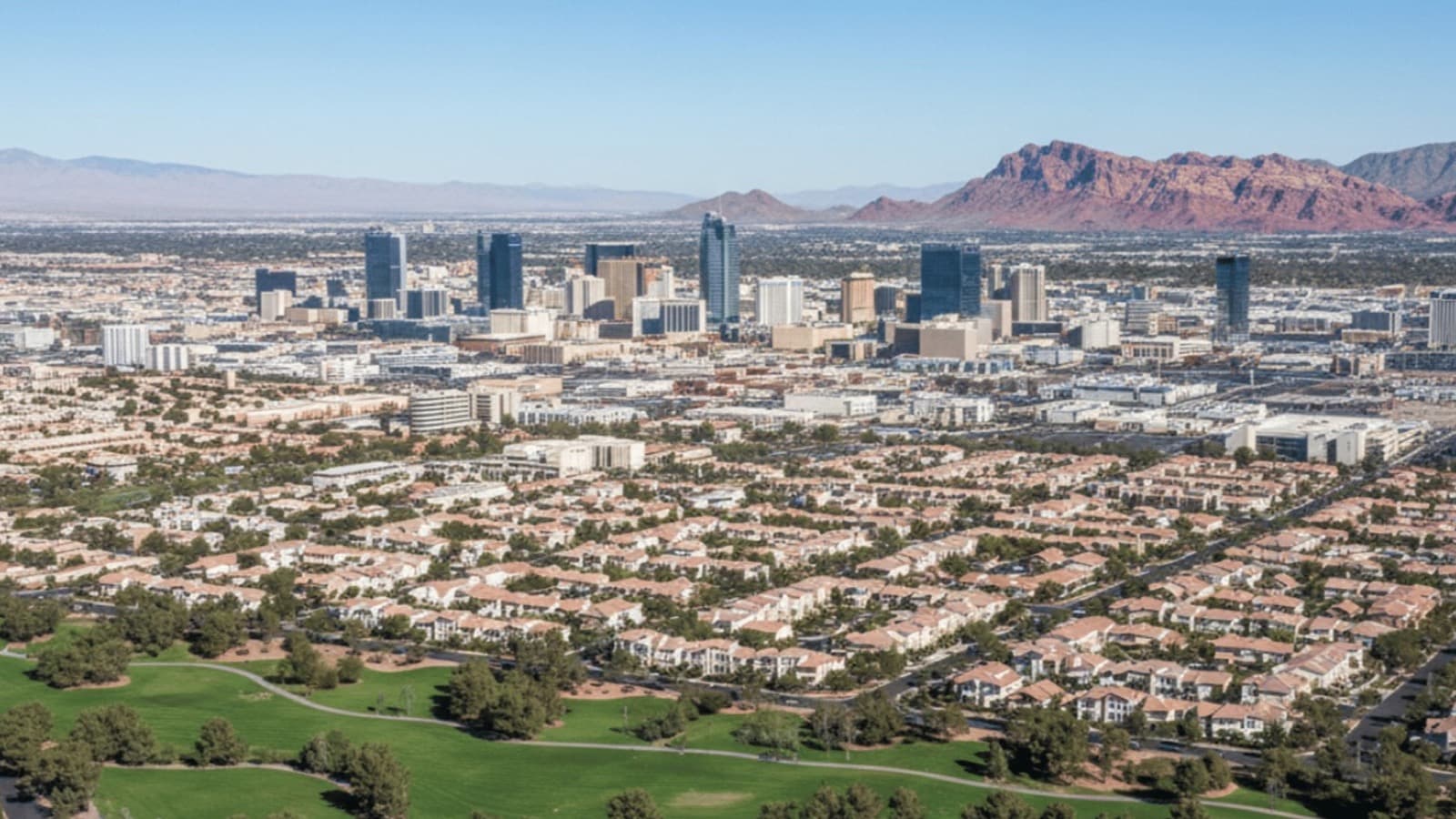
If you are shopping for a home in the Las Vegas metro, the single most common question I hear from buyers is some version of this: "Should I buy in Summerlin or stay in Las Vegas proper?" It sounds deceptively simple. Summerlin is technically within the Las Vegas city limits -- the majority of it sits inside that boundary -- yet ask any long-time local and they will tell you these two areas operate like completely different worlds.
I have been helping families, investors, and relocators navigate this exact decision across 9,600-plus closings at Nevada Real Estate Group, the #1 real estate team in Nevada. The gap between Summerlin and the broader Las Vegas Valley touches nearly every dimension of home ownership: purchase price, monthly carrying costs, school quality, commute patterns, safety statistics, and daily quality of life. This guide cuts through the marketing fluff and delivers the actual data you need.
Whether you are relocating from California, moving within the valley, or investing in Southern Nevada for the first time, the numbers below will tell you which side of the decision makes sense for your budget, your family, and your lifestyle goals.
Summerlin commands a median price of approximately $625,000 in mid-2026 -- $160,000 above the Las Vegas Valley median of $465,000 -- and delivers better schools, lower crime, and 200-plus miles of trails along the Red Rock Canyon corridor. Las Vegas proper offers broader sub-$400,000 inventory, more non-HOA neighborhoods, and a 5-to-20-minute Strip commute. Buyers with school-age children and budgets above $550,000 consistently choose Summerlin across the NREG closings we have represented. Budget-first buyers and investors lean Las Vegas. Call (702) 637-1759 to model your scenario.
- Summerlin median home price is approximately $625,000 in mid-2026 -- about $160,000 above the Las Vegas Valley median of $465,000.
- Summerlin HOA fees run $55 to $250-plus per month (master council plus sub-association), versus zero HOA in many Las Vegas neighborhoods.
- Summerlin schools average 7 to 9 out of 10 on GreatSchools ratings; Las Vegas schools vary widely from 4 to 8 depending on the zip code.
- Both areas sit in Clark County with no Nevada state income tax -- the property tax rate difference is modest at approximately 3.28% versus 3.05% of assessed value.
- Call (702) 637-1759 to speak with a Nevada Real Estate Group agent who specializes in both Las Vegas and Summerlin neighborhoods.
How Do Home Prices Compare Between Las Vegas and Summerlin?
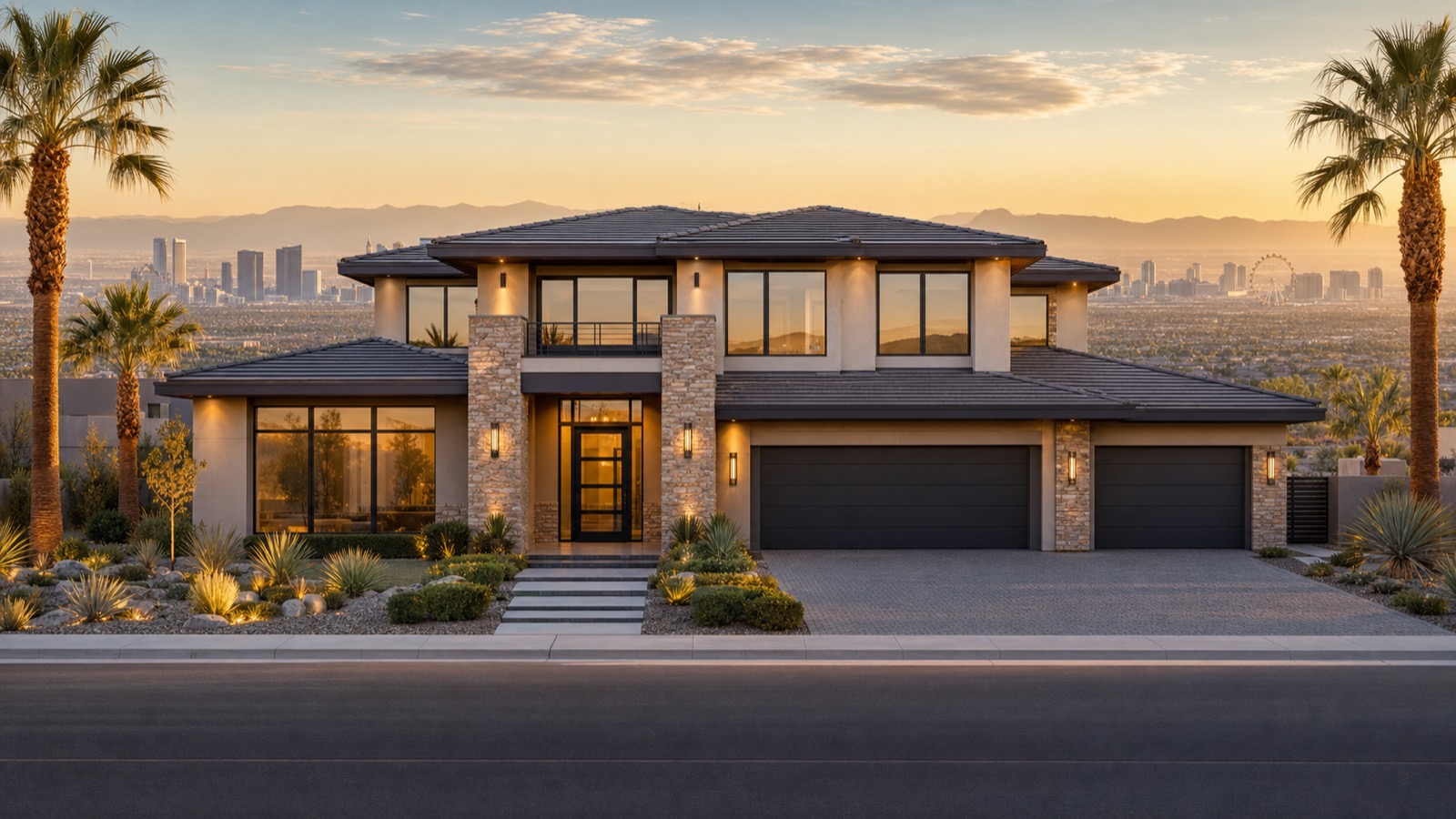
Let us start with the number that drives most buyer decisions. According to Las Vegas REALTORS (LVR/GLVAR), the median existing-home sale price across the greater Las Vegas Valley reached approximately $465,000 in mid-2026. Within Summerlin specifically, that median rises to approximately $625,000 -- a premium of roughly $160,000 for the master-planned lifestyle, top schools, and Red Rock Canyon access that define the community.
The gap widens significantly as you move into Summerlin's luxury villages. In Summerlin South neighborhoods like The Ridges, The Cliffs, and Reverence, medians routinely run $800,000 to well above $1.5 million. In Summerlin North villages like The Arbors, The Trails, and Peccole Ranch, you can find entry-level properties in the $480,000 to $550,000 range -- still a meaningful premium over the valley median, but more accessible for move-up buyers.
Las Vegas, by contrast, offers the widest price range in the metro. You can find condos in the Arts District and Downtown corridor from $220,000, non-HOA ranch homes in the Southwest from $350,000, and luxury guard-gated estates in MacDonald Highlands and Tournament Hills above $3 million. The diversity of price tiers is one of Las Vegas's most important advantages for buyers whose budget sits below $500,000.
| Factor | Las Vegas (Broader Metro) | Summerlin |
|---|---|---|
| Median home price | approximately $465,000 | approximately $625,000 |
| Entry-level single-family | $330,000 to $380,000 | $480,000 to $540,000 |
| Luxury tier (top 10%) | $900,000-plus (varies by submarket) | $1,500,000-plus in premier villages |
| HOA fees | $0 to $200 per month (many non-HOA pockets) | $55 to $250-plus per month (master + sub-association) |
| School quality (GreatSchools avg) | 4 to 7 out of 10 (varies by zip) | 7 to 9 out of 10 |
| Safety index | Varies widely by neighborhood | Consistently above average for Clark County |
| Trail access | Limited within city; Red Rock is 30-plus minutes | 200-plus miles of trails; Red Rock 10 minutes |
| Drive to Strip | 5 to 20 minutes (location-dependent) | 15 to 25 minutes from most villages |
| New construction activity | Active across metro (NW, SW corridors) | Active in Summerlin West (Redpoint, Kestrel villages) |
| Property tax rate (approx) | approximately 3.28% of assessed value | approximately 3.05% of assessed value |
For renters, the premium is proportional. A two-bedroom apartment in the Las Vegas Valley rents for approximately $1,550 to $1,800 per month depending on location. The same unit in Summerlin commands $1,900 to $2,300. If you are renting while evaluating the market, the monthly cost difference can be meaningful -- roughly $400 per month more for the Summerlin zip code.
How Do Schools Compare Between Las Vegas and Summerlin?
Education is the single most consistent driver we see pushing buyers toward Summerlin from other Las Vegas submarkets. According to Clark County School District performance data, Summerlin feeds into some of the highest-rated CCSD campuses in the valley -- a direct result of the master plan's deliberate investment in school facilities from the community's founding in the early 1990s. Families evaluating specific school catchment zones can search active listings by school district on our home search tool.
Summerlin public schools regularly earn 7 to 9 out of 10 ratings on GreatSchools. Palo Verde High School, Sig Rogich Middle School, and Bonita Elementary are perennial standouts with high state performance framework ratings. The community's demographic profile -- higher household incomes, strong parent engagement, newer school buildings -- compounds the quality advantage.
Across the broader Las Vegas Valley, schools vary enormously from zip code to zip code. The northwest and southwest corridors near Summerlin's boundary offer schools in the 6-to-8 range. Central and east Las Vegas neighborhoods often score 3 to 5. If you are buying in Las Vegas proper and schools matter to you, the specific school zone matters far more than the city boundary.
Summerlin also has exceptional access to private schools. The Bishop Gorman campus, Faith Lutheran, and several Montessori and charter options are concentrated in the western valley. For families that intend to use private education regardless of the public school quality, the Summerlin premium for schools is partially offset -- though the community still wins on trail access, safety, and master-plan amenity quality.
How Does Safety Compare in Las Vegas vs Summerlin?
According to the Las Vegas Metropolitan Police Department, Summerlin's area command consistently reports among the lowest violent crime rates in the valley. The community's design -- walled perimeters, limited entry points, master-planned street layouts that discourage cut-through traffic -- creates structural barriers to random crime that older Las Vegas neighborhoods cannot replicate.
The cost-of-crime-per-resident metric for Summerlin sits between $128 and $159, well below the broader Las Vegas average. For violent crime specifically, Summerlin runs 50% to 60% below the citywide rate. Property crime, including retail theft at the Downtown Summerlin shopping corridor, has trended modestly upward since 2024 -- but remains below the valley average for commercial districts.
Las Vegas proper spans a wide safety spectrum. The Northwest corridor, Providence, and Skye Canyon -- all technically within Las Vegas city limits -- deliver safety statistics that rival Summerlin at meaningfully lower price points. The central Strip corridor, Fremont Street area, and east Las Vegas have higher crime concentrations driven by transient populations and 24/7 commercial activity. For buyers prioritizing safety above all, Summerlin wins on raw statistics. For buyers willing to be selective about sub-neighborhood within Las Vegas, comparable safety is achievable at lower cost.
What Amenities Does Summerlin Offer That Las Vegas Doesn't?
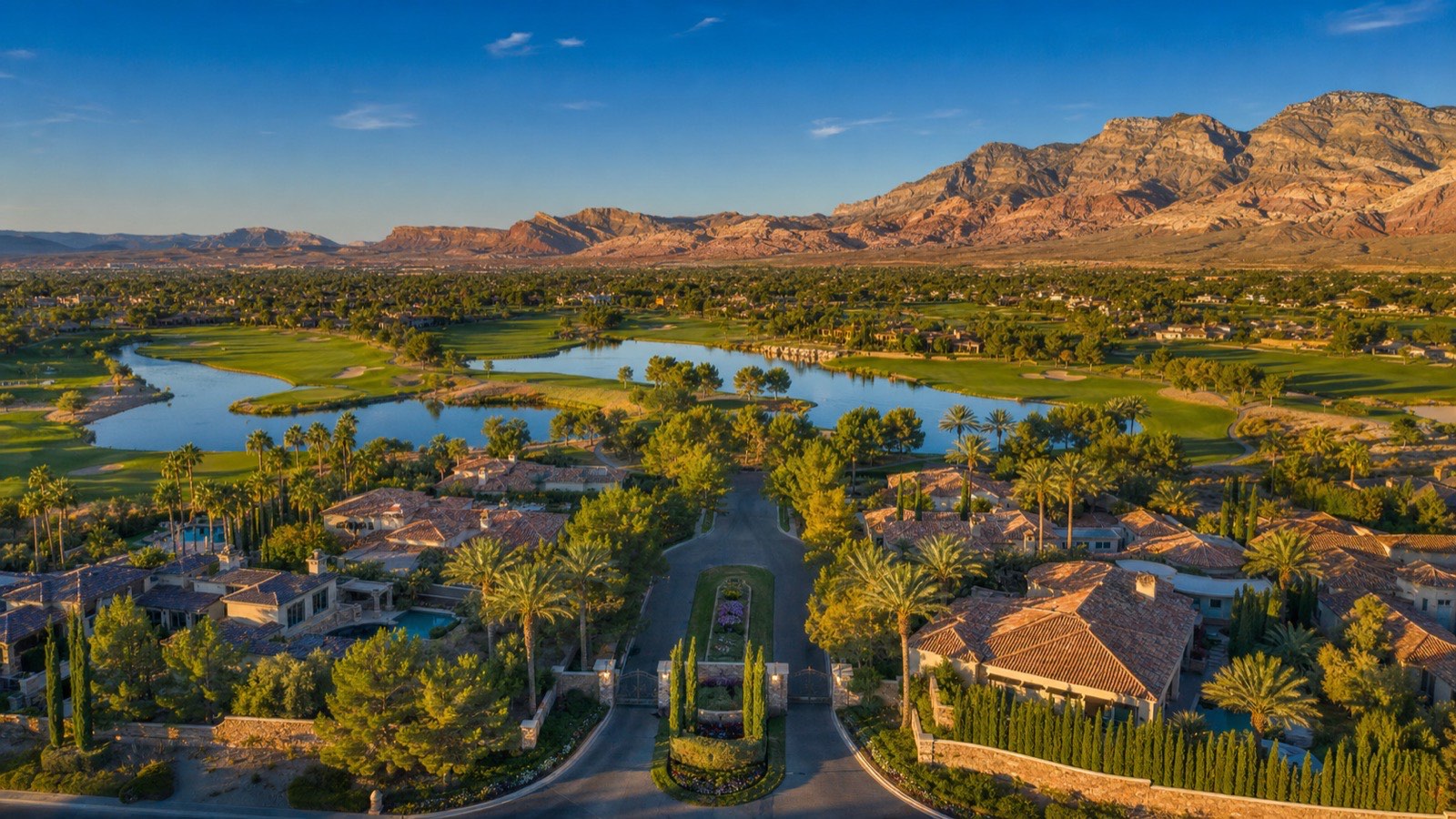
The amenity gap between Summerlin and the rest of the Las Vegas Valley is substantial and, for many buyers, the decisive factor. According to Howard Hughes Corporation, which develops and manages Summerlin's master plan, the community encompasses over 22,500 acres, 26 distinct villages, 9 golf courses, 200-plus miles of interconnected trails, and more than 260 parks.
Outdoor access is Summerlin's defining advantage. The Summerlin Trail System connects residential neighborhoods to Red Rock Canyon National Conservation Area, one of the most visited outdoor recreation sites in the American West. Residents can step out their front door and be on a desert trail within 5 to 10 minutes. The distance from most Las Vegas neighborhoods to that same trailhead is 25 to 40 minutes by car.
Downtown Summerlin is the community's commercial anchor -- a 1.6 million-square-foot open-air retail and dining destination anchored by Macy's, REI, and more than 125 restaurant and retail tenants. For day-to-day errands and dining, it functions as a walkable town center. Las Vegas's equivalent amenity base is more dispersed and less pedestrian-friendly, though the city's diversity of ethnic restaurants, independent food halls, and Chinatown corridor is unmatched by Summerlin's curated retail mix.
Sports infrastructure tilts toward Summerlin for golf and tennis. Nine championship courses -- including TPC Las Vegas, Bear's Best, and The Club at Sunrise -- sit within the master plan. The broader valley has more casino-anchored entertainment venues, but fewer integrated outdoor recreation amenities. Buyers relocating from out of state and looking for a softer landing should also browse our moving to Las Vegas resource for the full relocation checklist.
How Does Summerlin Differ From the Rest of Las Vegas?
Summerlin is technically part of the City of Las Vegas and relies on LVMPD for police services and CCSD for public schools. But functionally, it operates as its own enclave -- and this distinction matters for buyers.
The Summerlin Council governs the master plan's design standards, trail systems, parks, and common areas. Every home must conform to architectural guidelines. Landscaping, exterior colors, fence heights, signage, and even the type of vehicles visible from the street are regulated. This is the source of Summerlin's famously uniform aesthetic -- every village feels curated and consistent, which most residents love and some buyers find restrictive.
Las Vegas proper has fewer design restrictions. You can park an RV in the driveway, convert a garage to a workshop, operate a licensed home-based business, or paint your exterior a bold color without HOA approval. The architectural variety of Las Vegas -- from 1960s ranch homes to 1990s stucco subdivisions to modern new construction -- reflects decades of less-governed growth.
The other structural difference is density and layout. Las Vegas is a grid city: wide arterial streets, commercial uses mixed throughout residential areas, and commercial corridors every mile or so. Summerlin's village layout concentrates commercial uses at key nodes and routes residential traffic through internal streets that do not connect to major arterials. The result is dramatically less through-traffic in Summerlin neighborhoods -- a quality-of-life difference that is hard to quantify but universally noticed.
Which Is Better for Families: Las Vegas or Summerlin?
Summerlin wins for most families with school-age children who can absorb the premium. The combination of 7-to-9-rated CCSD schools, lower crime rates, 200-plus miles of trails, and the predictable consistency of master-planned neighborhoods makes the western Las Vegas corridor one of the top-ranked family environments in the American West. According to the U.S. Census Bureau, median household income in Summerlin zip codes runs $85,000 to $110,000 -- reflecting a stable, professional demographic that contributes to school quality and community engagement.
For families with budgets under $530,000, Las Vegas offers compelling alternatives. The Providence and Skye Canyon developments in the Northwest -- both technically within Las Vegas city limits -- deliver master-planned family amenities, new construction, and schools that rank 6 to 7 on GreatSchools at entry prices $80,000 to $100,000 below Summerlin. Henderson is the third option many of our family-buyer clients discover mid-search: master-planned, safe, and excellent schools at a median price of approximately $520,000.
For families prioritizing outdoor recreation specifically, Summerlin is unmatched in the valley. No other Las Vegas submarket puts 200-plus miles of trails and National Conservation Area access within a 10-minute walk of residential streets.
Which Is Better for Luxury Buyers: Las Vegas or Summerlin?
Summerlin is the clear winner for luxury buyers who want master-planned security, trail access, and a curated community environment. The community's luxury tier -- The Ridges, Reverence, The Cliffs, and the guard-gated communities in Summerlin South -- represents some of the most consistent high-end residential real estate in Southern Nevada. Homes in The Ridges range from $1.2 million to $10 million-plus, with custom builds that rival any community in Nevada.
Las Vegas proper offers a different luxury profile. MacDonald Highlands, Tournament Hills, and the Queensridge community deliver ultra-luxury at competitive price points, but within Las Vegas city limits rather than the Summerlin master plan. The Strip-adjacent luxury condo market -- Veer Towers, The Martin, Waldorf Astoria Residences -- has no parallel in Summerlin and attracts a completely different buyer: typically an investor, part-time resident, or buyer prioritizing entertainment access over community living.
For luxury buyers who entertain frequently, work in the hospitality industry, or want to be close to the Strip's cultural infrastructure, Las Vegas luxury condos offer an urban lifestyle that Summerlin cannot match. For luxury buyers raising families or seeking outdoor recreation alongside a high-end residential experience, Summerlin is Southern Nevada's premier address.
Which Is Better for First-Time Buyers: Las Vegas or Summerlin?
Las Vegas is the better starting point for most first-time buyers. According to the National Association of REALTORS, first-time buyers purchase below the local median more than 60% of the time -- and the Las Vegas sub-$400,000 inventory is meaningfully broader than Summerlin's. The community's entry-level floor sits at approximately $480,000, which exceeds many first-timers' pre-approval limits in the current rate environment.
The Nevada Housing Division offers several first-time buyer programs under Nevada Revised Statutes Chapter 319, including the Home Is Possible grant and reduced-interest FHA and conventional programs. These programs are available across Clark County, but the lower Las Vegas price points stretch the assistance dollars further. A $20,000 downpayment assistance grant covers a larger percentage of the purchase price on a $380,000 Las Vegas home than on a $530,000 Summerlin entry. Our first-time buyer guide walks through every current Nevada program with income limits and credit score requirements.
That said, first-time buyers whose budgets have stretch room above $500,000 should look at Summerlin North's older villages. The Arbors, Peccole Ranch, and portions of The Trails offer resale homes from $490,000 to $580,000 with full master-plan trail and park access -- a meaningful lifestyle upgrade versus a similarly-priced Las Vegas home in a non-planned neighborhood. First-timers who need more room to stretch should also explore new construction communities across the valley, where builder incentives can bring effective acquisition costs closer to $380,000 to $430,000 with rate buydowns included.
Is the Summerlin Premium Worth It?
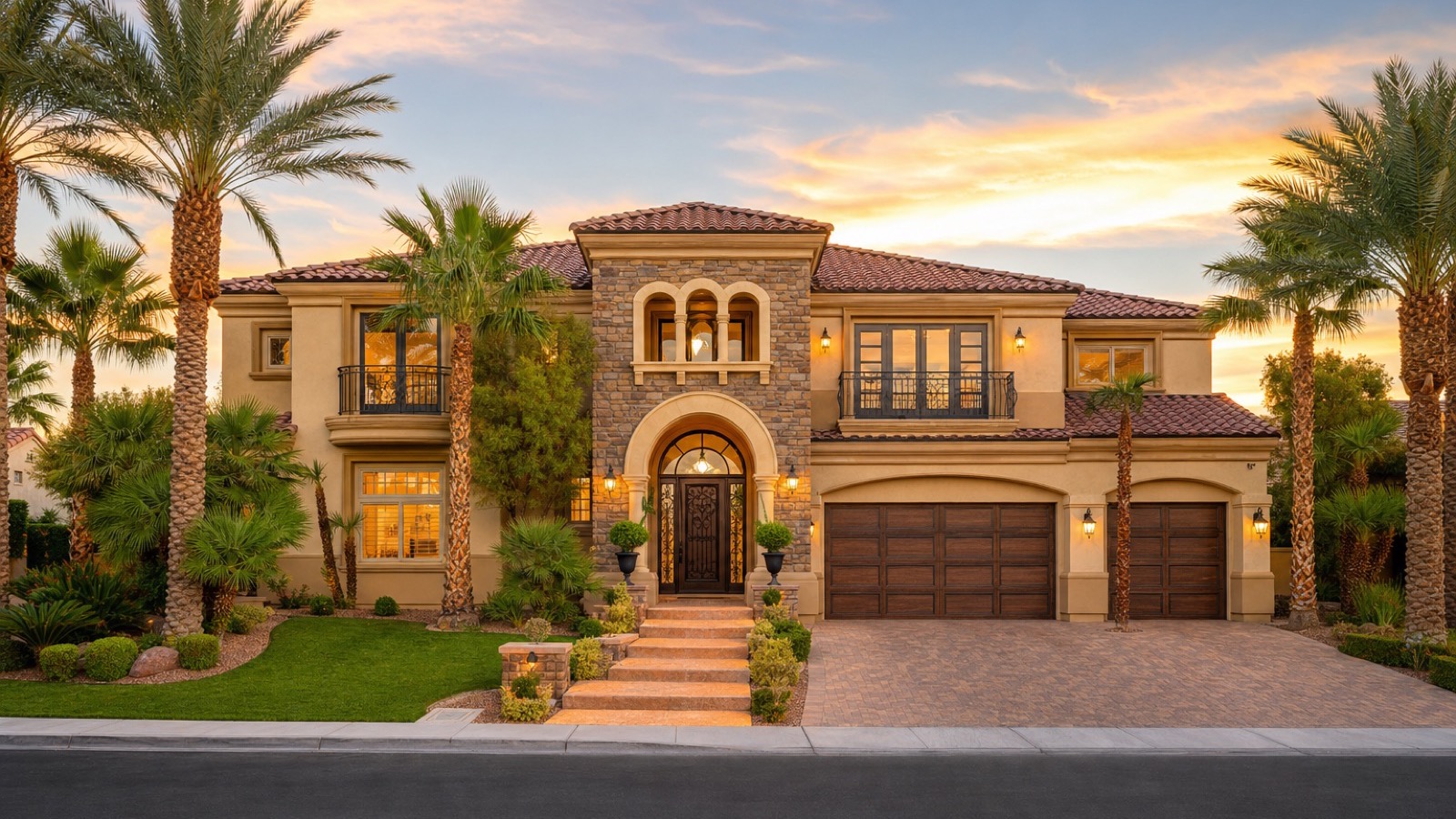
This is the real question behind every Las Vegas vs Summerlin conversation. In our experience across thousands of Southern Nevada closings, the Summerlin premium pays off clearly in three scenarios:
Scenario 1 -- Families with school-age children: The school quality differential translates directly into home values. According to the Federal Housing Finance Agency, Las Vegas metro home prices have appreciated at roughly 6% annually on a 10-year compounded basis. Within that, master-planned family communities -- Summerlin, Henderson, Green Valley Ranch -- consistently outperform the valley average at resale because the family buyer pool is large and the supply of new homes is finite.
Scenario 2 -- Outdoor recreation priority buyers: You cannot replicate the Red Rock Canyon access that Summerlin delivers from any other Las Vegas neighborhood at any price. For buyers who hike, cycle, or run regularly, the $160,000 premium is effectively purchasing proximity to a National Conservation Area that 3 million people visit annually.
Scenario 3 -- Long-hold investors targeting resale to families: Summerlin's tightly governed design standards preserve neighborhood consistency over decades. Older HOA-governed communities elsewhere in Las Vegas drift as design standards relax or enforcement weakens. Summerlin's governing structure -- the Summerlin Council backed by Howard Hughes Corporation's development standards -- is structurally more durable.
The premium does NOT pay off when your primary goal is cash-flow investing (lower entry price in Las Vegas produces better gross rent yields), when you value architectural variety or non-HOA freedom, or when your budget does not comfortably clear $550,000 without stretching your DTI ratio.
What Does the Las Vegas (Broader Metro) Lifestyle Actually Look Like?
Las Vegas is often reduced to the Strip in media coverage, but the residential experience for the 1.3 million people who actually live here is fundamentally suburban. According to the City of Las Vegas, the metro's cultural infrastructure -- world-class dining, major arena events, the Las Vegas Arts District, Formula One circuit, and of course the Strip itself -- is the most concentrated entertainment ecosystem in the American West.
The practical daily reality for Las Vegas residents is: suburban streets, backyard pools, a drive to work, a remarkable variety of dining within 20 minutes, and proximity to a global entertainment corridor that most cities in the world cannot approach. You are not living in a casino. You are living in a desert suburb that happens to have the best restaurant selection west of Los Angeles and the largest concentration of sports venues in Nevada.
Las Vegas's neighborhood diversity is also an asset that Summerlin cannot match. Chinatown on Spring Mountain Road offers one of the most authentic Asian food corridors in the Mountain West. The Arts District near Downtown is a walkable urban village with galleries, coffee shops, and independent retailers. The Southwest valley near Warm Springs has large, non-HOA homes with mature trees and minimal through-traffic. This variety -- of architecture, culture, price, and lifestyle -- is the defining advantage of choosing the broader Las Vegas market over Summerlin's curated consistency.
How Do HOA Fees and Community Rules Differ?
One of the most important financial considerations that buyers often underestimate is the HOA structure. In Summerlin, HOA fees are virtually universal and typically come in two layers.
The Summerlin Council master association fee runs approximately $74 per month in Summerlin North and $76 per month in Summerlin South. This covers the major parks, trail maintenance, community events, and the overarching design standards enforcement. On top of this, buyers pay a sub-association fee for their specific village or gated neighborhood, which ranges from $55 to $180 per month depending on amenities.
When combined, Summerlin buyers are often paying $150 to $250 per month in HOA fees before their mortgage. In some newer construction villages or guard-gated enclaves, that figure can reach $400 to $500 per month. Additionally, many newer Summerlin communities carry LIDs (Local Improvement Districts) or SIDs (Special Improvement Districts) -- infrastructure assessments that can add $50 to $100 per month until the district balance is paid off.
Las Vegas has many pockets with zero HOA fees. Established neighborhoods in the Southwest, Northwest, and valley floor that were built before the master-plan era typically have no HOA at all. For buyers who value freedom from architectural controls and want to avoid the monthly overhead, Las Vegas's non-HOA inventory is a meaningful financial and lifestyle advantage.
| Community Type | Las Vegas (Broader Metro) | Summerlin |
|---|---|---|
| Non-HOA established neighborhood | $0 per month (common in SW and NW zones) | Essentially unavailable |
| Standard subdivision HOA | $50 to $150 per month | $130 to $255 per month (master + sub) |
| Guard-gated community | $150 to $300 per month | $250 to $450 per month |
| Ultra-luxury (custom estates) | $200 to $500 per month | $400 to $600-plus per month |
| LID/SID infrastructure assessments | Common in newer NW construction (Skye Canyon, Providence) | Common in Summerlin West new construction |
According to the Nevada Department of Taxation, both Las Vegas and Summerlin sit within Clark County's property tax cap framework. Neither exceeds the state-mandated $3.64 per $100 of assessed value ceiling. The base property tax rate difference is modest -- approximately 3.28% in Las Vegas versus 3.05% in Summerlin -- but the HOA fee differential is often the more impactful number in a month-to-month budget comparison. For buyers weighing luxury options specifically, our luxury communities page covers the full guard-gated and custom estate inventory across the valley.
Where Do NREG Clients Typically Land in This Decision?
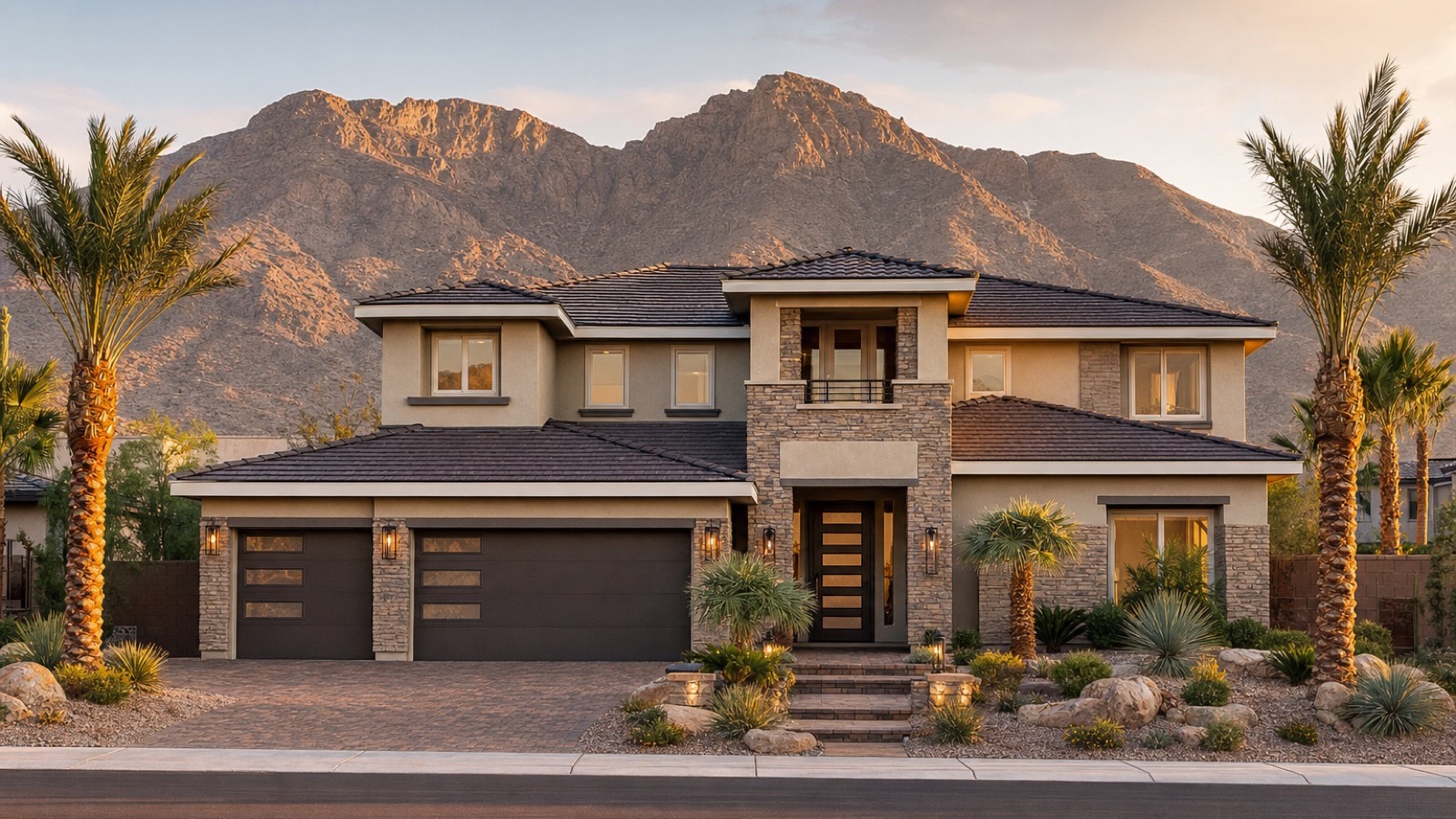
Across the 9,600-plus closings Nevada Real Estate Group has represented in Clark County, we have seen clear patterns emerge in who chooses Summerlin versus the broader Las Vegas market.
Summerlin buyers tend to share these characteristics: they have children in elementary or middle school, their budget comfortably clears $570,000, they hike or cycle regularly and want that trail access built into their daily routine, and they are willing to trade some price efficiency for the consistency of master-planned living. Many are relocating from California -- particularly the Bay Area or Los Angeles -- where a master-planned suburban environment at $625,000 is dramatically cheaper than their previous home market. For sellers on the Summerlin side making a move, our sellers resource walks through how to price and position a home in this premium submarket.
Las Vegas buyers (outside Summerlin) tend to prioritize different factors: maximizing square footage per dollar, avoiding HOA fees and design restrictions, investing in cash-flow rental properties, or choosing a location closer to the Strip for work or entertainment. We also see significant demand from buyers who specifically want the architectural variety and neighborhood character that a non-master-planned area provides. Many budget-focused families also explore North Las Vegas, where new construction from Lennar, KB Home, and D.R. Horton brings master-plan amenities at entry prices $100,000 to $150,000 below Summerlin.
The third option -- one we surface for buyers who feel genuinely torn -- is Henderson. Henderson delivers master-planned safety and school quality at a median price of approximately $520,000 -- between the Las Vegas median and the Summerlin median -- and is the city most comparable to Summerlin in terms of community governance and family-friendly infrastructure. Read our full comparison in our Las Vegas vs Henderson guide for the side-by-side details.
| Buyer Profile | Better Choice | Primary Reason |
|---|---|---|
| Families with school-age children, budget above $570,000 | Summerlin | 7-to-9-rated schools, lower crime, 200-plus miles of trails |
| First-time buyers under $430,000 | Las Vegas | Broader sub-$400,000 inventory, more non-HOA options |
| Outdoor recreation priority buyers | Summerlin | Red Rock Canyon 10 minutes; 200-plus trail miles on doorstep |
| Strip and Downtown workers | Las Vegas | 5 to 20-minute commute vs 15 to 25-minute commute from Summerlin |
| Cash-flow investors | Las Vegas | Lower entry price, stronger gross rent yield on sub-$450,000 assets |
| Long-term appreciation investors | Summerlin | Tighter supply, governed design standards, strong family resale demand |
| Buyers who want no HOA | Las Vegas | Established SW and NW neighborhoods with $0/month HOA widely available |
| Remote workers valuing lifestyle | Summerlin preferred | Trail-to-desk lifestyle; Downtown Summerlin walkable retail and dining hub |
For a deeper look at how Summerlin's specific villages compare to each other, our guide to living in Summerlin breaks down the 26 villages by price tier, school zone, trail access, and commute profile.
If your priority is finding the best neighborhood within the broader Las Vegas market specifically, our best neighborhoods in Las Vegas guide covers the top submarkets across safety, schools, price, and lifestyle.
There is no universally correct answer to the Las Vegas vs Summerlin question. We have helped buyers from the same family choose both -- a couple buying their primary home chose Summerlin for the trails and school zone while their adult child bought in Las Vegas's Southwest for the price point and investment potential. Call (702) 637-1759 and we will model both scenarios against your specific numbers.
Frequently Asked Questions About Las Vegas vs Summerlin
Is Summerlin more expensive than Las Vegas?
Yes, significantly. The Summerlin median home price runs approximately $625,000 in mid-2026 -- about $160,000 above the Las Vegas Valley median of $465,000. Entry-level homes in Summerlin start around $480,000 to $540,000, while comparable Las Vegas homes are available from $330,000 to $380,000. Renters pay roughly $400 more per month for a standard two-bedroom in a Summerlin zip code versus a similar unit elsewhere in the valley.
Is Summerlin technically part of Las Vegas?
Yes. The majority of Summerlin lies within the incorporated City of Las Vegas and receives Las Vegas police and fire services. However, because the community is governed by the Summerlin Council -- a master homeowners association that enforces design standards, maintains trails and parks, and oversees community character -- it functions operationally like a separate municipality. The governance layer, not the city boundary, is what makes Summerlin distinct.
How far is Summerlin from the Las Vegas Strip?
Most Summerlin residents are 15 to 25 minutes from the Strip via Summerlin Parkway or US-95. The eastern villages in Summerlin North (The Trails, Peccole Ranch) are closest at roughly 15 minutes. The newest western villages in Summerlin West -- where active new construction by Toll Brothers, Woodside Homes, and Taylor Morrison is underway -- can push that commute to 25 to 35 minutes depending on traffic.
Do I have to pay two HOA fees in Summerlin?
Almost always, yes. The Summerlin Council master fee runs approximately $74 to $76 per month (Summerlin North vs South). Your village or neighborhood sub-association adds $55 to $180 more per month. In guard-gated villages or newer construction communities, combined fees can reach $400 to $500 per month. Always confirm the full HOA load -- including any outstanding LID/SID balances -- before finalizing an offer.
Which area is better for investment properties?
Las Vegas delivers better gross rental yields. The lower median purchase price ($465,000 vs $625,000) combined with similar rental demand from the valley's 1.1 million-plus workforce produces meaningfully better cap rates on entry-level investment properties. According to Bureau of Labor Statistics data, the Las Vegas-Henderson metro workforce is broadly distributed across hospitality, healthcare, logistics, and technology -- creating strong and diversified tenant demand across all Las Vegas price tiers. Summerlin investments perform better on long-term appreciation and are easier to rent to family tenants, but the gross yield is typically lower due to the higher entry price.
Is Summerlin safer than the rest of Las Vegas?
Statistically, yes. According to LVMPD area command data, Summerlin's violent crime rate runs 50% to 60% below the Las Vegas citywide average. Property crime -- particularly retail theft near Downtown Summerlin -- has increased modestly since 2024 but remains below the valley average for commercial corridors. The structural design of the community (limited access points, walled neighborhoods, low through-traffic) creates passive safety advantages that go beyond raw statistics.
What new construction is available in Summerlin right now?
Summerlin West is the active new construction frontier as of mid-2026. The Redpoint and Kestrel villages are both receiving significant builder activity, with Toll Brothers, Woodside Homes, Taylor Morrison, and Tri Pointe Homes all building in the $650,000 to $1.5 million range. The Summerlin master plan was designed to accommodate growth to approximately 100,000 households at full build-out; roughly 80,000 units have been delivered, meaning new construction will continue for another 15 to 20 years in the western villages.
Which Sources Inform This Las Vegas vs Summerlin Guide?
All data in this guide draws from public agency records, professional REALTOR association reports, and government statistical sources. No competitor listing portals were referenced.
- Las Vegas REALTORS (LVR/GLVAR) -- Market Statistics Reports
- U.S. Census Bureau -- Clark County QuickFacts
- Clark County School District -- School Performance Data
- Howard Hughes Corporation -- Summerlin Master Plan
- City of Las Vegas -- Official City Portal
- Clark County Official Portal
- Nevada Department of Taxation -- Property Tax Rates
- Bureau of Labor Statistics -- Las Vegas-Henderson Metro Employment
- Federal Housing Finance Agency -- Home Price Index
- National Association of REALTORS -- Buyer Research
- Las Vegas Metropolitan Police Department -- Crime Statistics
Market data reflects MLS statistics and public records as of mid-2026. Individual community conditions vary. Contact Nevada Real Estate Group for a personalized analysis. Nevada Real Estate Group · Chris Nevada · License S.181401 · (702) 637-1759 · 8945 W Russell Rd, Suite 170, Las Vegas, NV 89148.