 6/10
6/10John C. Fremont Elementary
Zoned · CCSD (5 min)
K-5700 Students19:1
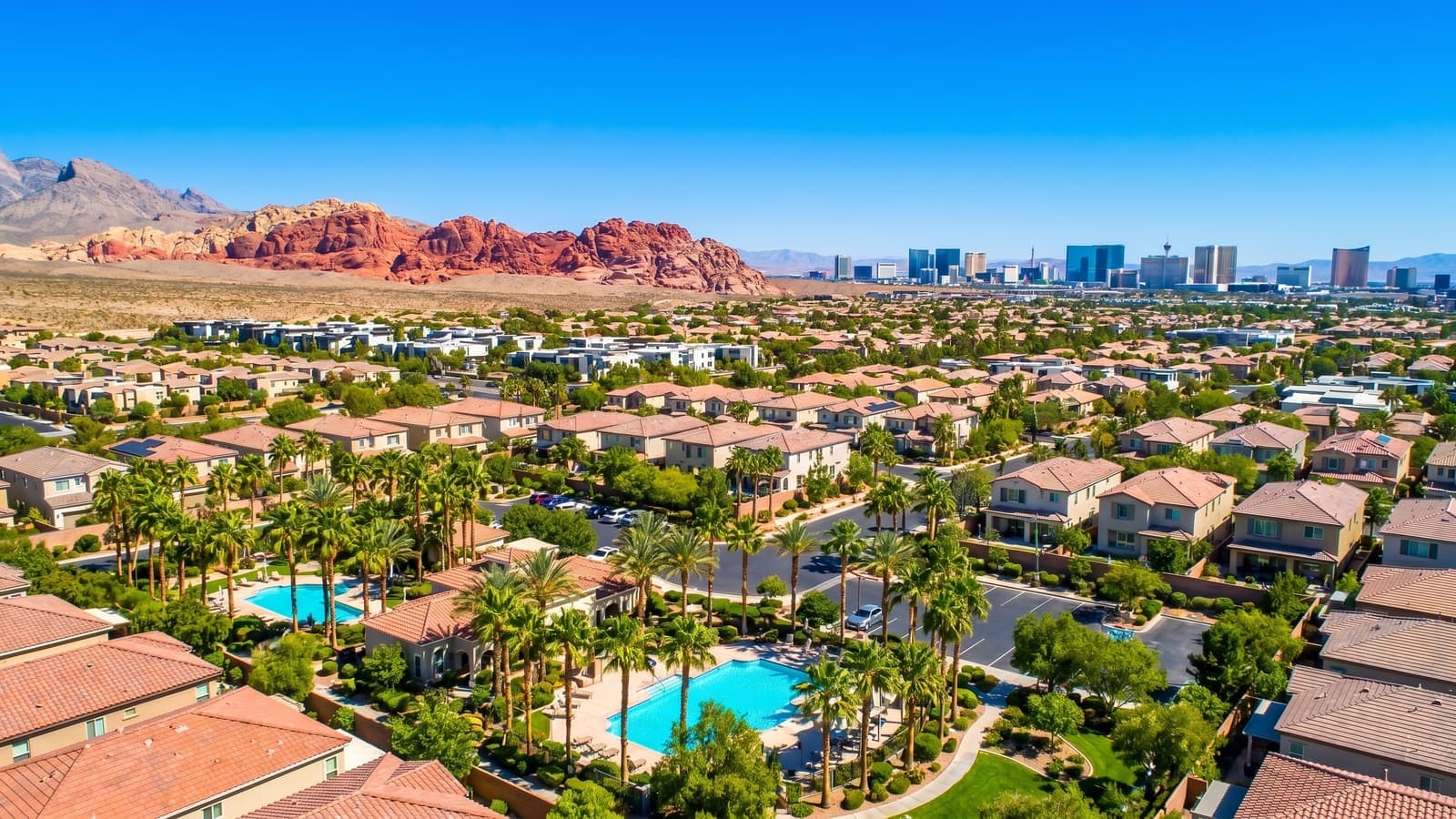
Nevada's #1 team for Valley View Las Vegas real estate. Search established single-family homes in the Valley View Boulevard corridor — central location near the Strip, Chinatown, and I-15 at first-time-buyer and investor prices.
CORRIDOR MEDIAN SALE (89102/89103)
$400K
LVR / GLVAR, June 2026
COMMUNITY PRICE RANGE
$300K–$550K
Community plan record
HOMES IN THE COMMUNITY
800+
Community plan record
DAYS ON MARKET (CORRIDOR)
42
LVR / GLVAR sold data, June 2026

Data reviewed by
NREG Research Team
All statistics verified against primary sources (LVR, U.S. Census, FBI, BLS)
Last updated
June 2026
Reviewed monthly · Next review July 2026
KEY TAKEAWAYS
Valley View Las Vegas pairs 800+ established single-family homes priced $300K–$550K along the Valley View Boulevard corridor (ZIPs 89102/89103) with a median near $400,000 per Las Vegas REALTORS, 42 median days on market, and Las Vegas city demographics per the U.S. Census. The takeaways below unpack the neighborhood's central-LV value case.
Last updated June 2026 · Sources: LVR, U.S. Census, City of Las Vegas
The Valley View Las Vegas ZIP corridor — 89102 and 89103 — carries active listings refreshed daily from Las Vegas REALTORS MLS data. The eight newest area listings appear below, and every active home is searchable in our live Las Vegas MLS portal filtered by price, beds, and ZIP.
PRICE DISTRIBUTION
Valley View Las Vegas homes trade across a $300K–$550K corridor per Las Vegas REALTORS MLS data, with condition and location within the neighborhood driving the spread. The counts below show where buyer competition concentrates — and where value is hidden for prepared buyers.
The Valley View Las Vegas corridor breaks down by condition tier, price band, and buyer type — each link opens our live Las Vegas MLS search pre-filtered by price, beds, and ZIP, with counts updated daily from Las Vegas REALTORS MLS data. Entry-tier homes open from $300K; updated premium single-family residences reach $550K.
Valley View Las Vegas covers the Valley View Boulevard corridor across ZIPs 89102 and 89103. The table below maps the submarket by buyer type and price band.
Updated daily · 800 active listings · MLS data
STAY AHEAD OF THE MARKET
Custom alerts by price, beds, and ZIP — no spam, unsubscribe anytime. The Valley View corridor moves at 42 median days, but well-priced renovated homes and investor-grade rentals can go under contract in under two weeks. Alert subscribers see new listings within hours of hitting the MLS.
Schools are the main trade-off of a Valley View Las Vegas address: CCSD-zoned campuses rate 5–6/10 per GreatSchools — below suburban norms — but private options including Bishop Gorman High School (A+) and The Meadows School (A+) are within 15 minutes. The cards below map realistic school options by level.
6/10 9/10
9/10 8/10
8/10 8/10
8/10Campus photos are representative imagery — school names, ratings, and enrollment data refer to the actual schools listed.
According to GreatSchools.org, Valley View Las Vegas families find zoned CCSD campuses rating 5–6/10 — below suburban norms. The private tier raises the ceiling significantly: Bishop Gorman High School (A+) and The Meadows School (A+) are each within 15 minutes. Ratings cross-checked against the Nevada Report Card, with the ranked table below.
| Rank | School | Type | Grades | GreatSchools | Neighborhood | Homes Near |
|---|---|---|---|---|---|---|
| 1 | Bishop Gorman HS | Private | 9-12 | A+ | Summerlin South · 15 min | $300,000+ |
| 2 | The Meadows School | Private | PreK-12 | A+ | West side · 15 min | $300,000+ |
| 3 | Coral Academy of Science | Public charter | K-12 | 8/10 | Multiple campuses · 15 min | $300,000+ |
| 4 | Nevada State High School | Public charter | 9-12 | 7/10 | Central LV · 10 min | $300,000+ |
| 5 | John C. Fremont ES | Public (zoned) | K-5 | 6/10 | Central LV · 5 min | $300,000+ |
SAFETY & CRIME
Safety varies by block. Valley View Las Vegas is an open, central-LV neighborhood under LVMPD jurisdiction — residential streets are quieter than the commercial corridors on Sahara and Desert Inn. Property crime runs above suburban averages but is consistent with any urban core. Benchmark using FBI Uniform Crime Reporting data street by street before writing an offer.
Valley View Las Vegas is an open neighborhood — no gate, no controlled access — in the urban core of Las Vegas. Like any central-city address, safety varies meaningfully from block to block: owner-occupied residential streets in the interior of the community see far fewer incidents than the Sahara Avenue or Desert Inn Road commercial frontage corridors.
Property crime — package theft, vehicle break-ins, and vandalism — runs above what buyers find in Summerlin or Henderson suburbia, consistent with central-LV density and renter-mix concentration. Violent crime in the residential grid stays below the citywide index in the owner-heavy blocks. Use FBI UCR-based tools to pull the specific addresses you're considering before any offer.
For buyers and investors, the practical picture is nuanced rather than uniformly risky. Many Valley View streets are quiet and owner-dominated. The investment case here is about proximity yield, not gated security — buyers prioritizing the latter should explore guard-gated options while buyers prioritizing value and central access will find Valley View competitive.
Sources: FBI Uniform Crime Reporting (latest available data), City of Las Vegas. LVMPD coverage area. Last updated June 2026.
Living in Valley View means mature tree-lined streets, a walkable grid, and genuine urban convenience — the Strip, Chinatown, Downtown Las Vegas, and the medical corridor are each 15 minutes away. City services run through the City of Las Vegas, with CCSD zoning covering public schools and no guard gate keeping entry accessible.
Valley View Las Vegas is known for its affordability within central Las Vegas — 800+ single-family homes at $300K–$550K, mature lots from 1970s construction, and walkable proximity to Chinatown, the Strip, and I-15.
First-time buyers who want a detached home without a suburban commute, resort and medical workers who need central proximity, and investors seeking single-family rentals near durable Strip-corridor employment.
Morning walks on established sidewalks through a quiet residential grid, errands at nearby Chinatown and Sahara Avenue commercial corridors, and evenings 15 minutes from the Strip or Downtown Las Vegas arts and dining scene.
Valley View Las Vegas occupies the Valley View Boulevard corridor in central Las Vegas — roughly between Sahara Avenue to the north, Desert Inn Road to the south, Decatur Boulevard to the west, and I-15 to the east. About 120 acres across ZIPs 89102 and 89103.
LIVABILITY REPORT CARD
Valley View Las Vegas earns top marks for central access and value, with honest trade-offs on school ratings and block-level safety variation. Below is our category-by-category report card — the same six factors our agents walk through with every buyer considering a central LV neighborhood before the first tour.
City of Las Vegas LVMPD coverage; safety varies by block — benchmark with FBI UCR data before writing. Residential blocks quieter than commercial corridors.
CCSD zoned campuses rate 5–6/10 per GreatSchools; private alternatives (Bishop Gorman, The Meadows) within 15 minutes raise the ceiling significantly.
Detached single-family homes $300K–$550K, 15 minutes from the Strip — one of the best cost-per-proximity ratios in Las Vegas.
I-15 and Valley View Boulevard both nearby; Strip, Downtown, Chinatown, and the medical corridor all 5–15 minutes away.
Lorenzi Park and neighborhood parks nearby; Chinatown dining and Sahara Ave retail corridor immediately adjacent; full strip-access amenities 15 minutes east.
Strong investor fundamentals: single-family rentals $1,500–$2,200/mo, sustained by Strip and medical-corridor employment year-round.
Source: Compiled from GreatSchools.org, FBI UCR, BLS, and Walk Score. Methodology: 6 weighted categories on a 4.0-equivalent scale. Last refreshed June 2026.
Quick Answer
Yes — if central proximity and value top your list. Valley View Las Vegas delivers a detached single-family home at $300K–$550K fifteen minutes from the Strip, five minutes from Chinatown, and within 20 minutes of Harry Reid Airport. The honest trade-offs are school ratings below the suburban average, block-level safety variation, and 1970s-era homes that need careful condition diligence. For buyers who want an urban address at an accessible price point — or investors targeting reliable Strip-corridor rental demand — few central Las Vegas neighborhoods match the value.
Source: City of Las Vegas
According to the U.S. Census Bureau QuickFacts for Las Vegas — the city that contains Valley View — the parent city holds 656,274 residents with a median household income of $66,820. Within the Valley View corridor, community records show approximately 2,400 residents across 800+ households, median age 38, average household income near $65,000+, and 55% homeownership.
The Census does not break the corridor out as its own place, so citywide figures serve as the statistical backdrop — presented honestly as exactly that. Within Valley View's streets, closing data shows a mix of first-time buyers, long-term owner-occupants, and investors who discovered the corridor's consistent rental demand from Strip and Chinatown workers.
Source: NREG community plan records & U.S. Census Bureau QuickFacts, Las Vegas city (Valley View corridor is not separately tabulated) · Updated
POPULATION & GROWTH
Valley View itself is built out — 800+ homes since the 1970s, with growth through renovation and infill rather than new rooftops. Its parent city keeps compounding: Las Vegas has added roughly 72,000 residents since 2010 per U.S. Census counts, sustaining the Strip-corridor demand that underpins Valley View's rental and resale market.
Inside Valley View, growth is structurally capped by the built-out 1970s footprint — new supply arrives only through occasional infill teardowns. The surrounding 89102/89103 corridor remains one of the most liquid central-LV markets, with active inventory refreshing continuously and consistent buyer demand from workers who want an urban address without a suburban commute.
Sources: U.S. Census Bureau QuickFacts and City of Las Vegas. Citywide figures shown because the Census does not tabulate the corridor separately; projection reflects recent Las Vegas growth rates. Last updated June 2026.
LIVABILITY SCORES
Valley View Las Vegas scores highest on value, central access, and investor fundamentals: detached single-family homes at $300K–$550K, fifteen minutes from the Strip, with reliable rental demand from Chinatown and medical-corridor workers. The honest trade-offs are school ratings below the suburban norm and block-level safety variation common to any central urban corridor.
Overall Livability
Schools (zoned + private)
Safety (block-level variation)
Value (price per proximity)
Location & Access
Rental Demand
MARKET TRENDS · LAST 12 MONTHS
The charts below show Las Vegas citywide sold medians, market time, and monthly closings from Las Vegas REALTORS MLS data — the liquid benchmark Valley View trades against. The corridor carries a $400,000 median and 42 median days on market, with homes that are priced and staged well selling in two to three weeks.
Median Sale Price
$400,000 corridor median (89102/89103), mid-2026
vs May 2025
Source: Las Vegas REALTORS
Days on Market
42 median days in the corridor; condition-ready homes sell faster
vs May 2025
Source: Las Vegas REALTORS
Closed Sales
Steady closing pace per LVR; inventory refreshes continuously
vs May 2025
Source: Las Vegas REALTORS
The long view: Valley View's median sold price rose 147% between 2014 ($167,925) and 2026 ($415,429), across 232,172 recorded closings — Las Vegas REALTORS MLS records via Repliers.
CENTRAL LV VALUE
Market Competitiveness
Valley View Las Vegas is a buyer-friendly market at its price point — 42 median days on market gives buyers time to inspect, negotiate, and secure financing without competing-offer pressure. Well-priced renovated homes move in two to three weeks; dated or overpriced listings sit. The investor tier competes more actively on turnkey rental-grade properties.
Valley View Las Vegas isn't one-size-fits-all — it serves first-time buyers, investors, Strip workers, and California relocators at different price points and priorities. Four profiles below match lifestyles to the community, followed by the honest pros and trade-offs our team walks every client through before they commit.
Ready to explore homes in Valley View Las Vegas? Our team knows every block, condition tier, and rental-grade property in the corridor.
Start Your Home SearchCorridor Comparison
A like-for-like comparison of the 89102 and 89103 corridors — pricing, lifestyle fit, and who each suits — drawn from the community plan record and active-listing data via Las Vegas REALTORS. Both ZIPs share similar character; minor differences in proximity to Chinatown and I-15 create micro-market variation.
| Submarket | Median Price | $ / Sq Ft | Days on Market | Active Listings | Best For |
|---|---|---|---|---|---|
| 89102 Corridor | From $300K | n/a* | 42 | see MLS | First-buyer · Investor |
| 89103 Corridor | From $310K | n/a* | 42 | see MLS | Strip worker · Rental |
| Twin Lakes (adjacent) | From $350K | n/a* | n/a* | n/a* | Owner-occupant · Lakeside |
| Spring Valley Ranch (adjacent) | From $380K | n/a* | n/a* | n/a* | Family · Suburban feel |
Source: Las Vegas REALTORS MLS data plus NREG corridor analysis, June 2026. Block-level $/SF and DOM vary; the corridor-level figures above are the statistically stable benchmarks.
Corridor Deep Dive
Submarket 1
The primary Valley View corridor — single-family homes built from 1970, mature lots, and consistent Strip-corridor rental demand. Closest ZIP to Chinatown and I-15 on-ramps.
Browse 89102 Corridor homes →Submarket 2
The western portion of the Valley View neighborhood — slightly closer to the Decatur corridor and Spring Valley to the south, similar age stock and pricing to 89102.
Browse 89103 Corridor homes →Submarket 3
The Twin Lakes neighborhood to the northwest features a lakeside setting that commands a modest premium over Valley View — a natural comparison for owner-occupant buyers who want scenic character.
Browse Twin Lakes (adjacent) homes →Submarket 4
Spring Valley Ranch to the southwest is a step toward suburban character — newer stock, higher entry — for buyers who want more residential quiet while staying in the central valley.
Browse Spring Valley Ranch (adjacent) homes →Submarket 5
Valley View Las Vegas delivers the most affordable detached single-family ownership in central Las Vegas — 800+ homes at $300K–$550K, 15 minutes from the Strip, with I-15 access, Chinatown adjacent, and no or minimal HOA. The community is the entry point for buyers who want a house near the resort corridor without a suburban drive.
Browse Valley View Corridor — The Central LV Value Case homes →STILL DECIDING?
BY ZIP CODE
Valley View Las Vegas spans two ZIP codes — 89102 and 89103 — and the table below breaks the corridor into its real buyer segments, from entry-tier investor-grade homes under $370K to updated premium single-family residences near $550K. Condition drives 42 median days on market across both ZIPs.
| ZIP | Primary Area | Median Price | $ / Sq Ft | Days on Market | Active | YoY |
|---|---|---|---|---|---|---|
| 89102 | Entry tier — dated or investor-grade single-family | $300K–$370K | n/a* | 45–55 days | See live MLS | n/a* |
| 89102/89103 | Core market — average condition single-family | $370K–$430K | n/a* | 38–45 days | See live MLS | n/a* |
| 89102/89103 | Premium tier — renovated or updated single-family | $430K–$550K | n/a* | 20–35 days | See live MLS | n/a* |
| 89102/89103 | Full Valley View corridor benchmark | ~$400,000 median | — | 42 | 800+ | n/a* |
Source: Las Vegas REALTORS MLS plus NREG corridor analysis. *Block-level $/SF and YoY change are intentionally omitted: sub-segment samples are too small to be statistically meaningful. Boundaries per Clark County GIS.
BY THE NUMBERS
Eight verifiable numbers — sourced to Las Vegas REALTORS, the U.S. Census Bureau, the Clark County Assessor, and City of Las Vegas data — capture Valley View Las Vegas faster than any brochure: 800+ homes, a $400,000 corridor median, 42 median days on market, and entry from $300,000 for a detached single-family home 15 minutes from the Strip.
$400,000
Corridor median sale price across ZIPs 89102 and 89103, mid-2026 per Las Vegas REALTORS.
Las Vegas REALTORS
$300K
Entry price for a detached single-family home in the corridor — one of the lowest in central Las Vegas.
Community plan record · LVR MLS
800+
Single-family homes across roughly 120 acres, built from 1970 by various builders.
Community plan record
42
Median days from list to accepted offer across the corridor over recent sales per LVR.
LVR / GLVAR, June 2026
$0–$50
Monthly HOA range — most homes carry little or no formal association, maximizing flexibility for buyers and investors.
Community plan record
1970
Establishment year — over 50 years of mature landscaping and settled neighborhood character.
Community plan record
~$65K
Average household income in the corridor — at median Las Vegas levels, with owner-occupants anchoring 55% of households.
U.S. Census Bureau · NREG records
15 min
Drive to the Strip via local roads — the central-proximity value that makes Valley View competitive at its price point.
Community plan record drive times
WHY VALLEY VIEW LAS VEGAS
From central proximity to investor-grade rental demand, Valley View Las Vegas occupies a distinct niche in the Las Vegas market. The five advantages below are each tied to a verifiable source — the Nevada Revised Statutes, Las Vegas REALTORS data, Census figures, and City of Las Vegas services — so you can check every claim.
Detached single-family homes from $300K at 15 minutes from the Strip — the most affordable house-ownership option inside the Las Vegas resort employment ring.
Nevada levies no personal income tax and caps primary-residence assessment increases at 3% annually under NRS 361.471 — structural cost savings over California ownership.
Resort workers, medical-corridor staff, and Chinatown employees anchor single-family rental demand year-round at $1,500–$2,200/mo.
Most Valley View homes carry $0–$50/mo HOA or none at all — no association restrictions on parking, landscaping, or minor modifications for owner-investors.
Sub-$550K pricing keeps every Valley View home inside FHA loan limits, and VA-eligible buyers can enter with zero down — broader buyer-pool support than higher-priced communities.
WHY BUY IN VALLEY VIEW LAS VEGAS
Valley View's case rests on proximity and value: detached single-family homes from $300K at 15 minutes from the Strip, property taxes capped at 3% annual growth under Nevada Revised Statutes 361.471, zero state income tax, and reliable rental demand from the Strip and Chinatown corridors. Ten sourced reasons follow.
Single-family homes from $300K within 15 minutes of the resort corridor — the best price-per-proximity ratio in central Las Vegas.
Las Vegas REALTORS MLS
Nevada levies no personal income tax — five-figure annual savings for households relocating from California.
Nevada Department of Taxation
Annual assessment increases on a primary residence are capped by statute — predictable long-run ownership costs.
NRS 361.471
Sub-$550K pricing and no guild restrictions keep all mortgage programs available to Valley View buyers.
HUD · VA benefits
Most homes carry $0–$50/mo with no formal association — owner-investors get maximum flexibility.
Community plan record
Strip workers, Chinatown employees, and medical-corridor staff anchor $1,500–$2,200/mo single-family rents year-round.
LVR rental tracking · BLS Las Vegas MSA
1970s-built homes on mature tree-lined lots — established character newer subdivisions physically cannot replicate at this price.
Community plan record
Las Vegas's Chinatown district — one of the city's best dining corridors — borders the neighborhood directly.
City of Las Vegas
I-15 on the eastern edge delivers quick access to the Strip, Downtown, and Harry Reid Airport in 15–20 minutes.
Community plan record · drive times
Renovated homes outperform dated ones by $60K–$100K — buyers who update gain real appreciation in a market that rewards improved stock.
NREG closing data
New Construction
No production builder operates inside Valley View Las Vegas — the community built out in the 1970s and all 800+ homes are resale. Buyers who want new construction near the valley center explore northwest Las Vegas or Henderson, where entry starts in the $380K–$400K range. Incentives change monthly — verify current offers before writing.
Family & Value
Most accessible new-build option near the valley center
Family & Mid-Market
Broadest new-build selection in the Las Vegas metro
55+ Active Adult
The new-build 55+ alternative to Valley View resale
Luxury & Move-Up
For buyers who want new luxury after outgrowing Valley View
Entry & Mid-Market
Affordable new construction alternative to Valley View resale
Outdoor Recreation
Lorenzi Park, neighborhood green spaces, and easy access to the city's regional park system put outdoor recreation within a short drive of every Valley View address. The City of Las Vegas maintains the surrounding park and trail network, usable through 300 days of annual sunshine.
10 MIN
The neighborhood's anchor park — a 40-acre oasis with two small lakes, sports fields, a botanical garden, walking paths, and the Nevada State Museum campus.
20 MIN
One of Las Vegas's largest parks — a 60-acre lake, disc golf, soccer and softball fields, playground areas, and tree-lined trails in the southeast valley.
25 MIN
A northern valley refuge — ponds, picnic groves, walking trails, and wildlife sightings on a historic ranch property.
15 MIN
World-class pools, entertainment venues, and dining on the resort corridor — accessible for residents in a way suburban neighbors cannot match.
30 MIN
The Mojave's signature conservation area — the 13-mile scenic loop, world-class climbing and hiking, managed by the Bureau of Land Management.
10 MIN
A neighborhood-scale city park with sports courts, picnic areas, and open lawn — a quick escape from the central-LV residential grid.
The Valley View Las Vegas Lifestyle
Three moods within minutes of your door: a morning walk through established residential streets, brunch in Chinatown's restaurant corridor, and an afternoon at Lorenzi Park or a 15-minute drive to the Strip — with Red Rock Canyon's roughly 195,000 conservation acres per the Bureau of Land Management thirty minutes west when you want to go bigger.
THIS WEEKEND'S OPEN HOUSES
Open houses are common in Valley View Las Vegas — this is an open community with no gate, so sellers frequently hold weekend opens. Set up instant alerts to get notified the moment a Valley View home schedules an open house, or browse every active listing now and let us arrange a private showing at your preferred time.
Quick Answer
Little to none — Valley View Las Vegas HOA fees range from $0–$50 per month, and many of the 1970-era homes carry no formal association at all. Where one exists, dues cover common-area maintenance. Always verify the HOA status, dues, reserve funding, and any restrictions on the specific parcel you're considering early in escrow — individual homes vary.
Every month, households from Los Angeles and the Bay Area discover a detached single-family home near $400,000 — attainable fifteen minutes from the Las Vegas Strip. California's top state income-tax rate is 13.3% per the Franchise Tax Board; Nevada's is zero — a $8,000+ annual savings on a $120,000 household income that funds the move.
The tax math is hard to ignore: California's top marginal rate is 13.3% — Nevada's is zero. A household earning $120,000 saves roughly $8,000 per year in state income taxes alone moving to Valley View. Add Nevada's 3% annual cap on primary-residence property-tax increases under NRS 361.471, and total housing cost here is structurally lower than any comparable California urban neighborhood at this price point.
At a $400,000 budget, a Los Angeles buyer is looking at a condo in a distant suburb or a fractional share of a townhome. That same budget in Valley View Las Vegas secures a detached single-family home on a mature lot, fifteen minutes from the Strip — with a garage, a yard, and no shared walls.
According to Las Vegas REALTORS, the median sale price in the Valley View corridor (89102/89103) sits near $400,000 in mid-2026. Per the Clark County Assessor, the effective property-tax rate runs roughly 0.5–0.7% of assessed value — well below national averages. FBI Uniform Crime Reporting data lets you benchmark area safety block by block, and the U.S. Census Bureau confirms Las Vegas city median household income at $66,820 — with Valley View's owner-occupied households averaging approximately $65,000+.
Valley View Las Vegas runs on a diverse economy: the resort corridor is 15 minutes east, the University Medical Center and medical office campus is nearby, Chinatown's restaurant and retail economy borders the neighborhood, and Downtown Las Vegas is 15 minutes north. Per the U.S. Bureau of Labor Statistics, the Las Vegas MSA maintains low unemployment and strong hospitality-sector employment — making Valley View a reliable rental and ownership market.
Day-to-day costs run meaningfully lower than coastal California across nearly every category. Nevada has no state income tax and no personal property tax on vehicles beyond registration. The category that flips hardest is housing: a $400,000 single-family home in Valley View costs $2,600/mo at 10% down — versus $5,500–$7,000/mo for a comparable Los Angeles urban home twice the price.
| Metric | Valley View LV, NV | Los Angeles, CA |
|---|---|---|
| State Income Tax | None | Up to 13.3% |
| Median Sale Price | ~$400K | ~$900K–$1.1M (urban) |
| Single-Family Entry (detached) | ~$300K | $700K+ (distant suburb) |
| Effective Property Tax Rate | ~0.5%–0.7% | ~1.0%+ |
| Airport Commute | ~20 min (Harry Reid) | 45–90+ min (LAX) |
Figures are approximate, for illustration. Contact our team for current market data.
Single-family rentals in Valley View Las Vegas lease for approximately $1,500–$2,200 per month, driven by steady demand from Strip workers, Chinatown employees, and medical-corridor staff. Ownership here at $400,000 with 10% down runs about $2,600 monthly all-in — meaning buy-vs-rent math favors ownership after roughly two to three years for buyers who plan to stay. Short-term rentals require City of Las Vegas permits; confirm eligibility before underwriting vacation-rental income.
Updated June 2026 · Source: Las Vegas REALTORS rental tracking & BLS Consumer Price Index
Already planning a move to Valley View Las Vegas? Our team specializes in out-of-state relocation — virtual tours, block-level comp reports, school boundary verification, and closing coordination without flying in repeatedly.
Start Your Relocation SearchRELOCATION TIMELINE
From first research to keys-in-hand, here's the 8-12 week timeline most Valley View Las Vegas buyers follow. Two deadlines are statutory: Nevada requires a driver's license within 30 days of residency and vehicle registration within 60, per the Nevada DMV — miss them and registration penalties stack.
Decide whether you're buying to live, rent, or invest. Entry-tier buyers can start from $300K with FHA or VA financing; investors typically target $320K–$430K condition-upside properties. The two profiles have different diligence checklists.
FHA works at 3.5% down below $550K; VA allows zero down for eligible veterans; conventional 5–10% down works for most buyers. Have your lender letter ready before touring — well-priced homes in this corridor can move in under two weeks.
Block-level safety variation and condition premiums of $60K–$100K make local expertise essential. Work with an agent who tracks the specific streets, not just the ZIP code.
Valley View is an open community — no gate clearance needed. Tour blocks at different times of day to understand traffic, neighbor mix, and street character before writing.
At 42 median DOM, buyers have modest negotiating room on most listings. Well-priced renovated homes are the exception — move faster and with fewer contingencies on those.
Order a full inspection; 1970s systems (electrical, plumbing, HVAC) deserve attention. Verify the HOA status, dues, and any restrictions for the specific parcel — homes in the same block can have different association status.
Nevada closes through escrow companies, not attorneys; expect 30–45 days from acceptance to funding. FHA appraisals sometimes add a few days — build that into your timing.
Transfer utilities (NV Energy, Southwest Gas, Las Vegas Valley Water District), then handle the Nevada DMV — driver's license within 30 days, vehicle registration within 60.
ECONOMY & JOBS
Valley View Las Vegas is fueled by its proximity to Las Vegas's resort and medical economies. According to the U.S. Bureau of Labor Statistics, the Las Vegas MSA maintains low unemployment and strong hospitality-sector employment — the same engines that keep Valley View's rental vacancy rates low and buyer demand consistent.
Sources: U.S. Bureau of Labor Statistics, City of Las Vegas. Last updated June 2026.
COMMUNITY COMPARISON
If you're weighing Valley View against other Las Vegas neighborhoods, this side-by-side covers the metrics buyers ask about most, updated June 2026. Valley View wins on entry price and central proximity; Summerlin and Henderson win on schools and suburban safety; Spring Valley sits in between — sources are LVR, the U.S. Census, and FBI UCR.
| Metric | Valley View LV | Spring Valley | Summerlin | Henderson |
|---|---|---|---|---|
| Median Sale Price | ~$400K | ~$460K | $728K | $548K |
| SFR Entry Price | ~$300K | ~$370K | ~$450K | ~$380K |
| Days on Market | 42 | 28 | 21 | 21 |
| Population | ~2,400 (corridor) | ~175,000 | ~127,000 | 331,857 |
| Median Household Income | ~$65,000 | ~$72,000 | ~$95,200 | $88,654 |
| Guard-Gated Option | None | Select enclaves | Select (The Ridges) | Select (MacDonald Highlands) |
| HOA Range | $0–$50 / none | $0–$150 | $50–$350+ | $50–$300+ |
| New Construction | None — built out | Limited | Very High (Summerlin West) | Very High (Cadence, Inspirada) |
| Best For | Value · Proximity · Investors | Balance · Access | Schools · Luxury · Outdoors | Families · Retirees · Safety |
Sources: Las Vegas REALTORS, U.S. Census QuickFacts. Valley View corridor figures are ZIP-area benchmarks — block-level variation exists; ask our team for street-level comp reports. Last updated June 2026.
A $400,000 Valley View Las Vegas purchase runs about $2,650 monthly with 10% down at 7% per Freddie Mac's rate survey — including property tax and insurance. No mandatory HOA on most homes keeps carrying costs below any comparable suburban option at this commute distance from the Strip.
Estimated calculations only — consult a lender for exact figures. Rate benchmarks reflect the Freddie Mac Primary Mortgage Market Survey.
BUY VS RENT
Rental supply here is steady from the investor base; executive single-family leases run $1,500–$2,200/mo. For owner-occupants who plan a 3+ year stay, buy-vs-rent math typically favors ownership once principal paydown and condition-improvement upside are counted.
OWN (10% DOWN, 7%)
5-year net cost:~$95,000
Equity built:~$108,000
RENT (MODELED SFR LEASE)
5-year net cost:~$115,000
Equity built:$0
Avg annual rent increase: 4.0%
Owning a Valley View Las Vegas home for five years nets out comparable to leasing once principal paydown and 3% annual appreciation are counted — and the owner walks away with roughly $108,000 in equity (including the down payment) while the renter walks away with none. Investors who improve the property unlock the condition-premium upside on top of market appreciation.
Model assumptions: 7.0% 30-yr fixed (Freddie Mac PMMS), 3% annual appreciation, 4% annual rent growth, 0.6% effective property tax, $25/mo blended HOA, modeled $1,750 SFR lease.
HOA Fees by Community
Most Valley View Las Vegas homes carry little or no formal HOA — a meaningful advantage for buyers and investors who want maximum flexibility. Where an association exists, verify the dues, reserve funding, and any restrictions early in escrow.
$0 / mo
Majority of 1970s single-family homes
$0
Includes:
No association restrictions, no monthly dues, maximum owner flexibility
Investor advantage
$0
Includes:
No HOA restrictions on leasing, parking, or minor modifications — common for investor buyers
Up to $50 / mo
Select street-level associations
$10–$50
Includes:
Common-area maintenance along shared corridors or cul-de-sacs
Due-diligence note
Verify per parcel
Includes:
Request the association documents early in escrow — dues, reserves, and any pending assessments
Always verify
HOA status per parcel
Statutory right
Includes:
Confirm whether a formal association exists on the specific address before making assumptions
Short-term rental rules
City permit required
Includes:
City of Las Vegas STR permits are required; confirm parcel eligibility before closing if STR income is in your underwriting
COMMUTE & TRANSPORTATION
Centrality is Valley View's biggest asset: Valley View Boulevard, Sahara Avenue, and Desert Inn Road feed every direction, with I-15 minutes east. Mean Las Vegas commutes run about 25 minutes per U.S. Census ACS data — and most Valley View residents beat that comfortably.
Drive times based on average non-rush-hour conditions. Sources: Google Maps traffic data, RTC of Southern Nevada.
Quick Answer
Most Valley View Las Vegas purchases close in 30 to 45 days through a Nevada escrow company. FHA and VA loans can stretch to 45–50 days depending on appraisal scheduling. Cash offers — common on investor-grade properties priced under $430K — close in 10–14 days. Factor HOA document delivery (5–10 business days) into your timeline early.
Quick Answer
First-time buyers can enter Valley View Las Vegas with as little as 3.5% down using FHA financing — on a $400,000 home that is $14,000 — or 0% with a VA loan for eligible veterans. Conventional 5% or 10% down works for most buyers with solid credit. Investors purchasing non-owner-occupied properties typically need 20–25% down. Have a lender letter in hand before you tour: well-priced homes in this corridor can sell in under two weeks when correctly priced.
Valley View FAQ — 18 Answers
Homes in the Valley View corridor (ZIPs 89102/89103) have a median near $330,000 per Las Vegas REALTORS MLS data, with the community's 800+ single-family homes trading between roughly $300,000 and $550,000 depending on condition, lot size, and updates. Renovated mid-century ranches and two-story homes at the top of the range command real premiums; distressed or dated properties open the range below $320,000.
Valley View Las Vegas sits in the City of Las Vegas under LVMPD jurisdiction. Like most central urban corridors, the area blends owner-occupants with investors and renters — property crime rates exceed suburban averages, while violent crime in the residential blocks stays lower than the citywide index. Benchmark safety street by street using FBI Uniform Crime Reporting data and ask our agents about specific block-level patterns before you write an offer.
Valley View Las Vegas straddles ZIPs 89102 and 89103, both in the City of Las Vegas. That central address puts you roughly 15 minutes from the Strip, 15 minutes from Downtown Las Vegas, and about 20 minutes from Harry Reid International Airport via I-15 or I-215. When searching MLS listings, include both ZIP codes to capture the full community inventory.
Little to none — HOA fees in Valley View Las Vegas run $0–$50 per month, and many of the 1970-era homes carry no formal association at all. Where one exists, dues cover common-area maintenance along shared corridors. Low or no HOA keeps monthly carrying costs down, but verify the status on any specific listing because individual parcels vary.
Valley View Las Vegas is zoned to Clark County School District: John C. Fremont Elementary (6/10), Fremont Middle School (5/10), and Clark High School (6/10) per GreatSchools. Private alternatives include Bishop Gorman High School and The Meadows School; Coral Academy of Science and Nevada State High School serve charter families. Verify zoning for any specific address — boundaries change — by calling our team at (702) 637-1759.
Valley View Las Vegas offers 800+ single-family homes built from 1970 onward by various builders. Floor plans run 1,200 to 2,400 square feet, with a mix of single-story ranches and two-story layouts. Mature landscaping defines the streetscape, and condition varies widely — the best-updated homes outperform dated ones by $60,000–$100,000 in the current market. Always compare several active and recent comps before submitting an offer.
About 15 minutes via local roads along Valley View Boulevard to the resort corridor. Downtown Las Vegas is roughly the same. Harry Reid International Airport sits around 20 minutes south via I-15 or I-215, and Summerlin is approximately 25 minutes west via US-95 or Summerlin Parkway. Central proximity at this price point is the headline value — resort-corridor workers can cut commutes dramatically compared to suburban alternatives.
Yes — it is one of the most affordable detached single-family options in central Las Vegas. Entry near $300,000–$350,000 combined with Nevada's zero state income tax and the 3% annual property-tax cap under Nevada Revised Statutes 361.471 keeps total housing cost among the lowest for a walkable urban address. FHA financing works here (3.5% down), and VA-eligible buyers can enter with zero down.
Valley View Las Vegas draws steady investor interest because of its central location, low entry price, and reliable rental demand from workers near the Strip, Chinatown, and the medical corridor on Valley View. Single-family detached rentals in 89102/89103 typically lease for $1,500–$2,200 per month, producing gross yields that outperform newer suburban construction. Vet the specific block — investor-heavy streets vary from owner-occupant blocks in upkeep and tenant quality.
Strong. Valley View Las Vegas sits inside the city's rental core — strip workers, hospital staff, and Chinatown-adjacent businesses anchor demand year-round. Single-family homes lease for approximately $1,500–$2,200 per month, and short-term rental regulations apply under City of Las Vegas rules. Always read the current city short-term-rental ordinance and confirm the specific parcel's eligibility before underwriting vacation-rental income on a purchase here.
Property taxes are low compared to national peers. Nevada's effective rate runs roughly 0.5–0.7% of assessed value per the Clark County Assessor, and annual increases on a primary residence are capped at 3% under Nevada Revised Statutes 361.471. On a $400,000 Valley View home that means roughly $2,000–$2,800 per year — a fraction of comparable urban-central properties in California at the same price point.
The Valley View corridor (89102/89103) runs about 24 median days from list to accepted offer per Las Vegas REALTORS data. Priced and staged correctly, move-in-ready homes sell in two to three weeks; dated properties at aspirational prices sit. At the current median, expect modest negotiating room on most listings — the market is not a seller's sprint, but well-priced homes move.
Valley View runs slightly more affordable than Spring Valley to the southwest, with older stock and a more urban character. Downtown Las Vegas is roughly the same drive time east but skews more condo and investor-flip inventory. Valley View's advantage is single-family density at sub-$450K prices with mature lots — Spring Valley typically opens $50,000–$80,000 higher for equivalent square footage. Compare comps in all three before deciding.
No — Valley View Las Vegas built out in the 1970s and 1980s, and today's opportunities are all resale. Infill teardowns occasionally appear, but production builders are not active here. Buyers wanting new construction near the valley center typically look at newer pockets in Enterprise or the northwest valley, while buyers prioritizing central proximity and established lots at lower prices stay in Valley View.
Four things move money here. First, condition premium: renovated homes outperform dated ones by $60K–$100K, so inspect carefully. Second, HOA verification: confirm whether the specific parcel has a formal association, and what dues and restrictions apply. Third, rental rules: short-term rentals require City of Las Vegas permits — verify before closing. Fourth, comps: call (702) 637-1759 and we will pull block-level sold data so your offer reflects what is actually trading in the immediate street, not a ZIP-wide average.
First-time buyers can enter Valley View Las Vegas with as little as 3.5% down using FHA financing — on a $400,000 home that is $14,000 — or 0% with a VA loan for eligible veterans. Conventional 5% or 10% down works for most buyers with solid credit. Investors purchasing non-owner-occupied properties typically need 20–25% down. Have a lender letter in hand before you tour: Valley View moves at a moderate pace but correctly priced inventory still competes.
Most Valley View Las Vegas purchases close in 30 to 45 days through a Nevada escrow company. FHA and VA loans can sometimes stretch to 45–50 days due to appraisal scheduling. Cash offers, common on investor-grade properties here, can close in 10–14 days. Factor in the HOA document review period if the listing has an active association — typically five to ten business days under Nevada statute.
Yes — Nevada Real Estate Group specializes in central Las Vegas neighborhoods including Valley View. Our agents understand block-level pricing, condition premiums, and rental yield for 89102/89103. Call us at (702) 637-1759 or start a search at the button above and we will match you with a Valley View specialist within the hour.
Updated June 2026
STILL HAVE QUESTIONS?
PEOPLE ALSO ASK
These are the eight questions Valley View Las Vegas buyers actually search — answered with specifics you can verify: corridor pricing from Las Vegas REALTORS, the 3% property-tax cap under Nevada Revised Statutes 361.471, City of Las Vegas STR rules, and community facts from the plan record.
Valley View Las Vegas is inside the City of Las Vegas — not unincorporated Clark County. City services, LVMPD police coverage, and City of Las Vegas building and short-term rental permits apply. The distinction matters for permit research.
The I-215 Beltway is roughly 20 minutes south via I-15 or local roads — not as immediate as some suburban communities, but Valley View's centrality means most destinations are directly accessible on surface streets without the 215.
Potentially yes, but you need a City of Las Vegas STR permit and must confirm the specific parcel's eligibility. Read the current ordinance before closing — never underwrite Airbnb income on a Valley View purchase without verified permit approval.
Most Valley View Las Vegas homes were built from 1970 through the 1990s by various builders. That means 30–55 year-old systems — always budget for a thorough inspection covering electrical, plumbing, HVAC, and roof before writing an offer.
Yes — Las Vegas's Chinatown district on Spring Mountain Road borders Valley View directly. Residents walk or take a 5-minute drive to the best restaurant corridor in the city, which is a meaningful lifestyle and rental-demand advantage.
Rental demand is strong, anchored by Strip workers, Chinatown employees, and medical-corridor staff. Single-family homes at the $1,500–$2,200/mo rent range see low vacancy relative to suburban areas at higher rent levels. Verify current conditions with our team before underwriting occupancy assumptions.
Most residential blocks in the 1970s-era community have sidewalks, and the grid layout makes pedestrian circulation practical. Walkability to daily errands is moderate — Chinatown is a short walk for some blocks; most residents drive for groceries and major shopping.
Valley View Las Vegas is about 15 minutes from the center of the Strip — head west on Sahara Avenue or Flamingo Road and turn north on Valley View Boulevard. From the I-15, exit at Sahara and head west approximately 2 miles.
WHY NEVADA REAL ESTATE GROUP
Direct market knowledge, the largest agent team in the valley, and thousands of verified five-star reviews. Across 9,600+ closed transactions and $4.85B+ in volume since 2011, our agents have represented buyers and sellers across Las Vegas's central corridors — including the Valley View neighborhood's block-level condition premiums, rental dynamics, and investor opportunities.
WORK WITH THE BEST
9,600+ transactions. $4.85B+ in total volume. Chris Nevada and the NREG team have closed thousands of Las Vegas transactions since 2011 — in a neighborhood where block-level condition knowledge and rental-yield analysis separate smart buys from costly mistakes, experience is the whole game. Tell us what you're looking for and we'll find your home.
NEARBY COMMUNITIES
Compare Valley View Las Vegas with neighboring communities and nearby cities. Each card pairs the commute time with median price positioning — from Twin Lakes at $350K (10 minutes away) to Summerlin at $728K (25 minutes) — so you can judge whether moving further from the Strip buys meaningfully more home for your budget.
A–Z INDEX
Valley View Las Vegas covers the Valley View Boulevard corridor across ZIPs 89102 and 89103, with several adjacent neighborhoods worth exploring — from Twin Lakes to the northwest and Spring Valley Ranch to the southwest. All entries below are indexed alphabetically for quick orientation and link to their full community guides.
KEEP LEARNING
These guides extend the research most Valley View Las Vegas buyers do next — understanding the citywide Las Vegas market, weighing central neighborhoods against suburban alternatives, and mapping the buying process — each written by our team from the same MLS data and primary sources used throughout this page.
MARKET GUIDE
The citywide playbook — pricing, inventory, rates, and where the valley's momentum actually is this year.
Read →BUYER GUIDE
FHA, VA, down payment assistance, and the step-by-step process for first-time buyers in the Las Vegas market.
Read →MARKET HUB
Citywide market data, every major Las Vegas community, and side-by-side comparisons in one place.
Read →Sources & Methodology
Every statistic on this page is sourced from a primary or government dataset, refreshed monthly. Valley View Las Vegas is presented using ZIP-area corridor benchmarks (89102/89103) — we explicitly label these as corridor figures and omit block-level medians that small sub-segment samples cannot support. Follow any link below to verify a figure.
Methodology: Listing data is sourced via Repliers IDX feed (Las Vegas MLS) and refreshed every 15 minutes. Demographic and economic data are pulled monthly via Census/BLS APIs. School data is refreshed quarterly. All comparisons are like-for-like (same metric, same time period).
Last refresh: June 2026 · Next scheduled refresh: July 2026