
When you tell locals you’re thinking about moving to Summerlin, NV, the conversation almost immediately splits into two distinct categories: "The Valley" and "Summerlin."
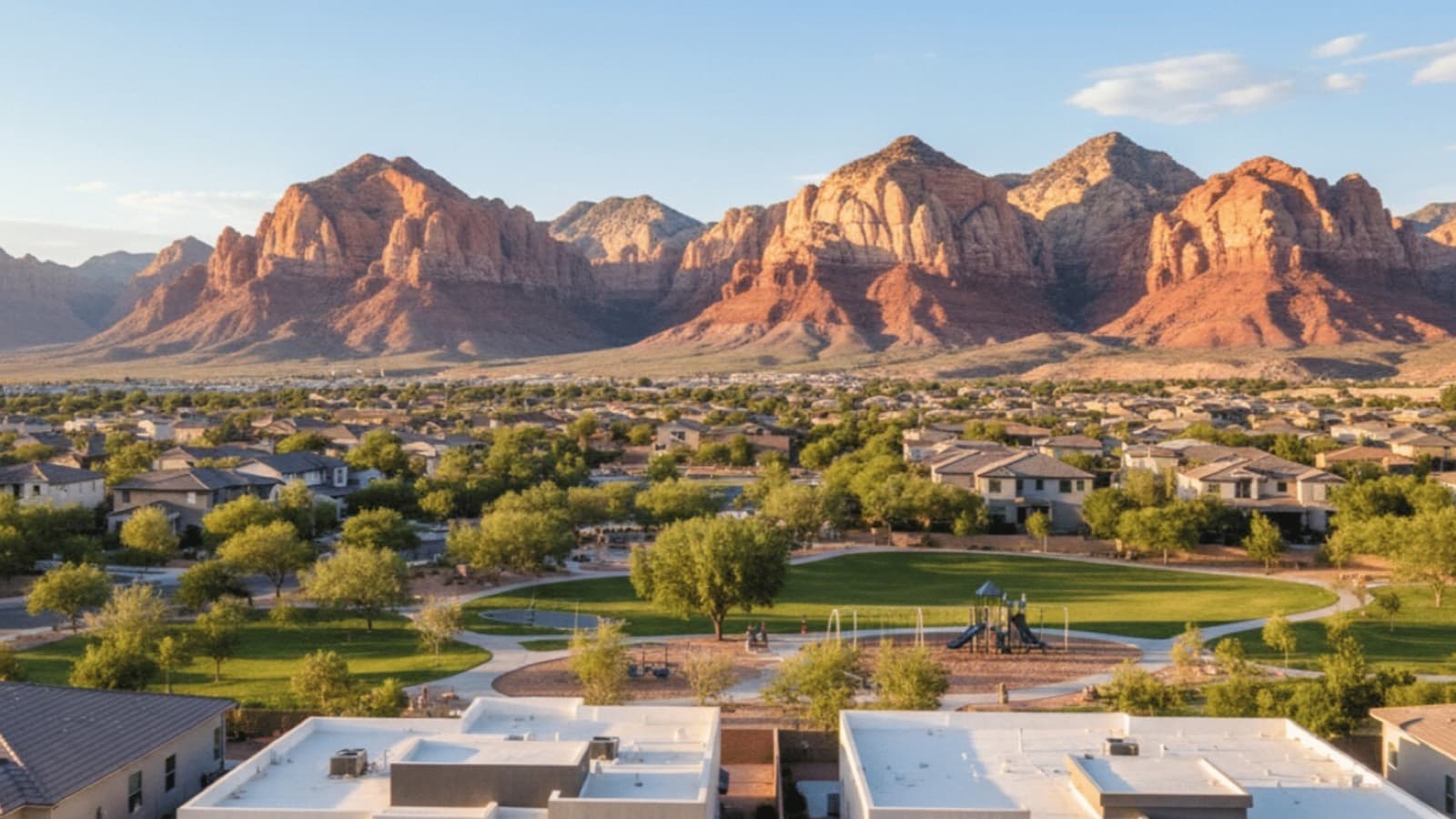
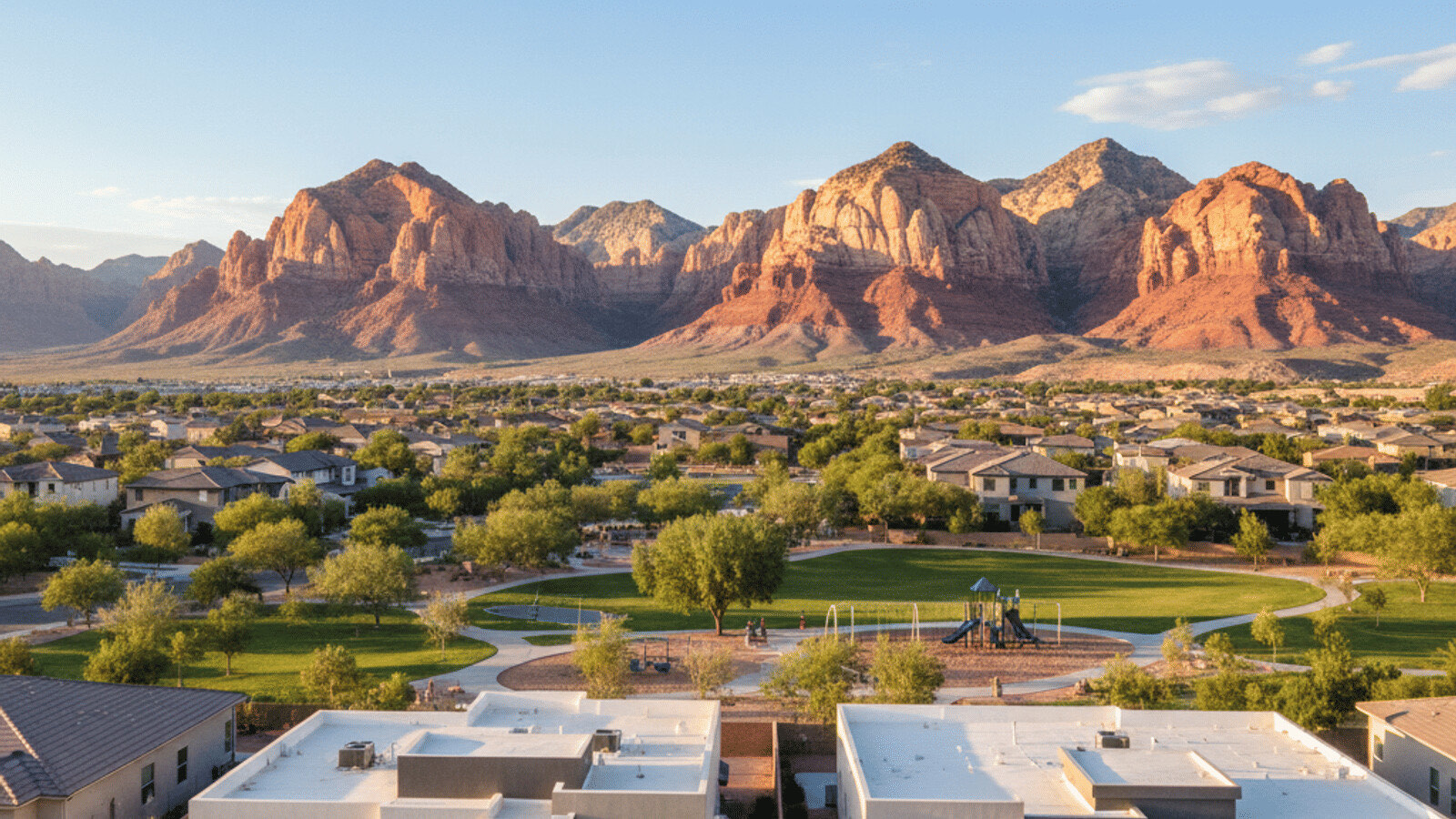
While technically part of Las Vegas and unincorporated Clark County, Summerlin functions like a city within a city. We are talking about a massive 22,500-acre master-planned community perched on the western rim of the valley, right up against the Red Rock Canyon National Conservation Area. It’s distinct, it’s organized, and as we head further into 2026, it is continuing to expand in ways that are changing the local real estate map.
For decades, Summerlin has been the default choice for buyers who want the tax benefits of Nevada but the green, manicured aesthetic of a high-end California suburb. Now in its 36th year of development, the community is shifting its center of gravity westward. If you are looking at homes this year, you’ll hear a lot about the "Summerlin West" expansion, specifically the highly anticipated Grand Park Village.
But living here comes with a unique set of rules, price tags, and quirks that you won’t find in the rest of the metro area. Whether you are relocating from the Bay Area, Seattle, or the East Coast, understanding exactly what you are paying for—and what you get in return—is the first step to deciding if life "above the valley" is right for you.
Pros and Cons of Living in Summerlin
If you are trying to decide if this community fits your lifestyle, it helps to look at the trade-offs plainly. Summerlin isn't for everyone; it is a curated experience that prioritizes uniformity and aesthetics, which some residents love and others find restrictive.
The Upside: The biggest draw is the environment. Because Summerlin sits at a higher elevation than the Strip, it is consistently cleaner, cooler, and greener. The master plan includes over 200 miles of connected trails, meaning you can often bike or jog for miles without ever crossing a major intersection. You also have immediate access to Red Rock Canyon for hiking, which feels like having a national park in your backyard. The commercial areas, specifically Downtown Summerlin, are designed to be walkable and upscale, offering a "main street" feel that most of suburban Las Vegas lacks.
The Trade-offs: The "Summerlin Premium" is real. You will pay significantly more for a home here than for a comparable house in the northwest or southwest parts of the valley. Along with the higher mortgage, you have stricter rules. The HOA guidelines cover everything from the color of your house to where you can park your car and how long your trash cans can be visible. If you are building new in 2026, particularly in the western villages, you will also be dealing with ongoing construction traffic and noise as the area develops.
Cost of Living: Housing, HOAs, and Taxes
Let’s get into the numbers. People often move here to escape state income taxes, and while Nevada has no state income tax, Summerlin has its own financial ecosystem you need to budget for.
The Real Estate Premium In 2026, the real estate market here operates on a different tier than the rest of Clark County. While the median home price in the greater Las Vegas area hovers around $470,000, median prices in Summerlin frequently sit between $600,000 and well over $1 million. You can find entry-level condos or townhomes for less, but a standard single-family home in a desirable village will command a premium. If you are eyeing luxury enclaves, prices easily climb into the multi-millions.
The Double HOA Structure One surprise for newcomers is the "double HOA" fee. Almost every homeowner here pays two separate association fees. First, there is the Summerlin North, South, or West Master Association fee, which typically runs about $55 to $65 per month. This covers the major parkways, trails, and community-wide landscaping.
On top of that, you pay a "sub-association" fee for your specific village or neighborhood. This can range widely—anywhere from $100 to over $300 a month—depending on whether your neighborhood has gates, a private pool, or its own clubhouse. It is crucial to check the total monthly obligation for any specific property you tour.
SIDs and LIDs: The Hidden Infrastructure Cost If you are looking at new construction or newer resale homes, you need to ask about SIDs (Special Improvement Districts) or LIDs (Limited Improvement Districts). These are assessments placed on the land to pay for infrastructure like roads, sewers, and lights.
In many Summerlin villages, this assessment is not included in the property tax rate but is billed separately, often semi-annually. These can add $500 to over $1,000+ per year to your carrying costs. You can sometimes pay them off in a lump sum, but it’s a cost you must factor in when calculating your monthly payment.
Best Neighborhoods & The Village System
Summerlin isn’t just a collection of streets; it is divided into distinct "Villages." Each Village functions like a mini-community with its own designated parks, architectural style, and often a specific price point. Understanding the Villages is the key to navigating the market here.
The New Frontier: Summerlin West (2026 Focus) If you are looking for new construction Summerlin homes, your search will likely start in Summerlin West. The headline for 2026 is Grand Park Village. This is the current focal point of development, centered around a planned 90-acre central park that will eventually serve as the green heart of the western expansion. Builders like KB Home, Toll Brothers, and Taylor Morrison are active here, offering modern floor plans that prioritize indoor-outdoor living.
Adjacent to Grand Park are villages like Kestrel and the more upscale Ascension. Ascension is positioning itself as a luxury destination with prices ranging from $1.5 million to over $2 million, catering to buyers who want the prestige of a guard-gated community with modern architecture.
Established Favorites If you prefer a neighborhood with mature landscaping and settled streets, look at The Paseos or The Vistas. These villages were built out in the 2000s and 2010s. They offer a great balance of location and amenities, often sitting slightly elevated with great views of the valley. Summerlin Centre is another strong option if you want to be walking distance to the retail and dining at Downtown Summerlin.
Luxury Enclaves For the ultra-wealthy, names like The Ridges and The Summit Club stand alone. The Ridges is built around the Bear’s Best golf course and features custom estates that can run into the tens of millions. It offers some of the highest elevations and best views of the Strip lights in the entire city.
Lifestyle: Downtown Summerlin, Parks, and Golf
The lifestyle here is what justifies the price tag for most residents. The developers, The Howard Hughes Corporation, designed the community so that you rarely need to leave "the bubble" for entertainment or shopping.
The Urban Core Downtown Summerlin (DTS) is the social hub. It’s an open-air shopping, dining, and entertainment district that feels more like a polished city center than a mall. You have everything from Apple and Trader Joe's to high-end steakhouses and casual patios. The area also hosts the Las Vegas Ballpark, home of the Aviators (Triple-A baseball), and City National Arena, where the Vegas Golden Knights practice. It’s vibrant, walkable, and hosts weekly farmers markets and holiday parades.
Outdoor Living Access to the outdoors is seamless here. With over 150 neighborhood parks, you are usually within a short walk of a green space, tennis court, or playground. The trail system is massive, connecting the different villages so you can cycle or run for miles without fighting traffic. And of course, the Red Rock Canyon National Conservation Area is practically next door, offering world-class hiking, climbing, and scenic drives just minutes from your driveway.
Golf Culture If you golf, this is a prime location. TPC Summerlin hosts the PGA Tour’s Shriners Children's Open every year, offering a chance to play where the pros play. TPC Las Vegas is another premier public option nearby. There are nearly a dozen courses in or immediately adjacent to Summerlin, ranging from private country clubs to accessible daily-fee courses.
Education and Schools
When moving to a new area, understanding the school landscape is always a top priority. Summerlin falls under the Clark County School District (CCSD), the fifth-largest district in the country. Residents here are zoned for some of the most recognized public schools in the valley, including Palo Verde High School and West Career and Technical Academy, a highly regarded magnet school.
However, many residents opt for private education, and the area has a high concentration of private institutions. Bishop Gorman High School is a prominent Catholic college preparatory school known for its academics and athletics. Other notable options include The Meadows School and The Alexander Dawson School, both of which offer rigorous curriculums from lower grades through high school.
For higher education, the College of Southern Nevada (CSN) has a dedicated Summerlin campus, providing convenient access to college courses and continued learning opportunities right within the community.
Weather: The Elevation Advantage
It might sound strange to say that one part of Las Vegas has different weather than another, but in Summerlin, elevation makes a difference. The community sits anywhere from 3,500 to over 4,400 feet above sea level.
This elevation means temperatures are typically 4 to 7 degrees cooler than at Harry Reid International Airport or on the Strip. In the middle of July, that small drop feels significant. The downside is the wind. Being perched on the western edge of the valley with nothing blocking the airflow coming over the mountains means it can get breezier here than in the lower, more protected parts of town.
Commuting and Getting Around
Living on the edge of town means you have a bit of a commute if you work on the Strip or in Henderson, but the infrastructure is solid.
The Arteries The Summerlin Parkway is your direct shot into downtown Las Vegas, while the CC 215 Beltway wraps around the community, acting as the main lifeline to the rest of the valley. The 215 is generally wide and well-maintained, though rush hour congestion has increased as the population has grown.
Drive Times In normal traffic, you are looking at about 20 minutes to get to the Las Vegas Strip and roughly 25 minutes to get to the airport. It’s a manageable commute for most, especially compared to the gridlock of Los Angeles or Seattle. Traffic within the villages themselves is usually calm, though school zones in the mornings can create brief bottlenecks.
FAQ: Moving to Summerlin
Is Summerlin NV expensive to live in?
Compared to the national average and the rest of Las Vegas, yes. You are paying a premium for the location, amenities, and landscaping. Between higher home prices, double HOA fees, and potential SID/LID assessments, your monthly housing costs will be higher here than for a similar-sized home in North Las Vegas or parts of Henderson.
What is the difference between Summerlin and Henderson?
Both are premier suburbs, but they have different vibes. Summerlin is a master-planned community managed by a single developer (Howard Hughes Corp), giving it a very uniform, manicured look with a focus on Red Rock views. Henderson is a full incorporated city with a wider variety of neighborhoods, older historic sections, and generally feels a bit more spread out and established in its own right.
Does it snow in Summerlin?
Actually, yes—sometimes. Because of the higher elevation, Summerlin is the most likely part of the Las Vegas valley to see snow dusting the rooftops during winter storms. It doesn't happen every year, and it usually melts by noon, but it’s definitely cooler here than on the Strip.
What are SIDs and LIDs in Summerlin?
These are "Special Improvement Districts" or "Limited Improvement Districts." They are essentially infrastructure loans taken out to build the roads and sewers for new communities. The cost is passed on to the homeowner as a lien on the property. You pay it semi-annually or monthly along with your taxes until the bond is paid off, which can take 10 to 20 years. Always verify the balance of the SID/LID before buying.