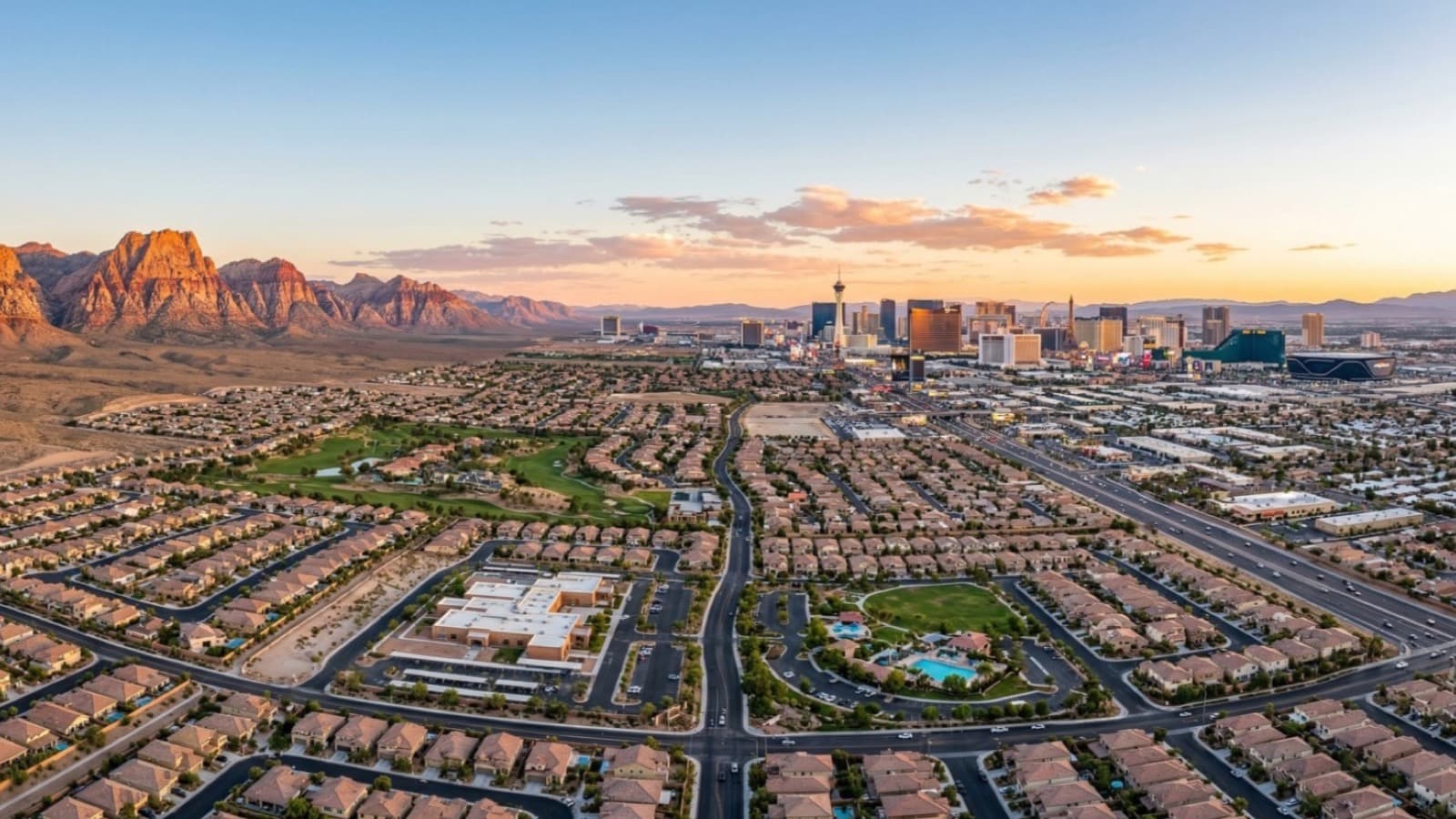

Moving to Las Vegas in 2026 is one of the smartest relocation decisions you can make right now. With a cost of living 2% below the national average, no state income tax, a population of 3.28 million and growing, and a median home price of $481,995, the Las Vegas Valley offers a combination of affordability, lifestyle, and opportunity that most major metro areas simply cannot match. I'm Chris Nevada, leader of Nevada Real Estate Group – LPT Realty, the #1 real estate team in Nevada, and I've helped thousands of families relocate to the valley. Here is everything you need to know before making the move.
Why People Are Moving to Las Vegas in 2026
Clark County's population reached 2.42 million in 2024 and is projected to grow 1.7% in both 2025 and 2026, according to UNLV's Center for Business and Economic Research. The county is on pace to hit 3 million by 2045. An estimated 122,000+ people moved to Nevada in 2023 alone, with the majority settling in the Las Vegas metro area.
The top reasons driving the migration wave:
-
No state income tax. Nevada is one of only nine states with zero state income tax. For someone earning $150,000, that can mean $10,000–$15,000 in annual savings compared to California.
-
Housing affordability. The median home price is $481,995 — a fraction of what comparable homes cost in Los Angeles, San Diego, or the Bay Area. Our Altos Research data shows a median list price of $584,375 with 4,086 active listings on the market.
-
Job diversification. While hospitality remains the anchor industry, Nevada is adding jobs in advanced manufacturing, logistics, healthcare, lithium technology, and digital services. Total nonfarm employment grew 1.9% year-over-year in January 2026.
-
World-class entertainment and lifestyle. Pro sports (Raiders, Golden Knights, Aces, Las Vegas Grand Prix), dining, outdoor recreation at Red Rock Canyon and Lake Mead, and 300+ days of sunshine per year.
Cost of Living in Las Vegas: The Real Numbers
According to multiple cost-of-living indices, Las Vegas sits 2% below the national average overall — making it one of the most affordable major cities in the western United States. Here is a category-by-category breakdown:
-
Housing: Approximately 5% above the national average. Median home price: $481,995 (LVR). Average rent: $1,567/month. Median rent for single-family homes: $2,240/month (Altos Research).
-
Utilities: About 9% higher than the national average. Average monthly energy bill: $242. Summer electric bills can spike to $200–$300 due to air conditioning. Natural gas averages $62/month.
-
Groceries: 3–4% above average. A couple can expect roughly $550/month on groceries.
-
Healthcare: 15–16% below the national average — one of the biggest cost advantages. Major hospital systems include Sunrise Hospital, UMC, and Summerlin Hospital.
-
Transportation: About 15% above average, driven primarily by gas prices (approximately $4.01/gallon). Public transit includes RTC bus routes and the Las Vegas Monorail.
-
Goods and Services: 16% below the national average. Haircuts, dining, and everyday purchases cost significantly less here.
Bottom line: A single person can live comfortably in Las Vegas on about $55,000–$70,000 per year. A family of four typically needs $5,400–$5,700 per month, or roughly $65,000–$70,000 annually. Compare that to California, where most residents save 25–40% on housing alone by moving here.
Best Neighborhoods for New Residents
Las Vegas is not one neighborhood — it is a valley of distinct communities, each with its own personality, price point, and lifestyle. Here is where most of our relocation clients end up:
Summerlin — The valley's premier master-planned community on the western edge. Top-rated schools, 150+ miles of trails, direct access to Red Rock Canyon, and Downtown Summerlin's retail and dining district. Median home prices range from $533,000 (Summerlin North) to $726,000 (Summerlin West). Best for families, outdoor enthusiasts, and professionals who want the highest quality of life.
Henderson — Consistently ranked among the safest cities in America with a population over 310,000. Master-planned communities like Cadence, Inspirada, and Anthem offer diverse price points from the mid-$300,000s to over $2 million. Henderson's Apex Industrial Park is projected to bring $7 billion in investment and 73,000+ jobs, making it a smart long-term bet. Median list price: $645,000 (Altos Research).
North Las Vegas — The most affordable submarket in the valley with a median list price of $455,000. New construction from D.R. Horton, Lennar, and KB Home starts in the high $200,000s. Aliante and Tule Springs are excellent master-planned communities for first-time buyers and families on a budget.
Southwest Las Vegas — Mountain's Edge, Rhodes Ranch, and Southern Highlands offer modern homes with 215 Beltway access at prices below Summerlin. Great for commuters and families. Explore Southern Highlands here.
Skye Canyon — An emerging northwest community with strong appreciation (up 2.6% year-over-year). New construction, community amenities, and a growing retail footprint make this one to watch.
Not sure which area fits your lifestyle? Contact our team for a personalized neighborhood consultation based on your budget, commute, and family needs.
Housing Market Conditions: What Buyers Face Right Now
The 2026 Las Vegas housing market is the most buyer-friendly it has been since 2020. Our real-time Altos Research data shows:
-
Median list price: $584,375 ($277 per square foot)
-
Active inventory: 4,086 homes
-
Median days on market: 70 days
-
Market Action Index: 35 (slight seller's advantage, but trending toward neutral)
-
Price reductions: 34% of listings have cut their asking price
-
Median rent: $2,240/month for single-family homes
With inventory up 17–24% year-over-year and a third of sellers cutting prices, buyers relocating from out of state have genuine negotiating leverage. Many are securing seller concessions on closing costs and repairs that simply were not available in 2021–2023.
Mortgage rates are currently around 6.46% (Freddie Mac, April 2026), with major forecasters projecting rates between 5.90% and 6.30% through Q2 2026. Start your Las Vegas home search here.
Jobs and the Economy: Beyond the Strip
The Las Vegas economy is diversifying faster than most people realize. While hospitality and gaming remain the backbone, here are the industries driving growth:
-
Healthcare: One of the strongest employment sectors in the valley, with consistent hiring across major systems.
-
Logistics and warehousing: Amazon and other major logistics operators have built multiple facilities in Southern Nevada. DETR projects 37.6% job growth in freight, labor, and stock occupations over the next decade.
-
Construction: Added 3,500 jobs from December 2025 to January 2026, reflecting ongoing residential and commercial development across the valley.
-
Advanced manufacturing and technology: The state's focus on lithium lifecycle industries, digital technology, and clean energy is attracting new employers and higher-wage careers.
-
Remote work: Las Vegas has become a magnet for remote workers drawn by affordable housing, no income tax, great weather, and a lifestyle that offers world-class dining and entertainment outside of working hours.
Total nonfarm employment in Las Vegas increased by 21,600 jobs (1.9%) year-over-year as of January 2026, according to DETR's latest jobs report. The unemployment rate sits at 5.2%, and the state is projecting 14.2% total industry growth from 2022 to 2032.
Planning your move to Las Vegas? Nevada Real Estate Group – LPT Realty has 150+ agents who know every neighborhood in the valley. We have helped thousands of families relocate from California, Arizona, the Midwest, and beyond. Search available homes or connect with our relocation team today.
Climate and Weather: What to Expect Year-Round
Las Vegas has a hot desert climate with 300+ days of sunshine per year and only about 4 inches of annual rainfall. Here is a realistic month-by-month picture:
-
Spring (March–May): Highs from 72°F to 90°F. The best weather of the year — perfect for hiking Red Rock Canyon, outdoor dining, and house hunting.
-
Summer (June–August): Highs from 100°F to 104°F. Dry heat, not humid. Pool season, indoor entertainment, and early-morning outdoor activities. Air conditioning is essential — budget $200–$300/month for summer electric bills.
-
Fall (September–November): Highs from 67°F to 94°F. October and November are among the most comfortable months. Outdoor events, patio dining, and ideal hiking weather return.
-
Winter (December–February): Highs from 57°F to 64°F. Mild by national standards — bring a light jacket. Snow is rare in the valley but common on nearby Mount Charleston (great for day-trip skiing).
For most new residents, the biggest adjustment is the summer heat. But with low humidity, ubiquitous air conditioning, and a lifestyle that revolves around pools, indoor entertainment, and early-morning outdoor recreation, most transplants adapt quickly.
Practical Tips for Relocating to Las Vegas
-
Visit before you move. Spend at least a long weekend exploring neighborhoods in person. Summerlin and Henderson feel completely different from downtown or the east side.
-
Establish residency early. Nevada residency gives you access to lower vehicle registration fees, Nevada driver's license, and the ability to claim no-income-tax status. Update your license within 30 days of establishing residency.
-
Budget for summer utilities. NV Energy electric bills spike in June through September. Smart thermostats, shade screens, and energy-efficient homes (especially new construction) help manage costs.
-
Understand HOA fees. Most master-planned communities have HOAs. Typical annual assessments run $1,200–$1,500. Gated communities and golf communities charge more.
-
Work with a local expert. The Las Vegas market has 40+ distinct communities, each with different price dynamics, school zones, and commute patterns. A local agent who knows the neighborhoods — not just the listings — saves you time and money.
Frequently Asked Questions About Moving to Las Vegas
How much money do you need to live comfortably in Las Vegas?
A single person can live comfortably in Las Vegas on about $55,000–$70,000 per year. A couple without children typically needs $60,000–$72,000 annually, and a family of four should budget $65,000–$85,000 per year depending on housing choices and lifestyle. The cost of living is approximately 2% below the national average, and Nevada has no state income tax, which effectively boosts your take-home pay by 5–13% compared to states like California.
Is Las Vegas a good place to raise a family?
Yes, particularly in the master-planned communities. Summerlin and Henderson consistently rank among the best family-friendly areas in Nevada, with top-rated schools, parks, community centers, and low crime rates. Henderson has been named one of the safest cities in America for cities over 200,000 population.
Is it cheaper to live in Las Vegas or Phoenix?
Las Vegas is approximately 8% less expensive than Phoenix overall. Housing is notably cheaper in Las Vegas, and Nevada's zero state income tax gives it a significant edge over Arizona's graduated income tax (up to 2.5%). For a family earning $100,000, the combined housing and tax savings of choosing Las Vegas over Phoenix can exceed $8,000–$12,000 annually.
What are the downsides of living in Las Vegas?
The main challenges include extreme summer heat (100°F+ for roughly 70 days per year), higher utility costs during summer, a tourism-dependent economy that can feel the effects of recessions, limited water resources, and a job market still heavily anchored in hospitality. However, the economy is diversifying, and most residents find the lifestyle, affordability, and tax advantages far outweigh the drawbacks.
Where should I live if I am moving to Las Vegas?
It depends on your budget, lifestyle, and commute. Summerlin is best for families and outdoor enthusiasts ($533K–$726K median). Henderson offers the best safety record and diverse price points ($400K–$2M+). North Las Vegas is the most affordable option ($415K–$450K). Southwest Las Vegas offers modern homes with easy freeway access ($483K–$490K). Contact Chris Nevada and the Nevada Real Estate Group team at (702) 637-1759 for a personalized neighborhood recommendation based on your specific needs.
Ready to make Las Vegas home? Nevada Real Estate Group – LPT Realty is Nevada's #1 real estate team with 150+ agents, $3.5B+ in closed sales, and 5,700+ five-star reviews. Whether you are relocating from California, the Midwest, or anywhere in between, our team will guide you from neighborhood selection through closing day.
Chris Nevada | Nevada Real Estate Group – LPT Realty | (702) 637-1759 | NevadaRealEstateGroup.com
** Tags: Las Vegas