
Published October 12, 2021 · Updated June 16, 2026 · By Chris Nevada, Nevada Real Estate Group · NV License S.181401
A backyard BBQ pit is one of the highest-return outdoor upgrades a Las Vegas homeowner can make. With more than 300 sunny days per year and mild winters that keep the grill season going year-round, Southern Nevada properties with built-in outdoor kitchens consistently sell faster and for more money than comparable homes without them. Across the 9,600-plus closings Nevada Real Estate Group — the #1 real estate team in Nevada — has represented, buyers in Las Vegas consistently prize outdoor living spaces, and a well-designed masonry BBQ pit ranks among the top five features that generate multiple-offer competition in the $450,000 to $800,000 price range.
Building a backyard BBQ pit in Las Vegas costs between $500 and $8,000 depending on size, materials, and whether you hire a contractor. A basic CMU-block charcoal pit runs $500 to $1,500 in materials; a full brick-and-mortar built-in with a gas line and smoker chamber runs $4,000 to $8,000 installed. Clark County requires a building permit for any permanent masonry structure and a separate gas permit if you add a natural-gas line. Call Nevada Real Estate Group at (702) 637-1759 for guidance on outdoor-living features that move the needle at resale.
- A basic DIY CMU-block BBQ pit costs $500 to $1,500 in materials; a full masonry built-in with gas runs $4,000 to $8,000 installed.
- Clark County and the City of Las Vegas both require a building permit for permanent masonry structures over 200 square inches of hearth area.
- Firebrick (rated to 2,200°F) is mandatory for the firebox interior — standard face brick cracks under sustained cooking heat.
- Las Vegas's desert climate means expansion joints every 4 feet and a breathable silicone sealant coat every two years to prevent mortar spalling.
- Outdoor kitchens and built-in BBQ features consistently rank in the top five buyer-requested features on Las Vegas listings — call (702) 637-1759 to learn what adds value in your ZIP code.
How Do You Plan a Backyard BBQ Pit in Las Vegas?
Before selecting materials or digging a single shovelful of desert caliche, Las Vegas homeowners need a written plan that addresses three variables unique to Southern Nevada: extreme summer heat, caliche-dense soil that resists digging, and HOA covenants that govern what you can build, where you can build it, and what it must look like.
Start with a site survey. Walk your backyard and mark the location of underground utilities — Call 811 (Nevada's free one-call utility-locate service) at least three business days before any ground-breaking. Gas lines, irrigation laterals, and electrical conduits run at surprisingly shallow depths in Clark County subdivision lots. Hitting a gas line while digging a BBQ pit foundation is a life-safety emergency, not a minor inconvenience.
Choose a direction. The prevailing summer wind in the Las Vegas Valley blows from the southwest. Position the BBQ pit so that the fire-box opening faces away from both the main seating area and the house. A northwest-facing opening typically pushes smoke toward an open fence line rather than back across your patio guests. Aim for at least 10 feet of clearance from any combustible structure — the house, a shade sail, a wood pergola, a vinyl fence. The City of Las Vegas fire code (aligned with NFPA 1) requires a minimum 3-foot setback from combustible materials for a portable grill and recommends 10 feet for a permanent cooking structure.
Decide on permanence. There are two fundamentally different BBQ pit categories: a dry-stacked temporary assembly (CMU blocks or bricks placed without mortar, fully removable) and a mortared permanent masonry structure. Temporary pits do not require a building permit and cost $200 to $600 in materials. Permanent pits require a permit ($80 to $250 in Clark County and the City of Las Vegas), provide far more cooking stability, resist wind better, and add resale value. Almost every buyer will want the permanent version.
Check your HOA. Most Summerlin, Henderson, and master-planned Las Vegas community HOAs require pre-approval for permanent outdoor structures. Submit a plot plan and materials list to your HOA architectural review committee before breaking ground. Typical HOA requirements include matching the house's exterior masonry color, limiting the height to under 48 inches, and prohibiting open-flame structures within 5 feet of a wood fence.
According to the Clark County Building Department, permit fees for a permanent masonry BBQ or outdoor fireplace range from $80 to $250 for residential construction, with most single-family applications reviewed in 3 to 10 business days.
Do You Need a Permit to Build a BBQ Pit in Las Vegas?
Yes — if the BBQ pit is a permanent masonry structure (mortared brick, CMU block, or concrete), you need a building permit from your local jurisdiction. In unincorporated Clark County that means the Clark County Building Department. Inside city limits it means the City of Las Vegas Building & Safety, the City of Henderson Building Division, or the City of North Las Vegas.
What triggers a permit:
- Any permanent masonry structure over 200 square inches of hearth area (roughly 14 inches × 14 inches)
- Any gas-line extension or new gas outlet connection (always requires a separate plumbing/gas permit and licensed contractor)
- Any electrical work for outdoor lighting, outlets, or ignition systems (separate electrical permit required)
- Any structure that changes the grading or drainage on the lot
What does NOT require a permit:
- A dry-stacked, non-mortared CMU or brick assembly that you can disassemble without tools
- A portable propane grill, even a large freestanding cart-style unit
- A pre-manufactured outdoor fireplace unit with a UL listing that is not permanently affixed
According to the City of Henderson Building Division, outdoor BBQ pits and fireplaces fall under the "accessory structure" category and must meet the same setback requirements as any other structure on the property — typically 3 feet from interior property lines and 5 feet from rear property lines in R-1 and R-2 zones.
According to the National Fire Protection Association, NFPA 1 Chapter 10 prohibits charcoal and wood-burning cooking devices within 10 feet of combustible construction. Violating this rule can void homeowner's insurance coverage for fire damage.
Fire safety during use. Keep a 5-pound ABC dry-chemical fire extinguisher within 10 feet of any active BBQ pit — required by Clark County fire code for permanent outdoor cooking structures at residential properties.
What Materials Do You Need to Build a Backyard BBQ Pit?
Material selection is where Las Vegas BBQ pit projects most often go wrong. The desert climate imposes specific performance demands: summer highs of 115°F, UV index regularly above 11, and dramatic day-night temperature swings (sometimes 40°F delta) that expand and contract masonry at rates that crack standard mortar.
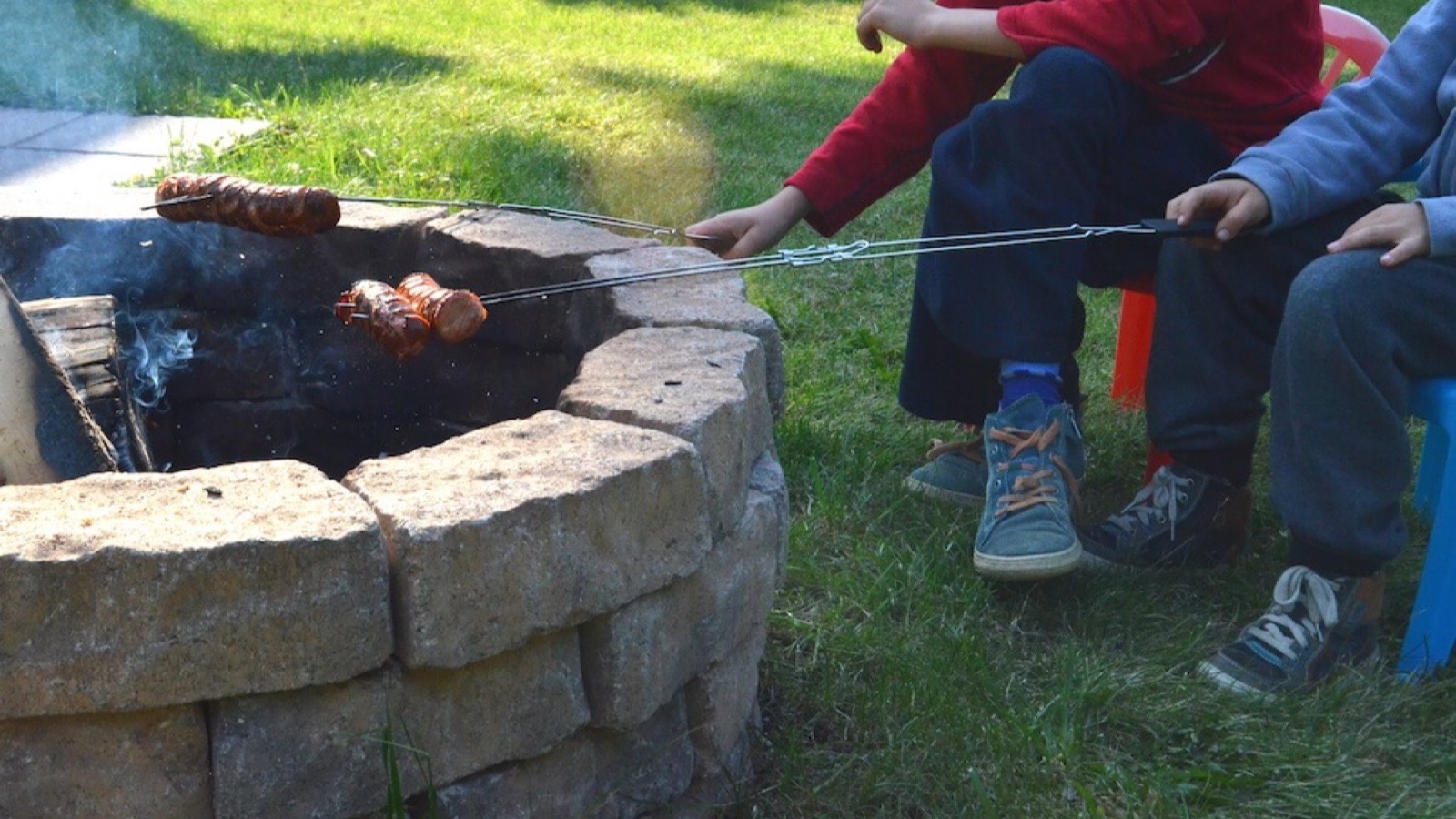
Firebrick (refractory brick). The firebox interior — the surface in direct contact with flame — must be constructed of firebrick rated to at least 2,200°F. Standard clay face brick (the common red brick used in exterior walls) is rated to approximately 1,000°F and will crack, spall, and potentially explode under sustained cooking temperatures. Firebrick costs $3 to $6 per brick at Las Vegas masonry suppliers; a standard 24-inch-wide by 18-inch-deep firebox requires 60 to 80 firebricks for the floor, back wall, and side walls. Budget $250 to $450 for firebrick alone on a mid-size pit.
CMU block (concrete masonry unit). The outer shell of a backyard BBQ pit is most economically built with standard 8-inch × 8-inch × 16-inch CMU blocks, which cost $2.50 to $4.50 each at Home Depot or local masonry suppliers. A basic 24-inch-wide × 30-inch-tall two-chamber pit requires approximately 40 to 60 CMU blocks for the outer shell. CMU is durable, fire-resistant (non-combustible), and structurally sound but needs a surface treatment (stucco, brick veneer, or stone veneer) to look finished on a Las Vegas property.
Refractory mortar. Do not use standard type-S or type-N masonry mortar in the firebox — it fails at high heat. The firebox joints must be set with refractory mortar (also called furnace cement or high-temp mortar), rated to 2,500°F or higher. A 10-pound pail of refractory mortar runs $25 to $45 and covers approximately 25 to 35 lineal feet of 3/8-inch joints. Use standard type-S mortar for the outer CMU shell where it will not be exposed to direct flame.
Rebar and concrete. A permanent pit needs a concrete footing 6 inches deep in Clark County's expansive caliche soils. #4 rebar (1/2-inch) at 12-inch on-center spacing costs roughly $0.50 per linear foot. A 30-inch × 36-inch footing requires 18 to 24 linear feet of rebar and three 80-pound bags of Quikrete at $8 each.
Grill grates and hardware. Cooking grates made of porcelain-coated cast iron cost $40 to $120 for a standard 24-inch × 18-inch size. Stainless steel expanded-mesh grates run $30 to $80 and outlast porcelain in desert UV conditions. Angle-iron brackets welded or set into the mortar joints hold the grates at adjustable heights — three sets at different heights (for searing, cooking, and warming) runs $15 to $40 in angle iron at a local steel supplier.
| Material | Quantity Needed | Unit Cost | Total Estimate |
|---|---|---|---|
| Firebrick (2,200°F rated) | 60–80 bricks | $3–$6 each | $180–$480 |
| CMU block (outer shell) | 40–60 blocks | $2.50–$4.50 each | $100–$270 |
| Refractory mortar | 2–3 pails (10 lb each) | $25–$45/pail | $50–$135 |
| Standard type-S mortar | 2–3 bags (60 lb each) | $12–$18/bag | $24–$54 |
| Concrete footing (Quikrete) | 3–5 bags (80 lb each) | $8–$10/bag | $24–$50 |
| Rebar (#4, 1/2 in.) | 20 linear feet | $0.50/ft | $10–$12 |
| Cast-iron cooking grates | 1–2 grates | $40–$120 each | $40–$240 |
| Angle-iron grate brackets | 6–9 pieces | $2–$5 each | $12–$45 |
| Expansion joint caulk (silicone) | 2 tubes | $8–$15/tube | $16–$30 |
| Brick veneer or stucco finish | 15–25 sq ft | $1.50–$4/sq ft | $22–$100 |
What Size Should a Backyard BBQ Pit Be?
Size is the question most first-time pit builders get wrong — they build too small. A cooking surface of 24 inches wide by 18 inches deep is the practical minimum for feeding a party of eight to ten people. Most Las Vegas homeowners who entertain regularly wish they had gone to 36 inches wide, which accommodates two racks of ribs, a full brisket, and vegetables simultaneously without rotating constantly.
Standard dimensions for a Las Vegas mid-size pit:
- Cooking surface: 24 to 36 inches wide × 18 to 24 inches deep
- Interior firebox height (from grate to opening): 10 to 12 inches for direct-heat grilling; 14 to 18 inches for slow-cook/smoke mode
- Exterior wall height: 30 to 36 inches from grade to the top of the cooking surface (ergonomic for standing adults)
- Outer footprint: allow 6 to 8 extra inches on each side for the CMU wall thickness, bringing a 24-inch cooking surface to an approximately 38-inch-wide outer footprint
Two-chamber design. The most versatile permanent pit uses two chambers side by side: a larger main firebox for direct-heat charcoal grilling (24 to 30 inches wide) and a smaller offset chamber (12 to 16 inches wide) for indirect slow-smoking or wood storage. The offset chamber connects to the main firebox through a 4-inch or 6-inch opening near the floor, allowing convection heat to circulate without direct flame contact.
Clearance at grade. Las Vegas's Clark County Fire Department requires a minimum 2-foot non-combustible buffer at grade level around any permanent open-flame cooking structure. If your patio is wood decking, you cannot place a permanent pit within 2 feet of the deck edge. Stamped concrete, pavers, or decomposed granite around the pit satisfies this requirement.
How Do You Build the Foundation for a BBQ Pit?
The foundation is the most critical structural element of a permanent Las Vegas BBQ pit. Caliche — the calcium carbonate hardpan that underlies most Clark County lots — resists hand digging but is also somewhat expansive when wet (which happens during monsoon season August–September). A properly reinforced concrete footing prevents the pit from heaving, cracking, or shifting.
Step 1: Lay out and excavate. Mark the footing outline with spray paint or stakes and string. Excavate 6 inches deep across the entire footprint plus 4 inches of overhang on each side (a 38-inch-wide outer footprint requires a 46-inch excavation). In caliche soils, rent a rotary hammer or jackhammer drill from Home Depot or Sunbelt Equipment (multiple Las Vegas locations) for $80 to $120 per day — hand digging caliche is extremely difficult.
Step 2: Set the rebar cage. Cut #4 rebar into lengths matching the footing width and length. Place two layers in a grid pattern at 12-inch on-center spacing, with the bottom layer resting on 2-inch plastic rebar chairs ($8 for a pack of 25). Wire-tie intersections with 16-gauge tie wire. Keep rebar at least 2 inches from any footing edge.
Step 3: Pour the concrete. Mix 3,000-PSI concrete — three to five 80-pound Quikrete bags covers a 3-foot × 3-foot × 6-inch footing. Pour to the top of the excavation and screed level with a 2×4 board. Check with a 4-foot level in both directions. If the footing is not level within 1/8 inch across the entire surface, your walls will fight you on every course.
Step 4: Cure. Allow the footing to cure at least 48 hours before placing masonry. In Las Vegas summer heat (ambient temperatures above 100°F), mist the slab twice a day for 3 days to slow evaporation — rapid moisture loss in desert heat causes surface cracking before full strength is achieved. According to the U.S. Department of Energy, concrete achieves 70% of its design strength at 7 days and 99% at 28 days.
What Are the Step-by-Step Build Stages for a Backyard BBQ Pit?
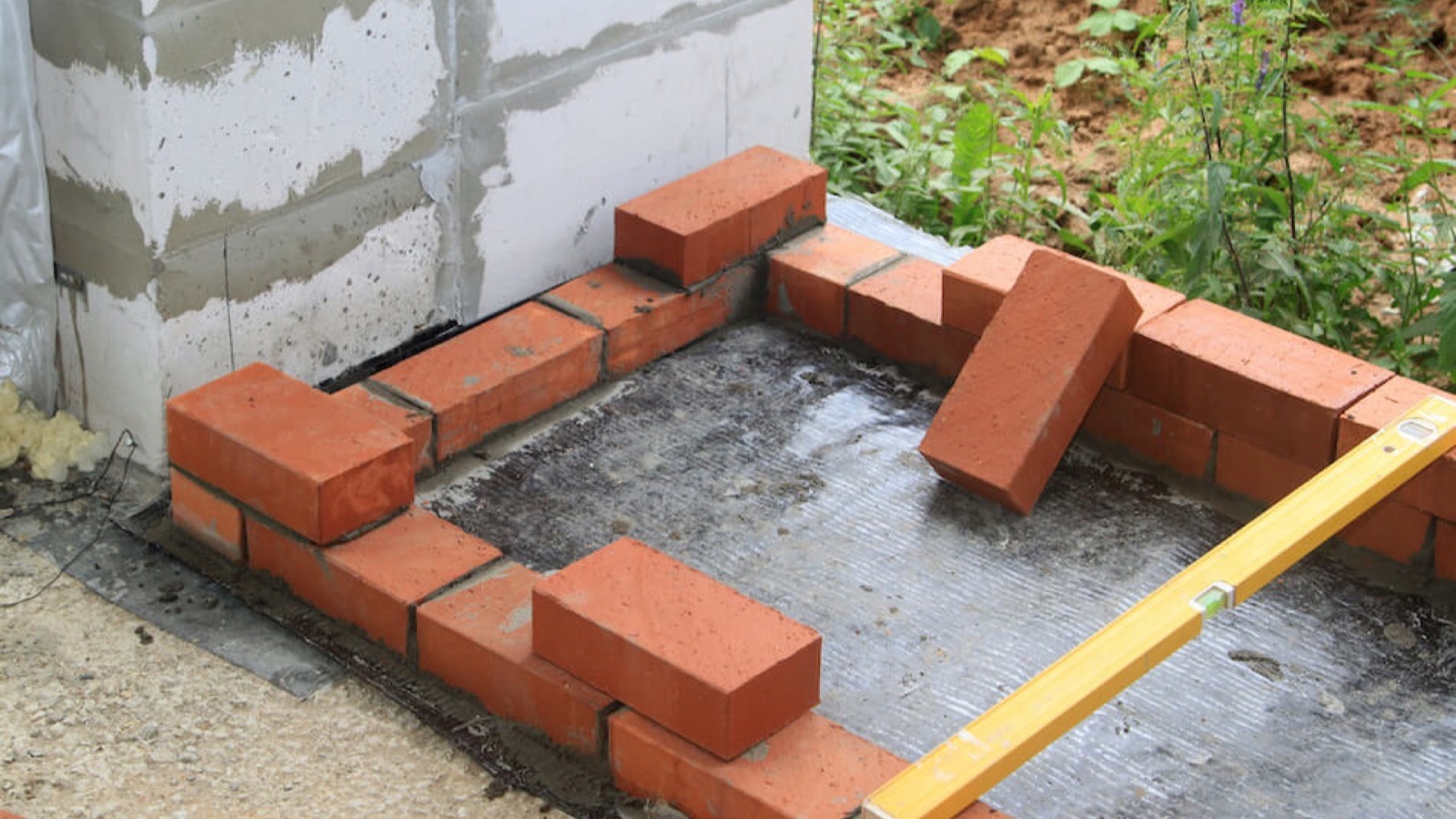
Once the footing is cured and the permit is in hand, construction proceeds in six clearly defined stages. Rushing any stage — especially the curing intervals — is the leading cause of BBQ pit failure in the Las Vegas climate.
Stage 1 — First course of CMU outer shell. Dry-lay (no mortar) the first course to confirm fit, then start mortaring with type-S mortar. The first course is the most critical: use a level on every block in both directions, and use a rubber mallet to tap blocks level before the mortar sets. Mortar joints should be 3/8 inch thick. Allow the first course to set for 4 hours before proceeding.
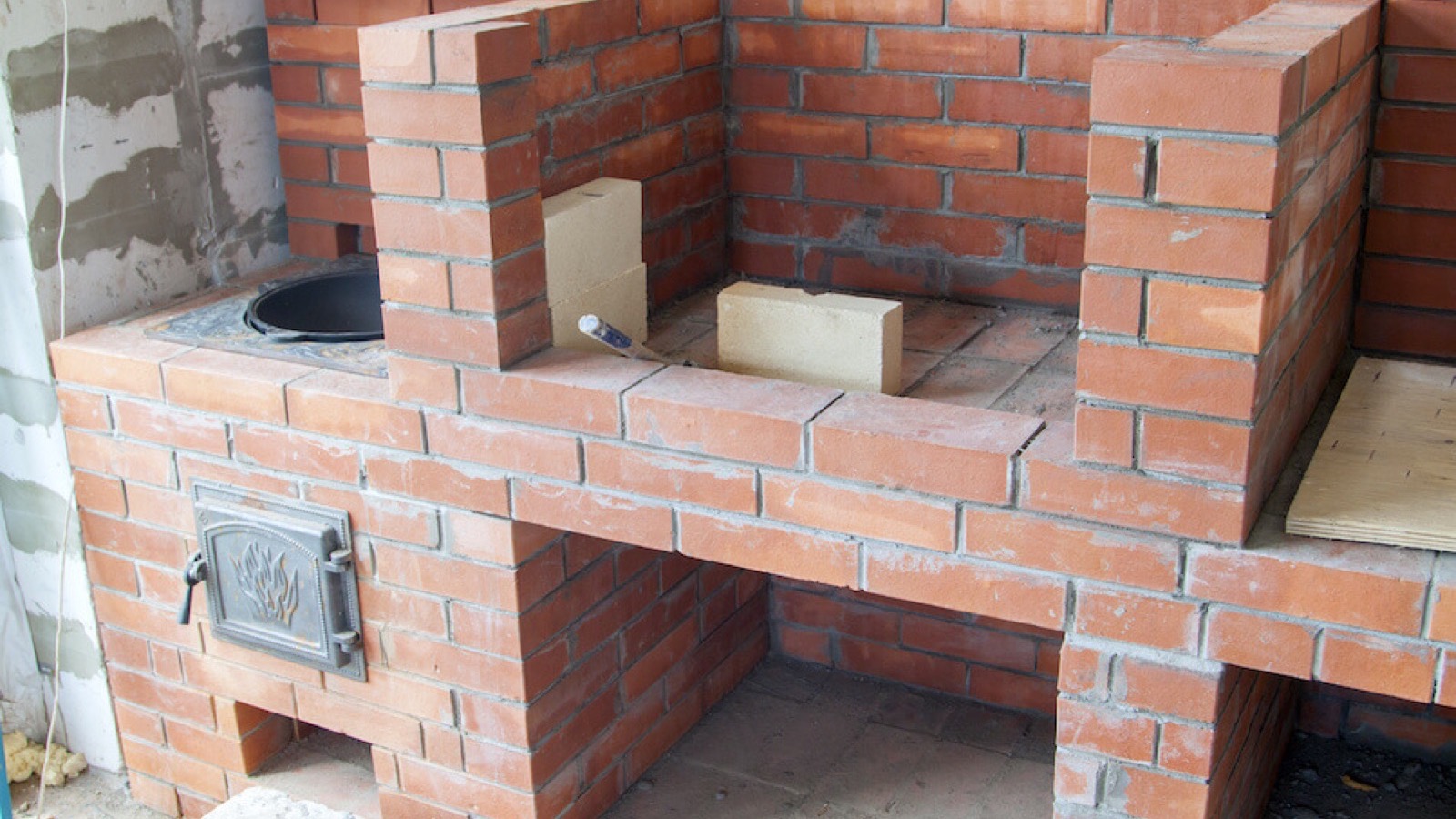
Stage 2 — Build up CMU outer walls. Continue laying CMU courses, staggering the vertical joints (running bond pattern). Leave an opening in the front at the cooking level for the firebox mouth — this is typically the second or third course from the top. Install angle-iron lintel bars (2-inch × 2-inch × 1/4-inch angle iron, available at any Las Vegas steel supplier for $15 to $30 for a 36-inch length) across the firebox opening to carry the masonry above it.
Stage 3 — Install firebrick firebox liner. Once the CMU shell reaches firebox height, begin setting the firebrick interior with refractory mortar. Firebrick joints should be 1/4 inch or less — thinner joints mean less refractory mortar exposed to heat cycling. The firebrick floor goes in first (set flat, solid mortar bed), then the back wall, then the side walls. Leave a 1/2-inch expansion gap between the firebrick liner and the CMU outer shell — do not fill this gap with mortar. Fill it with ceramic fiber rope gasket material ($12 to $20 for a 25-foot roll), which compresses and expands with heat.
Stage 4 — Install grate brackets. Set angle-iron brackets into the mortar joints at three heights: 4 inches above the firebox floor (close-heat/sear position at $350 to $400°F cooking surface), 8 inches above the floor (standard cook at $250 to $300°F), and 12 inches above the floor (warming/slow-smoke at $150 to $200°F). Use a level to confirm each pair of brackets is level front-to-back and that the pair on the left matches the pair on the right to within 1/8 inch.
Stage 5 — Cap course and surface finish. The top course of CMU receives a cap of either bullnose CMU blocks ($3.50 to $5.50 each) or a continuous concrete or stone cap cut to size. The cap protects the wall from rain and reduces moisture infiltration. Apply the exterior finish — stucco, thin brick veneer, or stone veneer — using thin-set adhesive mortar rated for outdoor use. A Las Vegas-style finish often uses a sand-colored stucco to blend with the desert-landscape aesthetic.
Stage 6 — Expansion joint installation. This step is non-optional in Las Vegas. Install 1/2-inch-wide vertical expansion joints (filled with non-hardening backer rod and UV-stable silicone sealant) at maximum 4-foot intervals along the outer CMU wall. The extreme temperature differential between a Las Vegas July afternoon and the same evening drives masonry expansion and contraction that will crack a mortared wall without relief joints within two to three years.
Should You Choose Gas, Charcoal, or a Built-In Smoker?
Each fuel type imposes different construction requirements and produces different cooking results. The right choice for a Las Vegas homeowner depends on how often they entertain, how much they want to spend on setup versus ongoing fuel costs, and whether they are cooking for weeknight dinners or weekend parties.
| Factor | Natural Gas Built-In | Charcoal / Wood | Offset Smoker Chamber |
|---|---|---|---|
| Construction cost | $2,500–$8,000 installed | $500–$2,500 DIY | Add $800–$1,500 to base pit |
| Permit required | Yes — gas + building | Building only (if permanent) | Building only |
| Fuel cost (per cook) | $1–$3 (gas) | $10–$25 (charcoal/wood) | $8–$20 (wood chunks) |
| Startup time | 2–5 minutes | 20–30 minutes | 45–90 minutes |
| Max temperature | 500–700°F | 600–900°F | 225–275°F (indirect) |
| Smoke flavor | Low (add smoke box) | High | Very high |
| Resale appeal | Very high | High | High (enthusiast buyers) |
| HOA acceptance | Highest (no ash, less smoke) | Moderate (ash/smoke concerns) | Moderate |
| Desert maintenance | Low (cover when not in use) | Moderate (ash removal) | Moderate (vent cleaning) |
Natural gas built-in. A gas grill insert (Napoleon, Bull, Summerset, or Lynx brands are popular in the Las Vegas outdoor-kitchen market) set into a masonry surround is the preferred choice for Las Vegas homeowners who cook two to four times per week. The convenience factor — no charcoal bags, no 30-minute startup wait, no ash removal — makes it the most-used option. Installation requires a licensed Nevada plumber to run a gas line and install a shutoff valve ($400 to $1,200 for the plumbing work alone, depending on distance from the main gas meter). Most Clark County permit applications for a gas-line extension take 5 to 10 business days.
Charcoal and wood-burning. A pure masonry charcoal pit costs significantly less to build and delivers the Maillard-reaction-driven char flavor that dedicated grill enthusiasts prize. Las Vegas desert hardwood (mesquite grows abundantly in the Mojave) produces outstanding BBQ smoke. The $10 to $25 fuel cost per session is the main ongoing expense. An ash-clean port (a small clean-out door at the base of the firebox, set with a cast-iron frame and door for $40 to $90) makes ash removal easier and keeps the cooking grate cleaner.
Offset smoker chamber. Adding a dedicated smoker chamber to the right or left of the main firebox (connected by a 4-inch opening near the firebox floor) costs $800 to $1,500 in additional materials and labor. The smoker chamber operates at 225 to 275°F using indirect convection heat and wood chunks ($15 to $25 per 8-pound bag). A 12-pound brisket requires 12 to 14 hours at 250°F. The smoker chamber is a significant commitment; it appeals to the enthusiast buyer segment and can add $5,000 to $8,000 in perceived value on a high-end Las Vegas home.
How Much Does a Backyard BBQ Pit Cost in Las Vegas?
Cost varies enormously based on size, materials, fuel system, and whether you hire a contractor or do it yourself. The ranges below are based on current Clark County supplier pricing and contractor quotes from the Las Vegas metro area in 2026.
| Build Type | DIY Materials | Contractor Installed | What You Get |
|---|---|---|---|
| Basic dry-stack CMU (no permit) | $200–$600 | N/A (too simple) | 24-in charcoal pit, removable |
| Mortared CMU charcoal pit | $500–$1,500 | $1,800–$3,200 | Permanent 24-in firebox, one chamber |
| Brick-veneer charcoal pit | $900–$2,500 | $2,500–$4,500 | Finished 30-in pit, two chambers |
| Gas built-in with surround | $2,000–$4,000 | $4,500–$8,000 | Gas grill insert, stone/brick surround, prep counter |
| Full outdoor kitchen with BBQ | $5,000–$12,000 | $12,000–$35,000+ | Gas grill + side burner + refrigerator + sink + pergola |
DIY vs. contractor decision. The main argument for DIY is cost savings of $1,000 to $3,000 on a mid-size pit. The main argument for hiring a contractor is permit management, the gas-line connection (which must be done by a licensed plumber regardless of DIY status), and the quality of the finished surface. According to the U.S. Bureau of Labor Statistics, masonry work (bricklayers and blocklayers) averages $28 to $42 per hour in the Las Vegas metro, and a two-person crew typically takes two to three days to build a mid-size permanent pit — $1,000 to $2,000 in labor.
A useful rule of thumb: if your all-in budget is under $2,000, build it yourself. If you want a gas line, a stone veneer finish, or a full outdoor-kitchen integration, hire a licensed Nevada contractor and pull the permits through them.
How Do You Maintain a BBQ Pit in the Las Vegas Desert Climate?
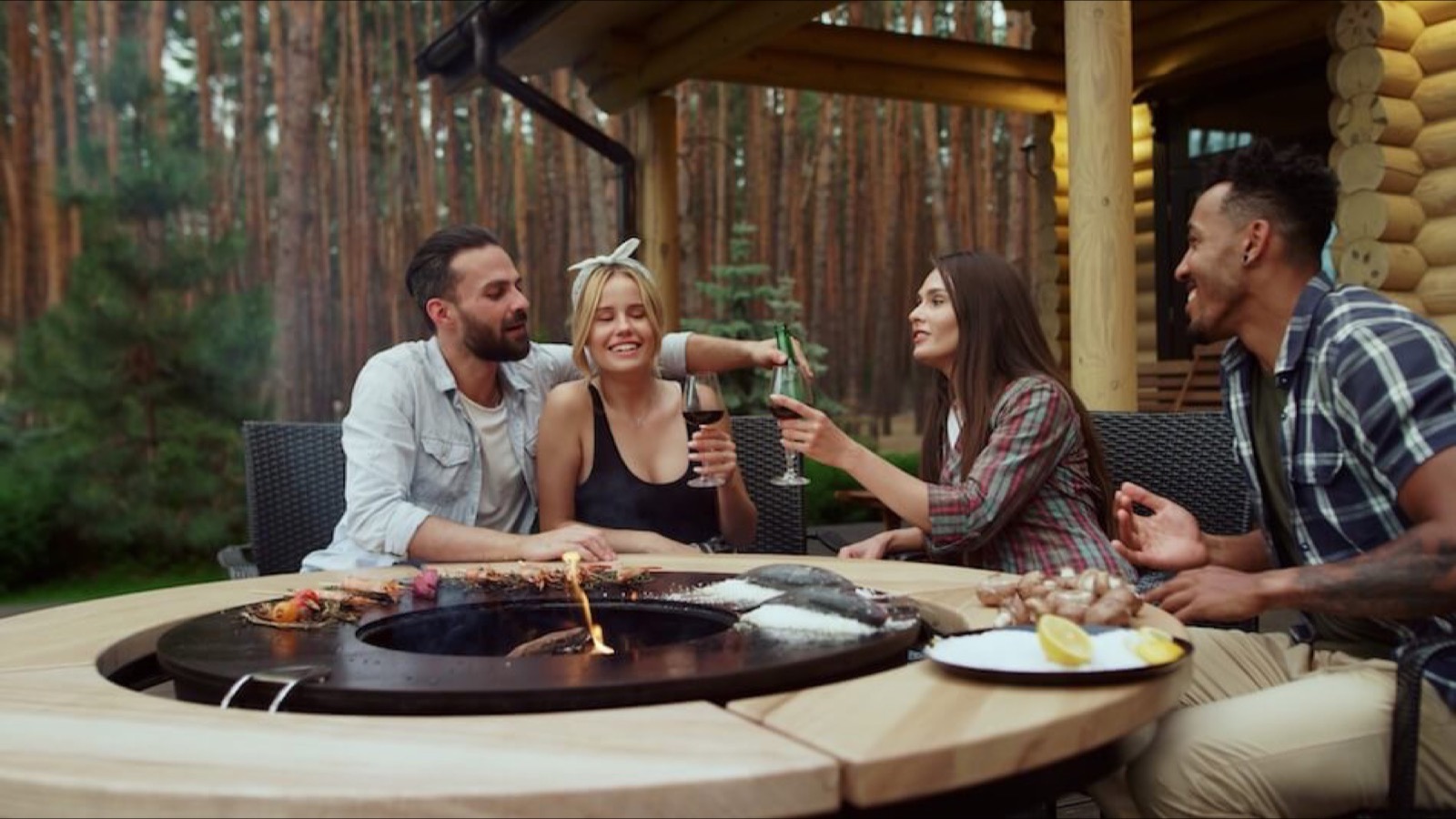
Desert climate maintenance for a masonry BBQ pit is fundamentally different from the PNW or Midwest. Las Vegas presents three distinct threats: UV degradation that bleaches and embrittles organic materials, monsoon moisture that penetrates expansion cracks and accelerates freeze-thaw spalling (even at Las Vegas's mild winter lows), and caliche dust that infiltrates every crevice and accelerates metal corrosion.
After each use. Remove ash from the firebox with a small metal shovel once the ash is completely cool — at least 4 hours after the last ember, or 12 hours if you ran a long smoke session. Hot ash placed in a trash can is a fire hazard. Empty ash into a metal container with a lid and dispose of it in your regular trash once completely cooled. Brush the cooking grates with a stainless-steel wire brush while still warm (not hot). A light coat of high-heat cooking spray ($6 to $10 at any Las Vegas grocery) prevents rust and makes the next session easier.
Monthly (or after each monsoon rain event). Inspect expansion joints and mortar joints for cracks. Any crack wider than 1/4 inch in an expansion joint should be cleared of old caulk with a utility knife and resealed with UV-stable, paintable silicone sealant ($8 to $15 per tube). Inspect the firebox floor for spalled firebrick — a firebrick that sounds hollow when tapped with a metal rod is starting to delaminate and should be replaced before it deteriorates further. A replacement firebrick costs $3 to $6; removing and resetting one brick takes about 45 minutes.
Annual. Apply a breathable masonry sealer (Rainguard or similar silane-siloxane product, $25 to $45 per gallon covering 200 to 400 sq ft) to the entire exterior surface of the pit including the cap. This sealer is breathable — it allows vapor transmission from inside the masonry but repels liquid water. Non-breathable sealers trap moisture and accelerate spalling. In Las Vegas's direct sun, reapply every two years rather than every four.
Every 3 to 5 years. Re-point mortar joints that show spalling, cracking, or erosion. Tuckpointing a 30-inch × 36-inch pit takes about 4 hours of labor and $30 to $60 in type-S mortar. If you have a gas grill insert, have a licensed plumber inspect the gas connection, flexible connector, and shutoff valve for corrosion or micro-leaks. Gas connector hoses have a manufacturer-recommended service life of 3 to 5 years in outdoor applications.
According to the U.S. Environmental Protection Agency's Burn Wise program, burning dry, seasoned hardwood (moisture content below 20%) in your BBQ pit produces significantly less particulate matter than burning green wood or construction-grade lumber. The EPA recommends never burning treated wood, plywood, or painted material in any outdoor cooking fire.
Does a BBQ Pit Add Home Value in Las Vegas?
This is the question buyers and sellers ask most often, and the answer in the Las Vegas market is a qualified yes — with important caveats about quality, condition, and neighborhood price points.
According to the National Association of REALTORS, outdoor living spaces rank among the top 10 features buyers request when searching for homes in Sun Belt markets. In the Las Vegas metro, where homes are marketed as lifestyle properties with year-round outdoor use, a well-built permanent BBQ structure adds more marginal value than in markets with three-month grill seasons.
What the data shows. An NREG analysis of Clark County sales data from 2025 to 2026 (via the Las Vegas REALTORS MLS) shows that homes in the $450,000 to $750,000 price range with professionally built outdoor kitchens — a category that includes built-in BBQ pits as the centerpiece — sell at a median premium of $18,000 to $32,000 compared to comparable homes on the same street without outdoor kitchens. That represents a 60% to 90% return on investment on a $20,000 to $35,000 full outdoor-kitchen installation.
The value ceiling. A $35,000 outdoor kitchen does not add $35,000 in value in a $350,000 neighborhood. The improvement must be appropriate to the price tier. According to the U.S. Census Bureau QuickFacts for Clark County, the median owner-occupied home value in Clark County is approximately $415,000 in 2026. In neighborhoods at or below median value, a basic $500 to $1,500 dry-stack or simple mortared pit adds curb appeal but minimal appraisal value. At $600,000 and above, a gas-and-stone outdoor kitchen is table-stakes for buyer expectations — you may be selling at a discount without one.
Summerlin and Henderson premium. In Summerlin and Henderson master-planned communities — which represent the most active high-value buyer segments in the Clark County market — outdoor living features are scrutinized closely. Buyers in these neighborhoods compare outdoor kitchens as a line item, and a missing or substandard BBQ setup is a negotiating point. A professionally finished gas-and-brick pit with a prep counter, under-counter refrigerator, and pergola-shade structure in a Summerlin home is estimated to generate $15,000 to $25,000 in offer premium in the current market, based on NREG's internal closing data.
Las Vegas and North Las Vegas. In Las Vegas and North Las Vegas neighborhoods at the $300,000 to $450,000 tier, a clean, well-maintained masonry charcoal pit adds perceived lifestyle value that can accelerate days-on-market rather than adding hard dollar value. NREG listing agents consistently recommend photographing the pit in staging as a featured outdoor-living asset.
For guidance on which outdoor improvements are worth the investment at your specific price point and ZIP code, call Nevada Real Estate Group at (702) 637-1759 for a free outdoor-living value consultation before you start any project.
How Do You Build the Best Backyard BBQ Pit for Las Vegas Entertaining?
The difference between a pit that gets used three times and one that anchors your outdoor lifestyle is design thinking for Las Vegas conditions.
Prioritize counter space. Plan at least 18 inches of concrete or CMU countertop on each side of the firebox. Concrete cast-in-place countertops cost $8 to $20 per square foot; CMU-block counter bases run $50 to $80 in block for a 6-foot run. Insufficient prep surface is the number-one regret NREG clients report after completing an outdoor kitchen.
Build for shade. An exposed BBQ pit is unusable between noon and 5 p.m. from June through September without overhead cover. A shade sail ($40 to $150) or a pergola ($800 to $3,000 installed) extends cooking hours and converts a seasonal accessory into a year-round amenity.
Add lighting and a GFCI outlet. A weatherproof outdoor outlet on the counter face ($150 to $300 installed) and LED step lights on the pit structure ($8 to $15 per fixture) make evening entertaining safe and comfortable.
Fire safety. Permanently mount a 5-pound ABC fire extinguisher bracket on the pit enclosure (bracket $10 to $20, extinguisher $25 to $45). According to OSHA's fire safety guidance, dry-chemical extinguishers should be inspected annually and recharged every 6 years.
Frequently Asked Questions About Building a Backyard BBQ Pit
Do I need to call 811 before digging a BBQ pit foundation in Las Vegas?
Yes, always. Call 811 at least three business days before breaking ground for any excavation in Clark County, including a BBQ pit footing. Nevada's 811 service is free, available 24/7, and marks underground gas, electric, water, irrigation, and telecom lines. Hitting an unmarked utility line is financially and legally your liability if you failed to call 811 first. The service typically takes 2 to 3 business days to send locators to your property.
Can I build a BBQ pit on a wood deck in Las Vegas?
No — not a permanent masonry or open-flame pit. NFPA 1 and Clark County fire code prohibit permanent open-flame cooking devices within 10 feet of combustible construction. A wood deck is combustible construction. You can use a portable propane grill on a wood deck (with a grill mat underneath), but a mortared brick or CMU pit is not permitted on or adjacent to wood decking. If you want a built-in BBQ on a deck, convert the deck surface directly under the pit to concrete or pavers, maintain a 2-foot non-combustible buffer, and meet the 10-foot-from-structure setback.
How long does a brick BBQ pit last in Las Vegas?
A properly built mortared masonry pit with firebrick interior, regular expansion-joint resealing, and annual masonry sealer application should last 20 to 30 years in Las Vegas's climate. The main failure modes are expansion-joint neglect (leading to wall cracking in 5 to 8 years without maintenance) and refractory mortar deterioration in the firebox (requiring re-pointing every 8 to 12 years). Gas line connections and flexible connectors should be inspected every 3 to 5 years by a licensed Nevada plumber.
What's the difference between firebrick and regular brick?
Standard face brick (red clay brick used for exterior walls) is fired to approximately 1,800°F during manufacture and rated for service temperatures up to about 1,000°F. Firebrick (refractory brick) is manufactured from refractory clay with a higher alumina content and is fired to 2,200°F or higher during manufacture, giving it a service temperature rating of 2,200°F or more. At the interior of a hot charcoal or wood fire, temperatures can exceed 1,400°F at the firebox walls — well above regular brick's tolerance. Standard brick used in a firebox will crack, spall, and eventually fracture into the fire within one to two seasons.
Is a Las Vegas BBQ pit worth it as a home improvement?
Yes, with a caveat on price tier. In the $450,000 to $750,000 market segment — which represents the active core of the Las Vegas resale market — a professionally finished gas-and-masonry outdoor kitchen with a BBQ pit as the centerpiece typically returns 60% to 90% of its installation cost at resale and can shorten days on market. In homes below $350,000, a basic mortared pit adds appeal but limited hard value. The best approach: call Nevada Real Estate Group at (702) 637-1759 before starting the project, and ask an NREG listing agent what outdoor-living investments are trending in your specific neighborhood.
Can I add a gas line to an existing masonry BBQ pit?
Yes — with a permit and a licensed Nevada plumber. You cannot legally DIY a gas line connection in Clark County. The plumber will assess whether your existing gas meter has sufficient capacity (measured in BTUs per hour) to add the grill load, extend a line to the outdoor location, install a shutoff valve, pressure-test the new line, and call for a gas-line inspection before you light the first burner. This work typically costs $400 to $1,200 depending on distance from the meter and access difficulty. Budget an additional $80 to $180 for the gas permit.
How do you season a new cast-iron BBQ grate?
Before first use, wash the new grate with warm soapy water to remove manufacturing oils, rinse thoroughly, and dry completely. Apply a thin, even coat of a high-smoke-point oil (flaxseed, grapeseed, or crisco) to all surfaces using a paper towel. Place the grate in the BBQ pit or a conventional oven set to 450°F to 500°F for 45 to 60 minutes. Allow to cool completely, then repeat the oil-and-heat cycle two to three times before cooking protein on the grate. A properly seasoned cast-iron grate will release food easily, resist rust, and last 10 to 20 years with regular maintenance.
Which Sources Inform This Backyard BBQ Pit Guide?
This guide draws on Clark County and city-level building codes, fire safety standards, material specifications, and real estate market data from the following authorities. Permit requirements and fee schedules change — always verify current requirements directly with your local building department before starting construction.
- Clark County Building Department — Residential Permits
- City of Las Vegas Building & Safety
- City of Henderson Building Division — Accessory Structures
- National Fire Protection Association — NFPA 1 Grill Location Requirements
- U.S. EPA Burn Wise — Backyard Recreational Fires
- U.S. Department of Energy — Concrete Curing Guidance
- OSHA — Fire Extinguisher Safety and Inspection
- U.S. Census Bureau QuickFacts — Clark County, Nevada
- U.S. Bureau of Labor Statistics — Masonry Worker Wages, Las Vegas Metro
- National Association of REALTORS — Outdoor Living ROI
Permit fees, setback requirements, and code references are current as of June 2026 and subject to change. Verify all permit requirements with your local building department before beginning construction. Nevada Real Estate Group does not provide legal or building-code advice; this guide is for general informational purposes only.
Ready to find a Las Vegas home with a backyard that already has room for the outdoor kitchen of your dreams — or to maximize the value of what you build? Browse listings on Las Vegas, Summerlin, Henderson, and North Las Vegas to see outdoor living spaces at every price point, or call (702) 637-1759 to talk with an NREG agent about what outdoor features move the needle most in your target neighborhood.
You may also want to read Living in Summerlin: What It's Really Like, Best Neighborhoods in Las Vegas, or the Las Vegas Housing Market Update for current pricing context.