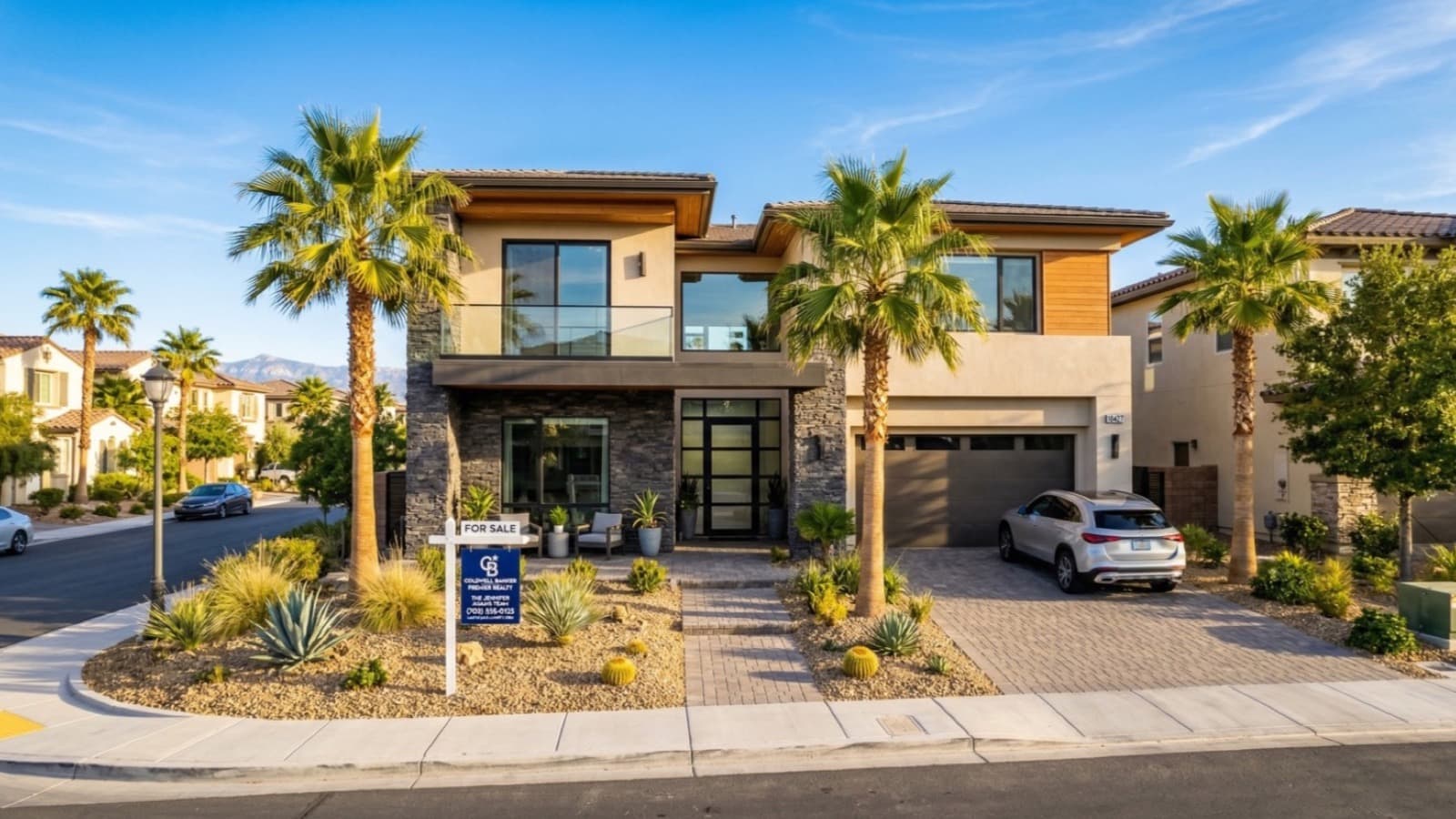

Las Vegas keeps showing up on every "best places to buy a home" list, and the question I hear most from buyers calling our office at (702) 637-1759 is deceptively simple: is Las Vegas actually a good place to buy a house, or is that just marketing? After 16 years and more than 5,000 personal closings across the Las Vegas Valley, I can give you a data-driven answer that respects both the opportunity and the real risks.
The short version: yes, Las Vegas is a strong market for the right buyer in 2026 — but "right buyer" carries weight. The city has genuine structural advantages (no state income tax, below-coastal pricing, strong population growth) and genuine risks (tourism-dependent economy, water scarcity, summer heat). This guide walks through each dimension with the numbers so you can make an informed decision.
I am Chris Nevada, founder of Nevada Real Estate Group, the #1 real estate team in Nevada. We have closed $4.85B+ in total sales volume and hold 9,061+ verified five-star reviews. Every claim in this post traces to a named source.
Yes, Las Vegas is a good place to buy a house in 2026 for prepared buyers. According to Las Vegas REALTORS, the median single-family home price is approximately $440,000 — 40-45% below comparable California metros. Nevada charges zero state income tax, saving most households $5,000-$15,000 per year. According to the FHFA, Las Vegas home values have appreciated roughly 5-7% annually over the past decade. The main risks are a cyclical tourism economy, long-term water supply constraints, and extreme summer heat. Buyers with stable income, 3-5% down, and a 5-year horizon are well-positioned.
- Las Vegas median home price near $440,000 in mid-2026 — roughly $310,000 less than the California median of $750,000+.
- Nevada's zero state income tax saves a $120,000 household approximately $8,000-$12,000 per year versus California or Oregon, permanently improving buying power.
- Clark County adds roughly 45,000 net new residents annually, supporting long-term demand and 5-7% historical annual appreciation per FHFA data.
- Key risks: hospitality/gaming economy is cyclical, Colorado River water supply faces long-term pressure, and 110-degree summers add $150-$300/month to cooling costs.
- Call Nevada Real Estate Group at (702) 637-1759 or visit 8945 W Russell Rd, Suite 170, Las Vegas, NV 89148 for a free buyer consultation and current MLS data.
Is Las Vegas a Good Place to Buy a House in 2026?
Las Vegas scores well on the fundamentals that determine long-term home value: population growth, job diversity, relative affordability, favorable tax policy, and infrastructure investment. According to Las Vegas REALTORS (LVR), the median single-family sale price in Clark County was approximately $440,000-$445,000 in mid-2026. That compares to a California statewide median above $750,000 and a Phoenix metro median near $420,000.
The 2026 market is more balanced than 2021-2022. Active inventory has climbed to roughly 4,000-5,000 listings in Clark County, and approximately 30-35% of sellers have reduced their asking prices. This is a meaningful shift from the frenzied sub-30-day selling environment of the pandemic era. Buyers now have time to conduct inspections, negotiate repairs, and in many cases, secure closing cost contributions from sellers.
According to the Federal Housing Finance Agency (FHFA) House Price Index, Las Vegas-Henderson-Paradise MSA home values have appreciated at roughly 5-7% annually over the trailing decade, with outsized gains in 2020-2022 offset by a modest 3-5% correction in 2023 before stabilizing. For a buyer who purchased in 2019 at $300,000, that home is worth approximately $480,000-$510,000 today.
The buyer question is not whether Las Vegas is a good market in the abstract — the data supports it. The real question is whether your personal finances and timeline align with today's market conditions.
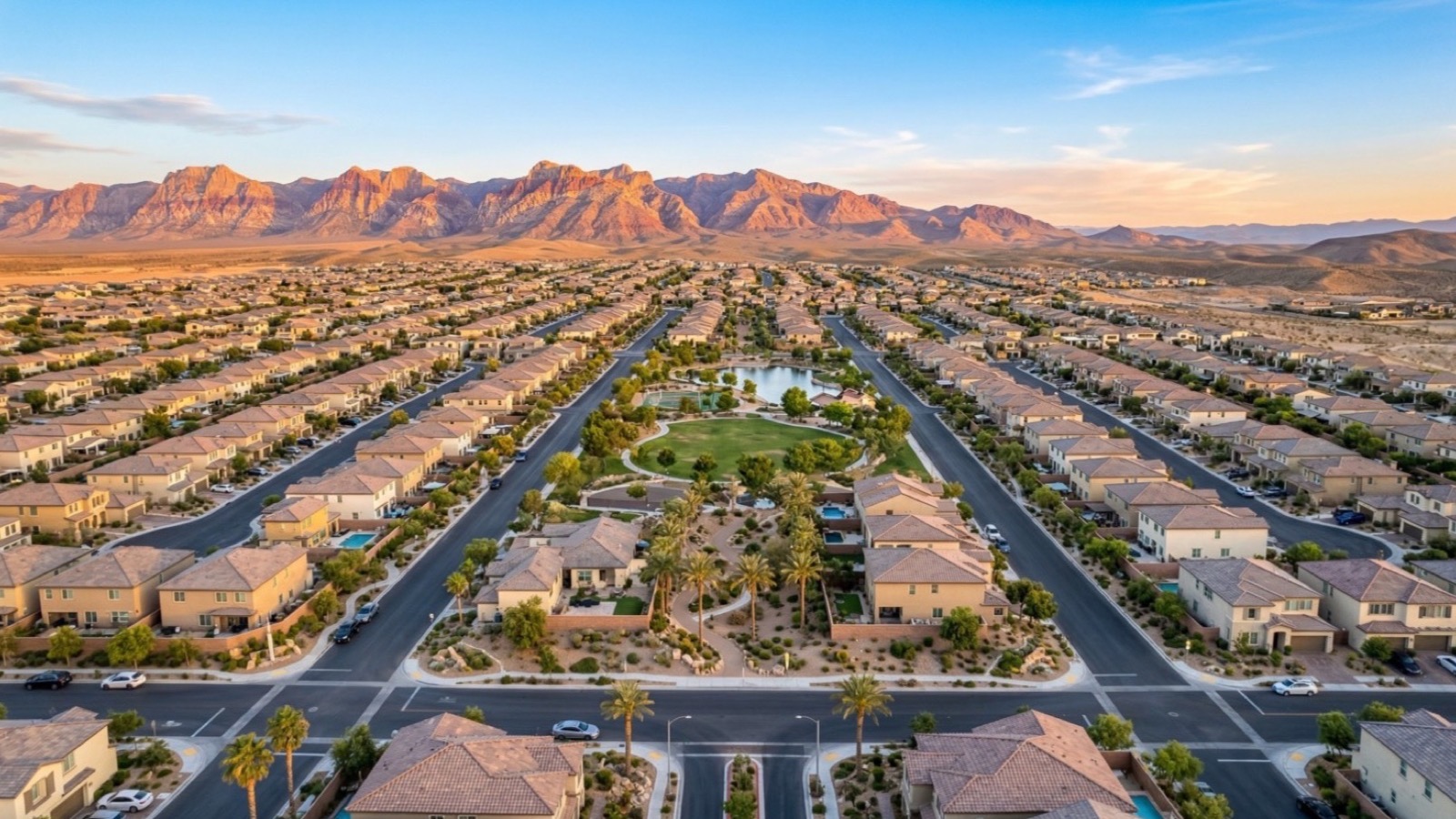
How Have Las Vegas Home Values Performed Over Time?
According to the FHFA House Price Index, the Las Vegas-Henderson-Paradise MSA is one of the best-performing western metros over a 20-year horizon. Here is the trajectory in broad strokes:
- 2006-2012: Las Vegas suffered one of the deepest foreclosure crises in the nation. Prices fell 60%+ from peak to trough. This scar shapes every conversation about Las Vegas real estate to this day.
- 2012-2019: Steady recovery averaging 8-12% annual appreciation as distressed inventory cleared and the economy diversified.
- 2020-2022: Pandemic-era boom: prices surged 40-50% as remote workers and California transplants flooded the market, inventory fell below one month of supply, and multiple-offer wars became routine.
- 2023: Mortgage rate shock (7.79% peak per Freddie Mac) cooled the market. Prices pulled back 3-5% from their highs. Volume dropped.
- 2024-2026: Stabilization and gradual recovery. Prices have reclaimed 2022 levels in most submarkets. Inventory has normalized to 3-5 months of supply.
The lesson from this history is that Las Vegas experiences amplified cycles relative to the national average. The upside is that long-term holders who survived the 2008-2012 correction were rewarded handsomely. The downside is that buyers who purchase at cycle peaks and need to sell within 3-5 years can face losses.
| Year | Approx. Median Price | Market Condition | Key Driver |
|---|---|---|---|
| 2006 (peak) | $310,000 | Bubble peak | Speculative lending, investor flip activity |
| 2012 (trough) | $118,000 | Foreclosure crisis | Subprime collapse, mass distress |
| 2019 | $305,000 | Healthy seller's market | Population growth, diversifying economy |
| 2022 (peak) | $482,000 | Frenzied seller's market | Remote work migration, record-low inventory |
| 2024 | $430,000 | Balanced/stabilizing | Rate normalization, inventory recovery |
| 2026 (mid-year) | $440,000-$445,000 | Moderate seller's market | Population growth, job diversification |
Is Las Vegas Affordable Compared to California?
For California buyers — and the majority of our relocation clients are from Southern California, the Bay Area, or Sacramento — Las Vegas offers a dramatic affordability reset. According to the California Association of Realtors, the California statewide median home price exceeded $750,000 in 2025. In the Bay Area, that median is above $1.3 million. Los Angeles County averages $850,000+.
At a Las Vegas median of approximately $440,000, a buyer leaving California gets:
- 40-45% more home for the same dollar versus Southern California
- 65%+ more home versus the Bay Area
- Zero state income tax (California tops out at 13.3% for high earners)
- Property tax rate of 0.5-0.6% versus California's Proposition 13-governed rate (which varies widely but averages higher on new purchases)
According to the U.S. Bureau of Labor Statistics (BLS) Consumer Price Index regional data, the Las Vegas metropolitan area has a cost of living approximately 5-8% below the national average. California's major metros run 25-45% above the national average.
| Metric | Las Vegas | Los Angeles | San Francisco Bay Area |
|---|---|---|---|
| Median Home Price | $440,000 | $850,000 | $1,300,000+ |
| State Income Tax (top rate) | 0% | 13.3% | 13.3% |
| Effective Property Tax Rate | 0.5-0.6% | 1.0-1.2% | 0.8-1.1% |
| Annual Property Tax ($440K) | $2,200-$2,640 | $4,400-$5,280 (on LV-equiv.) | $3,520-$4,840 (on LV-equiv.) |
| Income Tax on $120K income | $0 | $8,500-$11,000 | $8,500-$11,000 |
| Total Annual Advantage | Baseline | Las Vegas saves $11,000-$16,000 | Las Vegas saves $12,000-$18,000 |
How Does Nevada's No State Income Tax Help Buyers?
Nevada is one of only nine states with no personal state income tax. According to the Nevada Department of Taxation, the state funds its government primarily through gaming taxes, sales tax, and business license fees — meaning residents keep 100% of their earned income at the state level.
For real estate buyers, this matters in three compounding ways:
1. Immediate buying power. A household earning $100,000 who relocates from California saves approximately $6,000-$8,000 per year in state income tax. That is $500-$667 per month that can go toward a larger mortgage payment — effectively increasing purchasing power by $80,000-$100,000 at today's rates.
2. Accelerated equity building. The annual tax savings, reinvested, compound over time. A buyer who saves $10,000 per year in taxes and invests that in extra principal payments would eliminate 7-9 years from a 30-year mortgage.
3. Retirement advantage. Nevada does not tax Social Security benefits, pension income, or capital gains at the state level. For retirees or near-retirees relocating, the after-tax income advantage is substantial.
According to the Nevada Revised Statutes (NRS Chapter 361), residential property taxes are capped with an annual increase limit, providing additional cost predictability. Clark County's effective tax rate of approximately 0.5-0.6% on assessed value is among the lowest of any major U.S. metropolitan area.
Is Las Vegas Growing in Population and Jobs?
Population and job growth are the two most important long-term demand drivers for any housing market. Las Vegas scores well on both.
According to the U.S. Census Bureau QuickFacts for Clark County, the county population exceeded 2.3 million as of the 2020 census, with consistent net in-migration of 40,000-50,000 residents per year. UNLV's Center for Business and Economic Research (CBER) projects Clark County reaching 3 million residents by the early 2040s. This sustained population growth underpins housing demand across all price points.
On the employment side, Las Vegas has meaningfully diversified beyond its historical casino-and-hospitality base:
- Hospitality and gaming: Still the largest employer — MGM Resorts, Caesars Entertainment, Wynn Resorts — but now a smaller share of total employment than any point in the last 30 years.
- Logistics and e-commerce: Amazon operates multiple large fulfillment centers. UPS and FedEx distribution hubs serve the Southwest from Las Vegas.
- Advanced manufacturing: Haas Automation (world's largest machine tool builder) is headquartered in the region. The Henderson Apex Industrial Park is attracting $7B+ in planned investment and 73,000+ projected jobs.
- Data centers: Switch, Inc. operates one of the world's largest data center campuses in Las Vegas, drawing tech sector employment.
- Healthcare: The Valley Health System and Dignity Health operate major hospital networks. Healthcare is one of the fastest-growing employment sectors in Clark County.
- Sports: The Raiders (NFL), Golden Knights (NHL), Las Vegas Aces (WNBA), and the incoming MLB Athletics franchise employ thousands and generate tens of thousands in ancillary jobs.
According to BLS data, Las Vegas area unemployment has run at approximately 4.5-5.5% in 2025-2026, slightly above the national average — a reflection of the hospitality sector's sensitivity to consumer spending cycles, but well within normal range.
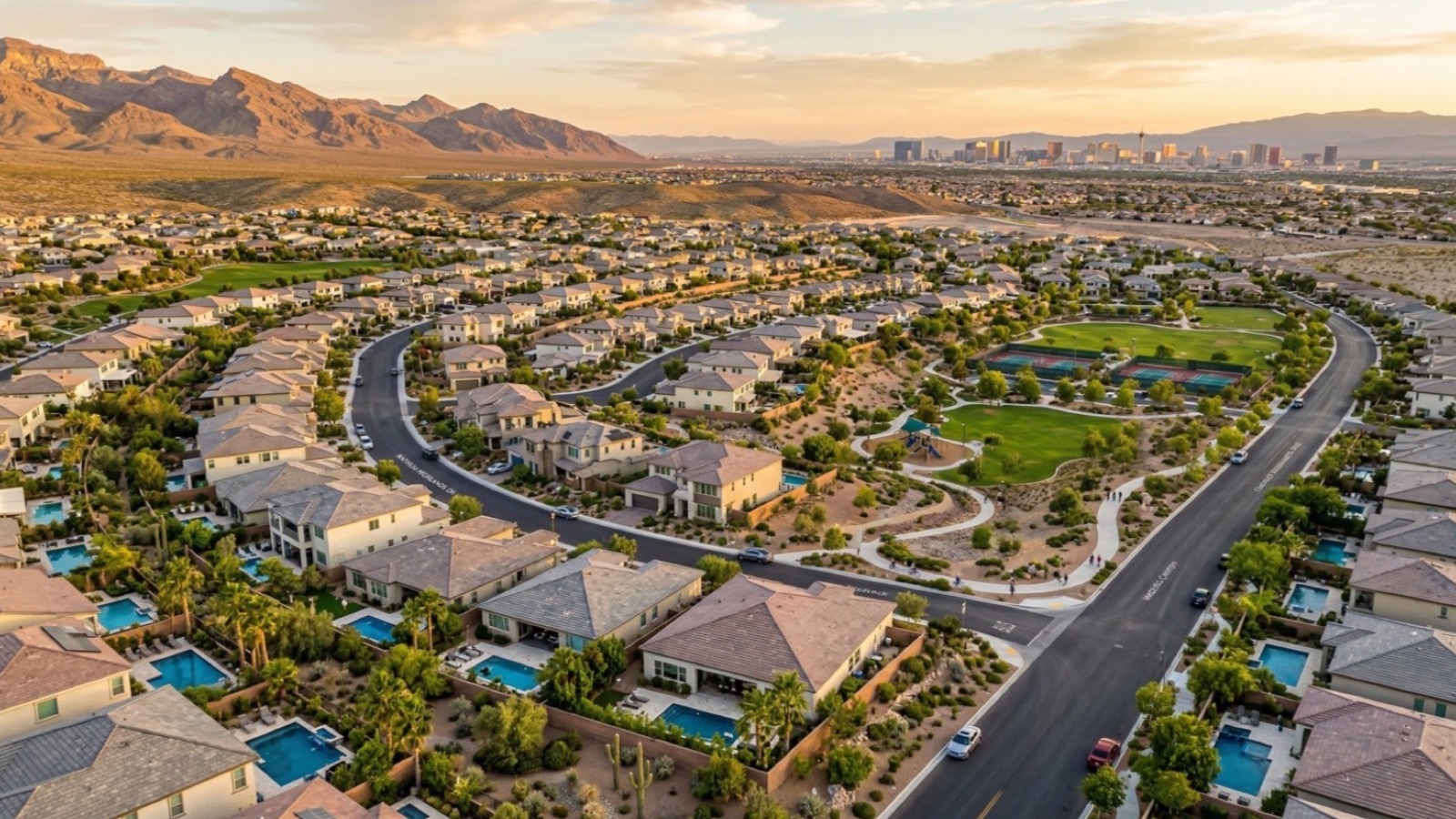
What Are the Risks of Buying in Las Vegas?
An honest buyer's guide cannot skip the risks. I respect clients enough to give them the full picture.
1. Tourism and gaming economic dependency. Despite meaningful diversification, Las Vegas's economy still has outsized exposure to the hospitality sector. During the COVID-19 shutdown, Las Vegas experienced unemployment above 30%. While that was an extreme exogenous shock, any deep national recession that cuts consumer travel spending disproportionately impacts Las Vegas employment. Buyers who depend on local employment should model a 6-12 month unemployment scenario into their financial planning.
2. Water scarcity and the Colorado River. Las Vegas draws 90% of its water from Lake Mead via the Colorado River. Prolonged drought and overallocation across seven states have kept Lake Mead below historical norms. The Southern Nevada Water Authority (SNWA) has made substantial investments in conservation — per-capita water use has dropped more than 50% since the 1990s — and the valley recycles virtually all indoor water back to Lake Mead. Still, water is a genuine long-term constraint. Buyers in newer construction with water-efficient landscaping and appliances face lower risk.
3. Extreme summer heat. Las Vegas averages 70+ days above 100 degrees Fahrenheit annually. The urban heat island effect pushes temperatures even higher in developed areas. Summer utility bills for a 2,000-square-foot home run $150-$300+ per month in July and August. This is a lifestyle constraint that drives higher-income residents to seasonal travel but is manageable with proper HVAC maintenance.
4. School quality variability. The Clark County School District (CCSD) is the fifth-largest in the nation and has historically scored below national averages on standardized measures. However, school quality varies enormously by neighborhood. Summerlin, Henderson, and Centennial Hills areas have high-performing schools that compare favorably with most western metros. Buyers with school-age children should research specific schools, not district averages, using resources like GreatSchools.
5. HOA concentration. Most Las Vegas communities — especially in master-planned developments like Summerlin — have active HOAs with monthly fees ranging from $35 to $400+. Guard-gated communities carry higher fees. Buyers should factor HOA costs into total housing expense calculations.
6. Market cycle amplification. As the 2008-2012 history shows, Las Vegas experiences larger boom-bust swings than most major U.S. metros. Buyers with short time horizons (under 3 years) carry higher risk. The mitigation is a 5+ year ownership horizon, conservative financing, and a down payment large enough to avoid being underwater in a correction.
Is It Better to Rent or Buy in Las Vegas Right Now?
This is the question I spend the most time on with prospective clients. According to Altos Research data tracking Las Vegas, the median monthly rent for a single-family home runs approximately $2,100-$2,400, with significant variation by neighborhood and size.
On a purchase of a $440,000 home with 10% down ($44,000), at a 6.5% 30-year fixed rate:
| Cost Component | Renting ($2,200/mo) | Buying ($440K, 10% down) |
|---|---|---|
| Base payment (P&I or rent) | $2,200 | $2,491 |
| Property tax (est.) | Included in rent | $195/mo ($2,340/yr) |
| HOA (typical master-plan) | Often included | $75-$150/mo |
| Insurance | Renter's: $30/mo | Homeowner's: $120-$180/mo |
| PMI (under 20% down) | N/A | $90-$120/mo (drops at 20% equity) |
| Estimated total monthly | $2,230 | $3,021-$3,136 |
| Monthly equity built (yr 1) | $0 | Approximately $600-$800 |
| Annual appreciation (5-7%) | $0 | $22,000-$31,000 |
The pure monthly cash flow often favors renting by $700-$900 per month in the near term. But homeowners accumulate equity through principal paydown and appreciation. According to NAR data, the median homeowner has 40x the net worth of the median renter nationally. In Las Vegas, the long-term ownership premium is real — but only for buyers who stay 5+ years and choose the right price point.
My general guidance: if you plan to be in Las Vegas for 5+ years, have stable income and a down payment saved, buying makes strong financial sense. If your timeline is under 3 years, renting is the lower-risk choice.
Who Should Buy a House in Las Vegas?
Las Vegas works exceptionally well for specific buyer profiles:
California relocators. The combined savings from no state income tax plus lower home prices can exceed $30,000-$50,000 per year for a household earning $150,000+. Many California buyers can afford significantly more home in Las Vegas than they could in Southern California. Our relocation-focused blog covers the financial math in detail.
First-time buyers. Las Vegas has one of the most active first-time buyer markets in the West. FHA loans require only 3.5% down. Clark County's Nevada Housing Division offers down payment assistance programs. New construction from builders like KB Home, DR Horton, and Century Communities starts in the $280,000-$350,000 range in North Las Vegas, making homeownership accessible.
Retirees and 55+ buyers. Nevada's tax structure is exceptional for retirees. No income tax, no pension tax, no tax on Social Security benefits. Sun City Anthem, Sun City MacDonald Ranch, and multiple age-restricted communities in Henderson offer maintenance-free living from $300,000-$800,000+. According to the U.S. Census Bureau, Clark County's 65+ population is growing faster than any comparable metro.
Investors. Las Vegas's rental market is underpinned by a tourism workforce that rents heavily. According to NAR data on investor activity, Las Vegas has consistently ranked as one of the top 10 investor markets in the western U.S. Gross rental yields on single-family homes typically run 5-7% before expenses.
Remote workers. With no state income tax and a cost of living 5-8% below the national average, Las Vegas is an ideal destination for remote workers earning coastal salaries. The lifestyle amenities — entertainment, dining, outdoor recreation at Red Rock Canyon and Lake Mead — rival larger metros at a fraction of the cost.
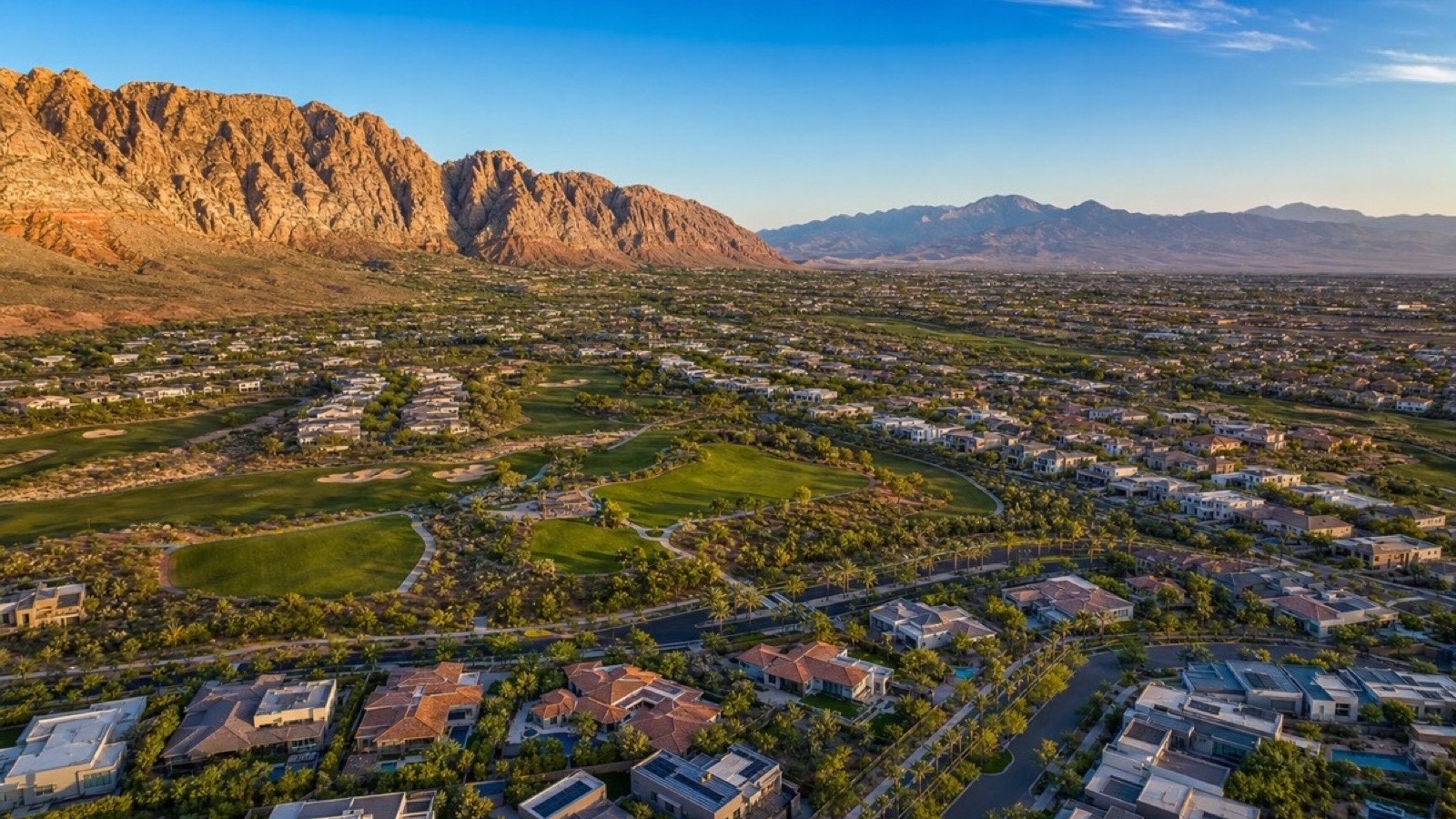
What Neighborhoods Should Las Vegas Buyers Consider?
The Las Vegas Valley is not one market — it is a collection of distinct communities with different price points, school districts, commute profiles, and lifestyle amenities. Here is a quick framework by budget:
Under $350,000 — North Las Vegas and outlying areas. North Las Vegas has seen the most significant new construction activity in the Valley. Builders like Richmond American, KB Home, and Lennar are delivering new homes from the high $280,000s in communities like Aliante, Eldorado Heights, and Apex. The area skews younger, with growing infrastructure investment tied to the $7B Henderson Apex Industrial Park. Median home prices in North Las Vegas run approximately $360,000-$380,000.
$350,000-$500,000 — Henderson and Southwest Las Vegas. Henderson is consistently rated one of the safest mid-size cities in the U.S. The Cadence master-plan offers new construction starting near $400,000. Inspirada, Anthem, and Green Valley provide established community infrastructure with HOA-maintained amenities. Southwest Las Vegas neighborhoods like Mountain's Edge and Providence offer good value with newer construction inventory.
$500,000-$750,000 — Centennial Hills, Skye Canyon, and Summerlin South. Centennial Hills in northwest Las Vegas offers quiet master-planned living with Skye Canyon's newer amenities nearby. The southern villages of Summerlin — including The Paseos, Reverence, and Stonebridge — provide Summerlin's full amenity package (300+ miles of trails, 150+ parks) at more accessible price points than the northern luxury villages.
$750,000-$1.5M — Summerlin, Southern Highlands, Henderson Hills. Summerlin's premium villages (The Ridges, Reverence) and Henderson's MacDonald Highlands area deliver the valley's best combination of schools, safety, amenities, and appreciation history. These are the markets where 5+ years of ownership has consistently yielded strong equity returns.
$1.5M+ — Guard-gated and ultra-luxury. MacDonald Highlands, The Ridges, Ascaya, and select guard-gated communities in Henderson and Summerlin offer estate-level properties with Strip views, golf course access, and bespoke architecture. These markets are less correlated to broader economic cycles and represent a separate investment thesis.
How Do Las Vegas Property Taxes Compare?
Nevada's property tax system is one of the most buyer-friendly in the nation. According to the Nevada Department of Taxation and Clark County Assessor's records, residential property taxes are calculated at approximately 35% of appraised value multiplied by the county tax rate — producing an effective rate of roughly 0.5-0.6% of market value.
For a $440,000 home, annual property taxes run approximately $2,200-$2,640. Compare that to:
- California (post-Prop 13 average on a new $440K purchase): $4,400-$5,280
- Texas (no income tax state with high property taxes): $7,920-$10,560 at 1.8-2.4% effective rates
- Illinois (Chicago metro): $8,800-$13,200 at 2.0-3.0%
- New Jersey (national high): $9,680-$15,840 at 2.2-3.6%
Nevada's tax caps also limit annual assessment increases, preventing the shock of rapid tax bill growth during price appreciation cycles. According to Nevada Revised Statutes (NRS 361), the assessed value of a residential property cannot increase more than 3% per year (or the CPI change, whichever is lower), providing meaningful long-term cost stability.

What Does the 2026 Las Vegas Market Look Like?
According to Las Vegas REALTORS monthly statistics, the mid-2026 market reflects a normalization after the 2020-2022 frenzy:
- Median single-family sale price: approximately $440,000-$445,000
- Active listings: approximately 4,000-5,000 homes in Clark County
- Median days on market: 50-70 days (versus under 15 in 2021)
- Share of listings with price reductions: 30-35%
- Builder incentives: mortgage rate buydowns of 1-2 points, upgrade packages of $15,000-$40,000, and closing cost assistance are common
According to Freddie Mac's Primary Mortgage Market Survey (PMMS), the 30-year fixed mortgage rate in mid-2026 sits in the 6.3-6.8% range — meaningfully below the 7.79% peak of late 2023 but above the sub-3% rates of 2021. On a $440,000 purchase with 10% down ($396,000 loan), a rate of 6.5% produces a principal-and-interest payment of approximately $2,502 per month.
The most important market dynamic for 2026 buyers: builder competition. According to the Las Vegas New Home Guide, more than 40 active subdivisions are selling new construction across the Valley. Builders are competing aggressively for buyers through incentive packages. In many cases, a new construction home with a builder rate buydown produces a lower effective payment than a resale home at the same price. This is creating unusual value opportunities for buyers willing to consider new construction.
According to the FHFA outlook published in early 2026, the Las Vegas MSA is forecast for 3-5% appreciation in 2026, assuming mortgage rates remain in the 6-7% range. More aggressive rate improvement — toward 5.5% — could unlock pent-up demand and push appreciation toward 6-8%.
Frequently Asked Questions About Buying a House in Las Vegas
Is Las Vegas real estate a good investment in 2026?
Yes, Las Vegas real estate performs well as a long-term investment. According to FHFA data, the Las Vegas MSA has appreciated at roughly 5-7% annually over the past decade, comparing favorably to most major western metros on a risk-adjusted basis. The combination of population growth, no state income tax, below-coastal pricing, and strong rental demand supports the investment thesis. The primary risk is the cyclical tourism economy — investors should carry 6-12 months of reserves.
What is the average home price in Las Vegas in 2026?
According to Las Vegas REALTORS, the median single-family sale price in Clark County was approximately $440,000-$445,000 in mid-2026. The average (mean) price runs higher, near $530,000-$560,000, pulled up by luxury transactions. Condos and townhomes have a separate market with medians near $250,000-$300,000. New construction single-family homes range from the high $280,000s in North Las Vegas to $3M+ in Summerlin's luxury villages.
How much do I need to earn to buy a house in Las Vegas?
At a $440,000 median price with 10% down ($44,000) and a 6.5% mortgage rate, the monthly principal and interest payment is approximately $2,502. Adding property tax ($195/mo), insurance ($150/mo), and HOA ($100/mo average) brings total housing cost to approximately $2,950-$3,100 per month. Using a 28% housing-to-income ratio, a buyer needs gross household income of approximately $126,000-$132,000 per year to qualify comfortably. FHA loans (3.5% down) and Nevada down-payment assistance programs can help buyers with lower savings qualify with less upfront capital.
Is it better to rent or buy in Las Vegas in 2026?
For buyers with 5+ years of planned ownership, buying is generally the stronger financial choice. Median rent for a comparable single-family home runs $2,100-$2,400 per month. The purchase payment is higher month-to-month, but buyers build equity through principal paydown and appreciation. According to NAR data, homeowners nationally have 40x the net worth of renters over a 30-year period. For buyers with a timeline under 3 years, renting carries less transaction-cost risk.
What are the biggest risks of buying in Las Vegas?
The four primary risks are: (1) economic cyclicality tied to the hospitality and gaming sector; (2) long-term water supply constraints from Colorado River allocation disputes; (3) extreme summer heat adding $150-$300+ per month to utility costs; and (4) market cycle amplification — Las Vegas experiences larger boom-bust swings than most metros, penalizing buyers who must sell in a down cycle within a few years of purchase.
Which Las Vegas neighborhoods have the best schools?
According to GreatSchools ratings, the highest-performing school clusters in Clark County are concentrated in Summerlin (particularly the western villages), Green Valley and Seven Hills in Henderson, and Centennial Hills in northwest Las Vegas. These neighborhoods consistently outperform district averages on standardized tests and have lower teacher turnover. Buyers with school-age children should check individual school ratings, not just district averages, because CCSD quality varies significantly by location.
How do I start the home-buying process in Las Vegas?
The first step is a pre-approval call with a Nevada-licensed mortgage lender to establish your budget and loan type (conventional, FHA, VA, USDA). The second step is connecting with a local buyer's agent — preferably one with deep knowledge of specific communities and current MLS data. Nevada Real Estate Group has 150+ licensed agents covering every neighborhood in the Valley. Call us at (702) 637-1759 or visit 8945 W Russell Rd, Suite 170, Las Vegas, NV 89148 for a free consultation. License: S.181401.
Which Sources Inform This Las Vegas Buyer Guide?
The data and analysis in this guide draws from publicly available government, academic, and industry sources. Specific claims trace to the following:
- Federal Housing Finance Agency (FHFA) House Price Index — Las Vegas-Henderson-Paradise MSA historical appreciation data
- Las Vegas REALTORS (LVR) Monthly Statistics — current median prices, active inventory, days on market, price reduction percentages
- U.S. Census Bureau QuickFacts — Clark County, Nevada — population estimates and in-migration data
- Bureau of Labor Statistics (BLS) Regional Employment Data — Las Vegas metro employment, unemployment rate, sector composition
- Freddie Mac Primary Mortgage Market Survey (PMMS) — weekly 30-year fixed mortgage rate benchmarks and historical peak data
- Nevada Department of Taxation — state tax structure, no income tax confirmation, property tax calculation methodology
- Clark County Assessor's Office — property tax assessment rates and annual increase caps under NRS 361
- U.S. Department of Housing and Urban Development (HUD) — FHA loan limits for Clark County and down payment assistance program frameworks
- Consumer Financial Protection Bureau (CFPB) — mortgage qualification guidelines, debt-to-income ratio standards
- National Association of Realtors (NAR) — homeowner vs. renter net worth comparison data, national investor activity trends
Market data reflects publicly available figures as of mid-2026. Consult a licensed Nevada real estate professional before making purchase decisions.