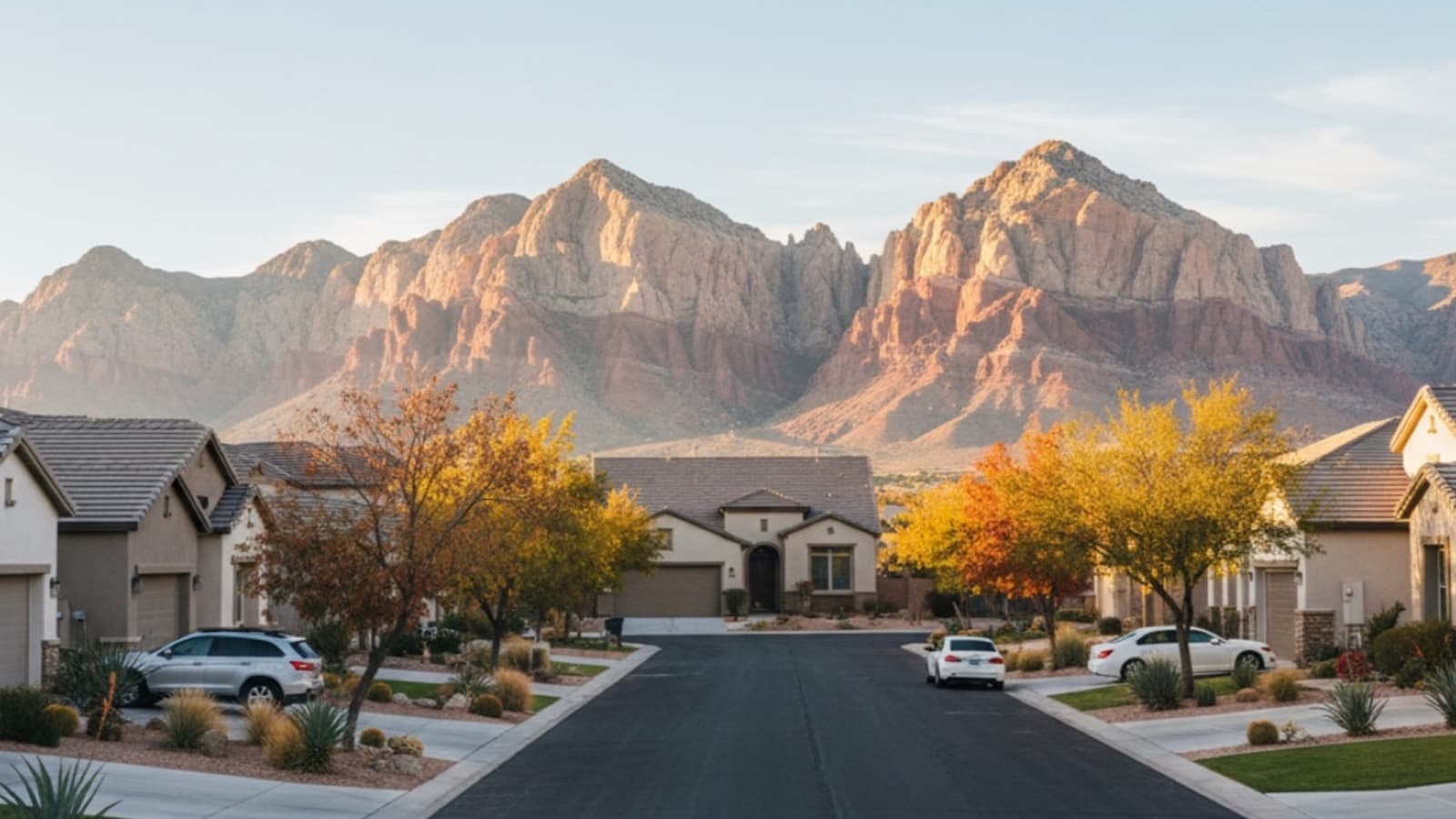

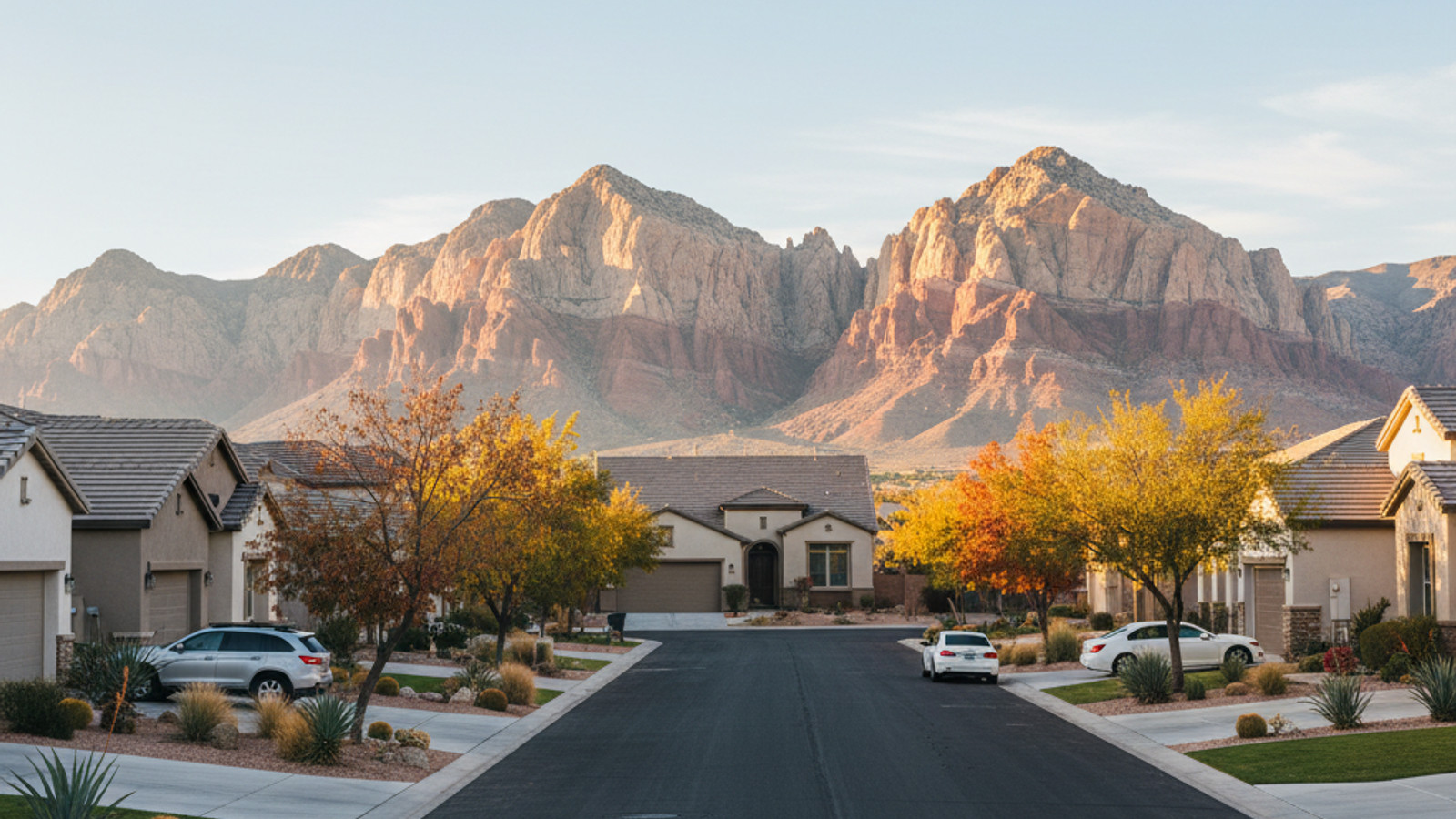
Living in Summerlin offers a distinct lifestyle that sets it apart from the rest of the Las Vegas Valley. You have the Red Rock backdrop, over 200 miles of trails, and manicured streetscapes that don't just happen by accident. However, that "Summerlin Premium"—which often equates to a cost of living roughly 30% higher than the Vegas average—shows up most clearly in your monthly housing costs.
If you are looking at homes for sale in Summerlin, you have probably noticed the "HOA" section on listing sheets can be confusing. You might see one fee, two fees, or sometimes even a mention of a "SID." To make matters more urgent for your budgeting, rates have shifted recently.
Effective January 1, 2026, the master association fees adjusted upward. The goal of this guide is to cut through the confusion and break down exactly what you pay, who you pay it to, and what you actually get in return for those monthly dues.
The "Layer Cake": How Summerlin HOA Fees Work
Before we get to the specific 2026 dollar amounts, it is vital to understand the structure. Summerlin isn't just one big neighborhood; it is a master-planned community comprised of smaller villages. Because of this, the fees work like a layer cake.
Depending on where you buy, you will likely encounter three distinct layers of costs:
-
Tier 1: The Master Association. This is the base layer. Almost every homeowner in Summerlin pays this, regardless of whether they live in a condo or a custom mansion. This fee includes the mandatory "Summerlin Council" assessment.
-
Tier 2: The Sub-Association. This is the fee for your specific village or neighborhood. If you are in a gated community or a condo complex, this fee pays for the maintenance of those specific gates, private streets, or building exteriors.
-
Tier 3: SIDs/LIDs. While not technically an HOA fee, this is a monthly infrastructure assessment that often appears alongside your dues in your budget planning.
What Do I Get for the Money? (The Summerlin Council)
A common question buyers ask is, "Why am I paying this Master fee?" A significant portion of that payment (specifically $37/month) goes to The Summerlin Council. This is the non-profit arm responsible for the lifestyle amenities that likely drew you to the area in the first place.
That fee covers the landscaping and maintenance of the massive trail system and the upkeep of dozens of community parks like The Arbors, The Vistas, and Cottonwood Canyon. It also funds the resident-only events that define the community culture, such as the holiday parades and movies in the park. While you may pay small usage fees for certain classes, the community centers and pools are maintained through this collective funding.
2026 Summerlin Master Association Rates
Let’s look at the hard numbers. For administrative purposes, Summerlin is divided into three geographic Master Associations: North, South, and West.
As of January 1, 2026, the rates have increased to keep up with inflation and maintenance costs. Please note that the amounts below include the $37 Summerlin Council fee mentioned above; it is not an extra charge on top of these numbers.
-
Summerlin North: $74/month (previously $65). This generally covers the established villages north of Cheyenne Avenue, such as The Pueblo and The Hills.
-
Summerlin South: $76/month (previously $67). This covers villages south of Charleston Blvd, including The Willows, The Gardens, and luxury areas like The Ridges.
-
Summerlin West: $69/month (previously $60). This applies to the newer expansion areas west of the 215 Beltway, such as Redpoint and Kestrel.
If you are browsing Summerlin West new homes or looking at established properties in the North, these are the baseline figures you should plug into your mortgage calculator.
Sub-Association Fees: What to Expect
While the Master fee is consistent across large swaths of the city, the sub-association fee is where you will see the most variety. This second layer pays for amenities exclusive to your direct neighbors, rather than the general public.
In standard non-gated neighborhoods, you might pay a sub-HOA fee ranging from $50 to $120 per month. This usually covers common area landscaping within the subdivision that the Master Association doesn't touch.
If you are looking at guard-gated communities like Red Rock Country Club or The Ridges, the costs jump significantly. You can expect to pay anywhere from $200 to over $500 per month. This higher cost funds the 24-hour staffing of the guard gates, roving security patrols, and often private parks or clubhouses strictly for residents of that enclave.
For those interested in condos or townhomes, fees are also typically higher—often $250 to $400+ per month—because they include "walls-out" insurance coverage, roof maintenance, and exterior building repairs.
One-Time HOA Transfer Fees & Capital Contributions
When you are sitting at the closing table, there are a few one-time costs to be aware of. You aren't just taking over the monthly payments; you are also buying into the association's reserve funds.
-
Capital Contribution: This is a one-time fee paid at closing. For 2026, you can expect this to be approximately $444 for Summerlin North and $456 for Summerlin South.
-
Transfer Fees: These are standard administrative charges for updating the ownership records.
-
Resale Package: Nevada law requires the seller to provide a resale package (HOA documents) for your review, but the cost is part of the closing transaction.
Age-Qualified Community Fees: Sun City Summerlin
If you are looking at Sun City Summerlin homes for sale, the math changes completely. As an age-qualified (55+) community, Sun City operates independently with its own fee structure that covers a much broader range of amenities.
For 2026, the estimated monthly fee for Sun City Summerlin hovers between $208 and $230 per month. While this is higher than a standard single-family home HOA, it provides access to three private golf courses, four clubhouses, and multiple pools that are exclusive to Sun City residents.
Buyers here also need to prepare for the NORA fee (New Owner Reserve Assessment). This is a significant one-time fee due at closing, currently approximately $5,000. It ensures the community reserves remain healthy without spiking the monthly dues for existing retirees.
The "Hidden" Cost: SIDs and LIDs Explained
Finally, we need to talk about SIDs (Special Improvement Districts) and LIDs (Local Improvement Districts). While these are technically tax assessments, not HOA fees, they impact your monthly budget in the exact same way.
SIDs are bonds used to pay for the initial infrastructure of a community—the roads, sewer lines, and streetlights. They are most common in Summerlin West and the newer villages. In older parts of Summerlin, like The Hills or The Pueblo, these bonds have often been paid off entirely.
The cost impact can add $50 to $200+ per month to your expenses. These are usually billed semi-annually along with your property taxes. The good news is that because this is a finite bond, the balance can be paid in full during the resale transaction. Buyers can sometimes negotiate for the seller to pay this off, or you can choose to pay it off yourself to lower your ongoing monthly carrying costs.
Frequently Asked Questions
Do HOA fees in Summerlin increase every year?
Not necessarily every single year, but you should plan for it. As we saw with the shift to the 2026 rates, fees are adjusted periodically to keep up with inflation, rising utility costs for common areas, and reserve fund requirements.
Are Summerlin HOA fees included in my mortgage payment?
Usually, no. While your property taxes and insurance are often escrowed and paid as part of your mortgage, HOA fees are typically billed directly to you. You will need to set up a separate payment for your Master Association and any sub-associations.
Can I opt out of the Summerlin Council fee?
No. The Summerlin Council fee is a mandatory assessment tied to the deed of the property. It is not a membership you can cancel; failure to pay it can result in a lien on the property just like any other HOA debt.
How do Summerlin fees compare to Henderson?
Generally, Summerlin fees are slightly higher than comparable master-planned communities in Henderson (like Green Valley). This is often attributed to the sheer scale of the amenity network, including the extensive trail system and park density that Summerlin maintains.