Tier01
Entry Lakefront
$5M–$10M
Typical Areas: Incline lakefront strip, Crystal Bay edges
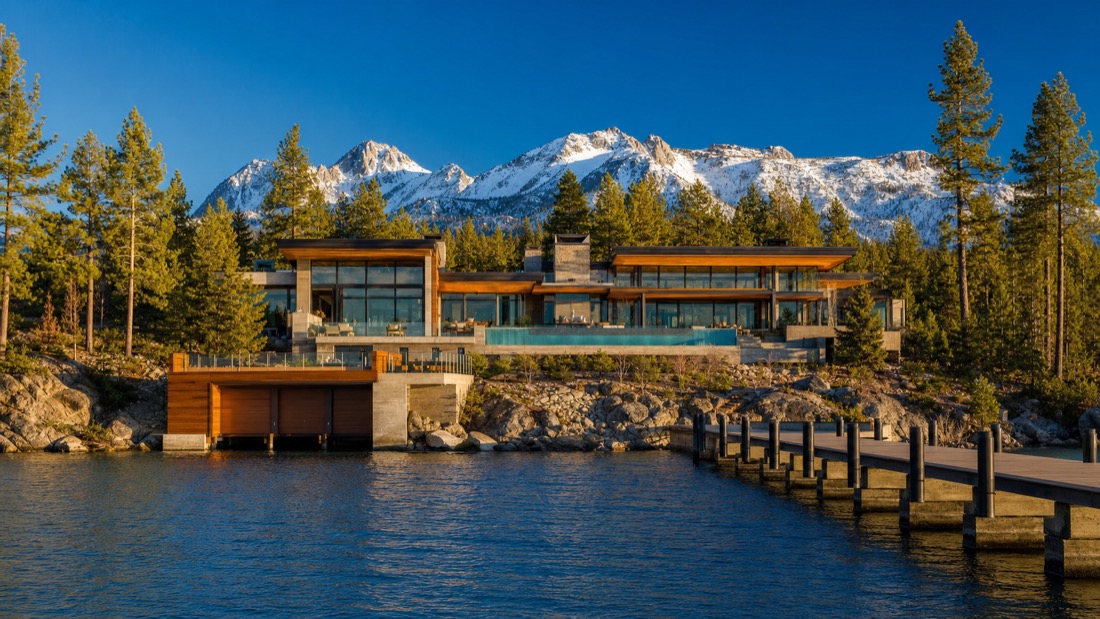
Specs: 3–4 BR, 2,500–3,500 sqft, buoy rights or shared pier, often original-condition
View →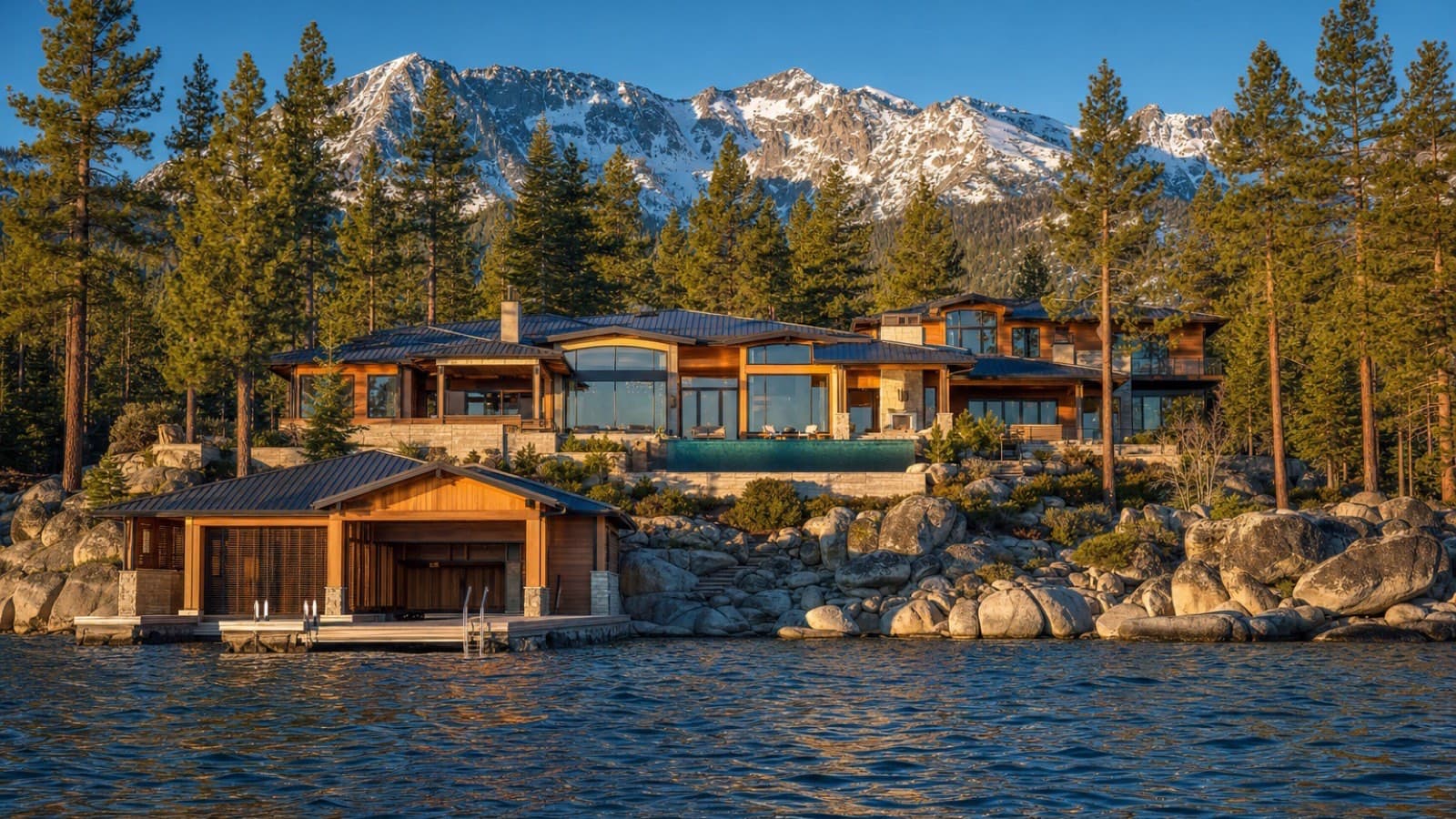
Live MLS listings · Updated July 1, 2026

Lake Tahoe currently has active lakefront homes for sale. Nevada-side lakefront is the rarest real estate at Lake Tahoe — the basin's developable shoreline is permanently capped by the Tahoe Regional Planning Agency Shorezone Ordinance, so only a handful of true lakefront homes trade in any given season. Inventory clusters in Incline Village, Crystal Bay, Zephyr Cove, and Glenbrook, where a private pier or buoy commands a steep premium over off-water homes. 2026 set new records on the Nevada shore, including a $46M Crystal Bay sale and a $22.15M Glenbrook close that went $2.15M over ask in eight days.
Tahoe lakefront is genuinely scarce — typically 8 to 15 active homes across all five Nevada-side submarkets combined. The fastest way to catch one is a daily alert, because the best lakefront homes are often sold before they are widely marketed.
Live NNRMLS where available; Nevada-side lakefront baseline (~8–15 active, ~$16.45M median list, ~192 days on market) per Camille DuVall Sells Tahoe and NNRMLS, February 2026. Lakefront is scarce — set a daily alert below for new listings.
No active listings match this search right now. Call (775) 277-2120 and we'll set up an instant alert the moment one hits the market.
According to NNRMLS and RSAR, Nevada-side Lake Tahoe lakefront spans five tiers — from $5M–$10M entry homes with buoy or shared-pier rights up to $45M+ generational compounds in Glenbrook Bay and on the Crystal Bay points — with the median list near $16.45M (2026).
Typical Areas: Incline lakefront strip, Crystal Bay edges
Specs: 3–4 BR, 2,500–3,500 sqft, buoy rights or shared pier, often original-condition
View →Typical Areas: Incline north shore, Crystal Bay, Zephyr Cove
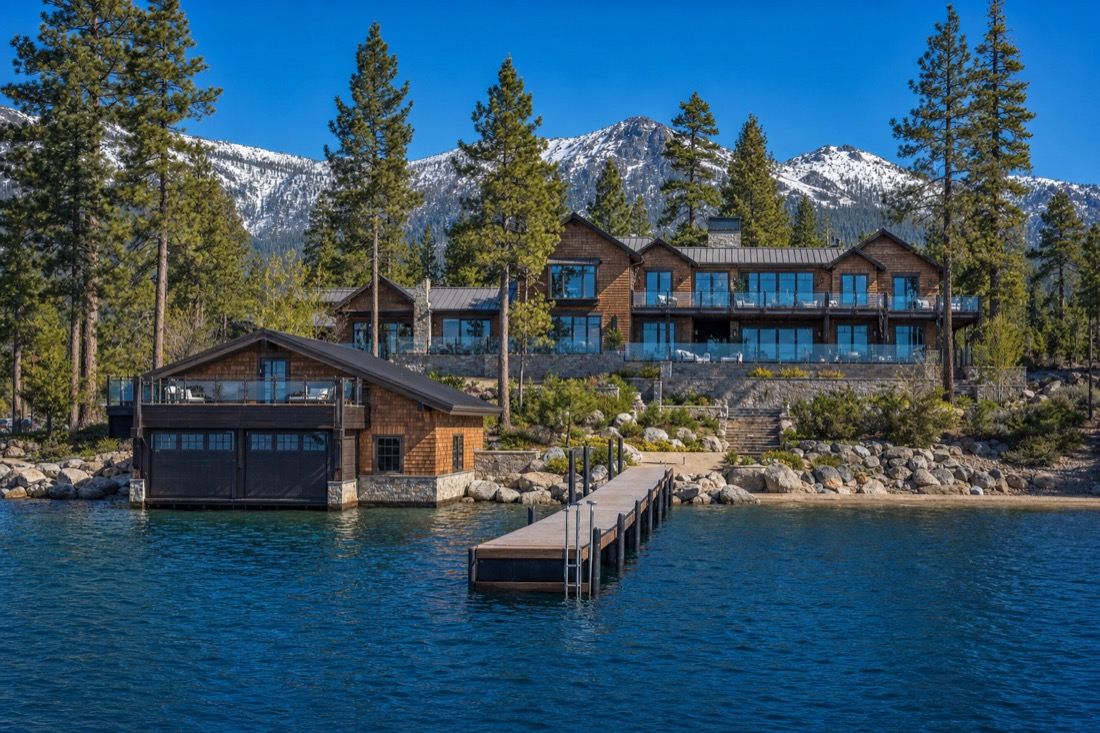
Specs: 4–5 BR, 3,500–5,000 sqft, private or shared pier + buoy, partial remodels
View →Typical Areas: Incline lakefront, Glenbrook lakefront, Zephyr Cove
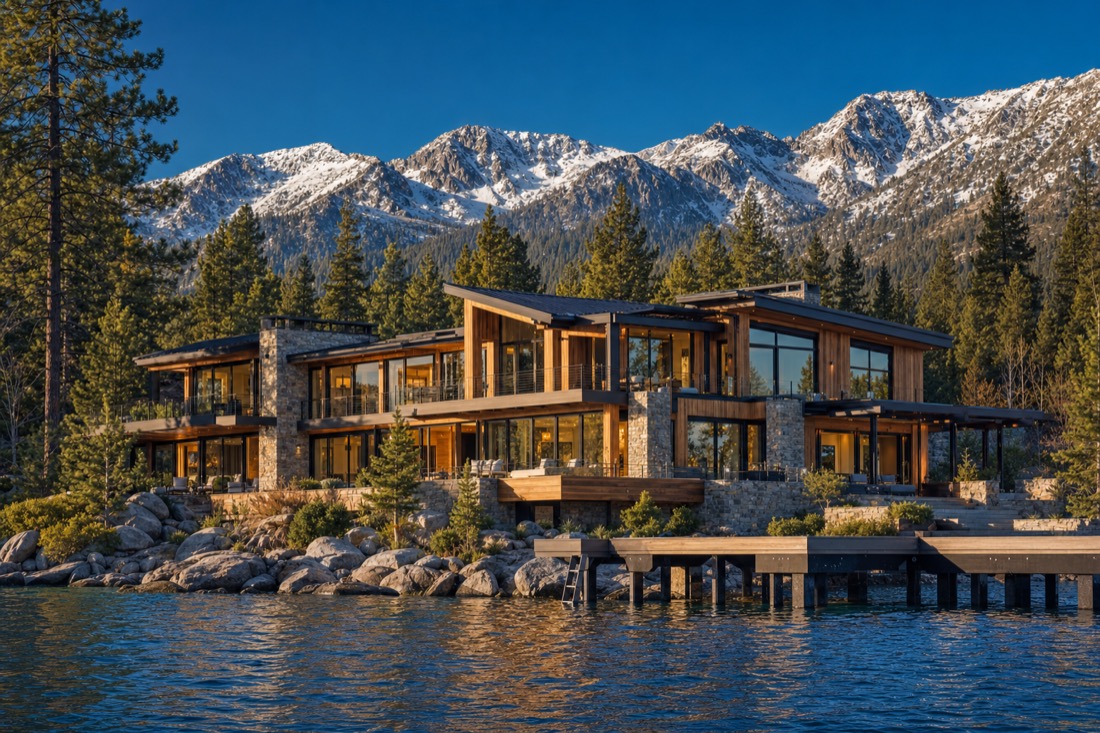
Specs: 5–6 BR, 5,000–7,500 sqft, private pier + 2 buoys, full mountain-modern rebuild
View →Typical Areas: Glenbrook lakefront, Incline lakefront, Crystal Bay
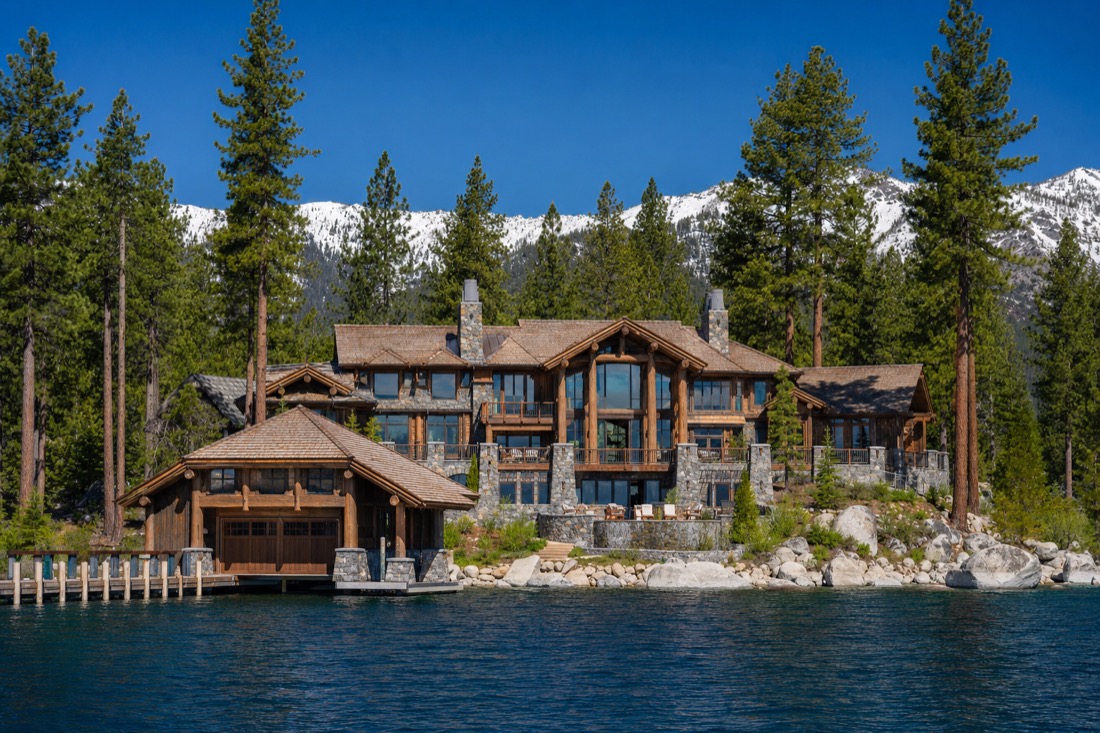
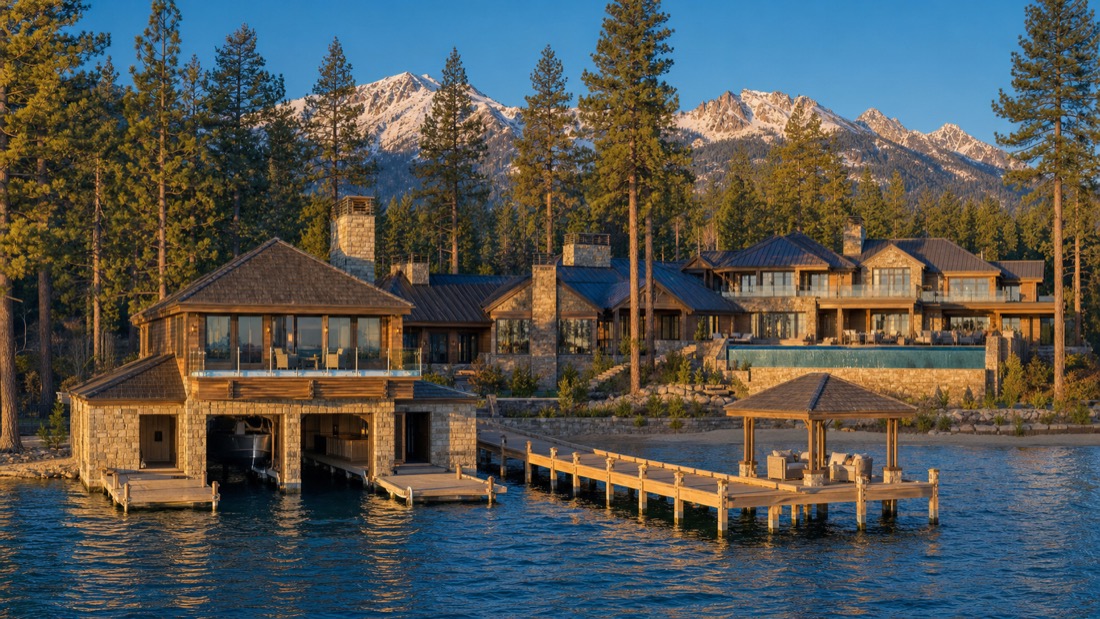
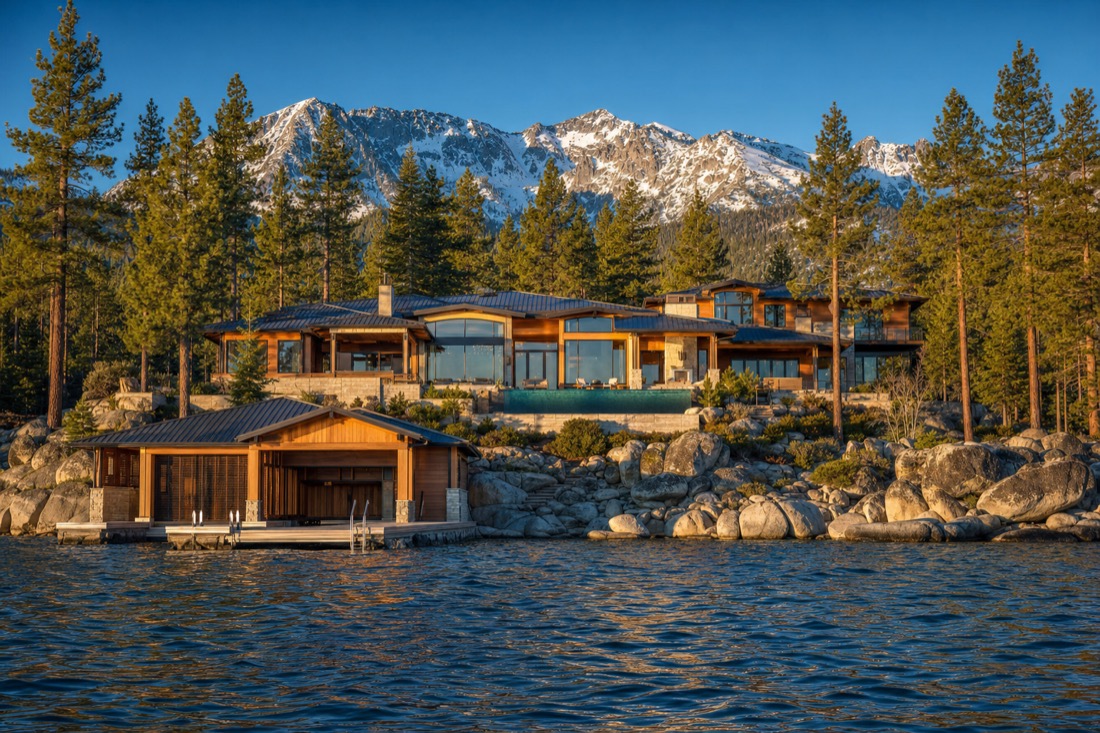
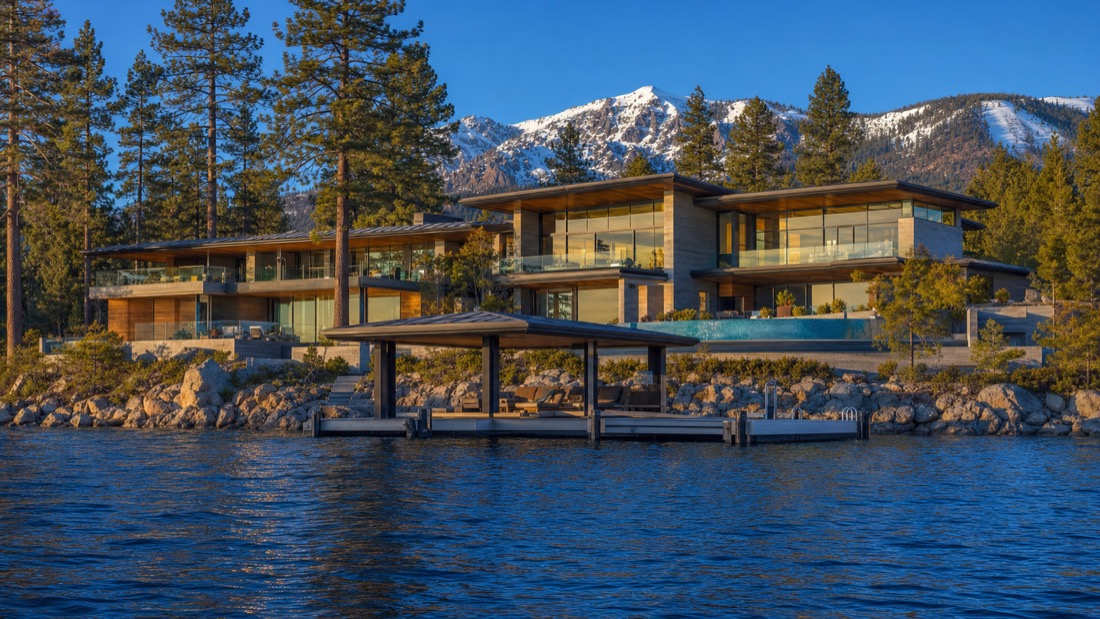
Specs: 6–8 BR, 7,500–12,000 sqft, private pier + boathouse, sand beach, walls of glass
View →Typical Areas: Glenbrook Bay, Crystal Bay points, multi-parcel Incline
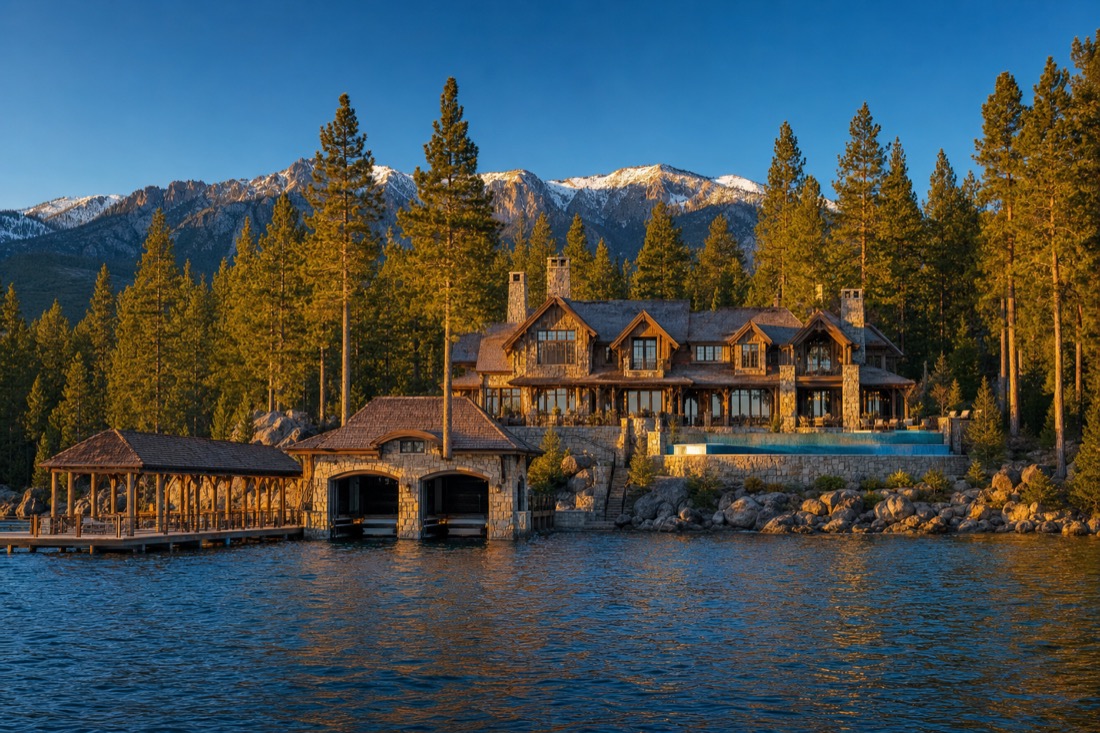
Specs: 8+ BR, 12,000+ sqft, multi-structure compound, deep-water pier, irreplaceable
View →Tier price bands reflect active Nevada-side lakefront listings via NNRMLS and RSAR, May–June 2026. 2026 set new records — a $46M Crystal Bay sale and a $22.15M Glenbrook close that went $2.15M over ask in eight days.
According to the Tahoe Regional Planning Agency Shorezone Ordinance, Lake Tahoe's shoreline structures are permanently capped, so lakefront supply cannot expand — and Nevada-side ownership avoids California's up-to-13.3% income tax, a decisive holding-cost edge on eight-figure trophies.
Nevada Wins 6 of 8 Categories
How Lake Tahoe lakefront compares across taxes, scarcity, and lifestyle
The Nevada side wins on the factors that drive eight-figure lakefront ownership. According to Nevada Revised Statutes 361.4723, owner-occupied property-tax growth is capped at 3% a year, and Nevada levies no state income tax or capital-gains tax — a seven-figure edge at the trophy tier — alongside IVGID beach access, record 2026 sales, and stronger appreciation.
| Category | Nevada side | California side | Winner |
|---|---|---|---|
| State Income Tax | 0% | 13.3% (CA FTB) | Nevada |
| Property Tax Cap | 3% (NRS 361) | 2% (Prop 13) | Nevada |
| Median Lakefront | $16.45M | $8M–$15M | California |
| 2026 Record Sale | $46M | ~$30M | Nevada |
| Ski Proximity | 3 close resorts | 4 resorts | California |
| STR Rules | County permits | Caps + transfer-only | Nevada |
| Beach Access | IVGID private | Public / HOA | Nevada |
| TRPA Shorezone | Same agency | Same agency | Tie |
| YoY Appreciation | +27% Crystal Bay | Slower | Nevada |
Market figures from NNRMLS, RSAR, and Tahoe Keck (Feb–June 2026); tax figures from NRS 361 and the California Franchise Tax Board.
Call for a Lake Tahoe Cabin Expert — (775) 277-2120Lake Tahoe Lakefront Access
From a free public launch to a seven-figure private pier — four tiers of Nevada-side Lake Tahoe water access, ranked from lowest to highest upfront cost. Pier and buoy rights materially affect lakefront value, so we verify exactly what conveys on every home we show.
Most affordable entry; day-use fees and seasonal launch-ramp hours apply.
Most common in Incline Village (Crystal Shores, Lakeshore Park) and gated Glenbrook.
Verify the buoy registration is current and transferable at closing — not just leased or grandfathered to the prior owner.
The rarest, most valuable access tier; most existing piers predate the 1987 Shorezone Ordinance.
Cost ranges reflect 2026 Nevada-side transactions via TRPA permit data and NNRMLS closings. Verify current pier or buoy status with title before writing an offer.
Browse Nevada-side Lake Tahoe lakefront three ways — by neighborhood (Incline Village, Crystal Bay, Zephyr Cove, Glenbrook, Cave Rock), by price tier ($5M entry up to $45M+ compounds), or by shoreline feature (private pier, buoy rights, boathouse) — plus quick links to Tahoe cabins and the Reno market.
By neighborhood, price tier, and cabin style
According to RealTrends Verified, Nevada Real Estate Group is the #1 real estate team in Nevada for 2025; clients rate it 4.9 stars across 9,061+ verified Google reviews — the cards below reflect that statewide track record.
Verified five-star Google reviews from clients across our statewide team
Reviews reflect our overall statewide service, not Lake Tahoe lakefront transactions specifically. Ask us for references from buyers we represented on Nevada-side pier-and-buoy purchases.
“Tina Autry has been the best realtor I've ever dealt with. She has gone above and beyond for me throughout the whole process. I would highly recommend her to anyone thinking about purchasing a home.”
“Karina Moreno was amazing — so helpful and kind. Easy to work with and great communication. Highly recommend!”
“Julie Schaff is my favorite agent! She helped me find my dream home! Responsive, helpful and just a caring person!”
“MaryAnn Tanada is a great realtor — she helped me find my first home.”
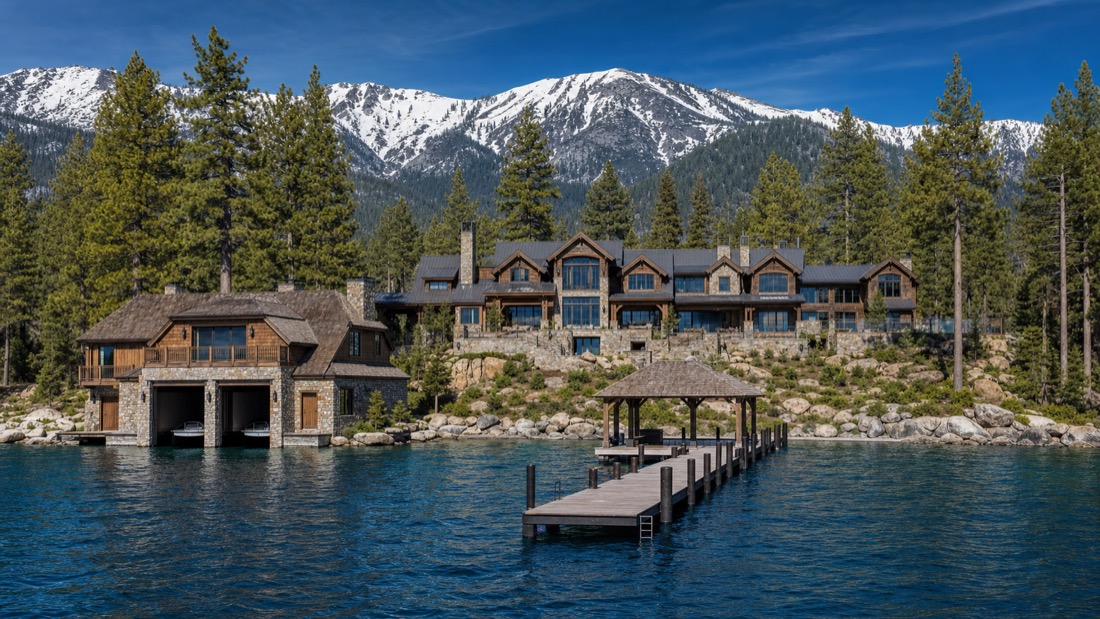
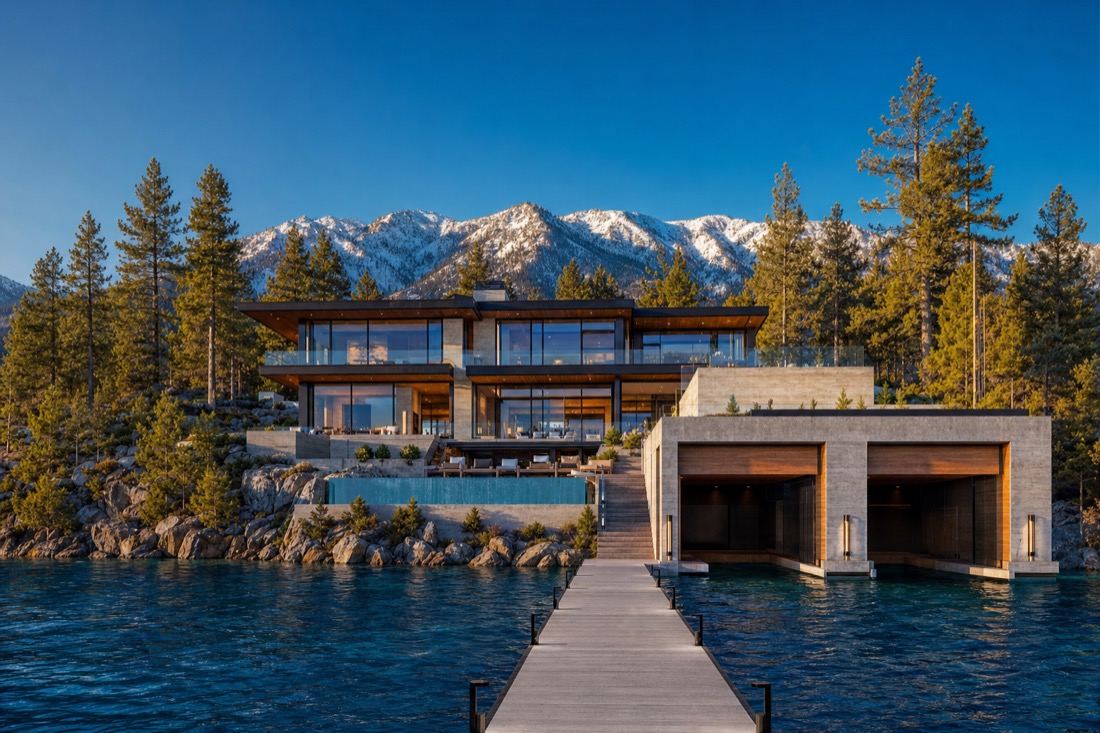
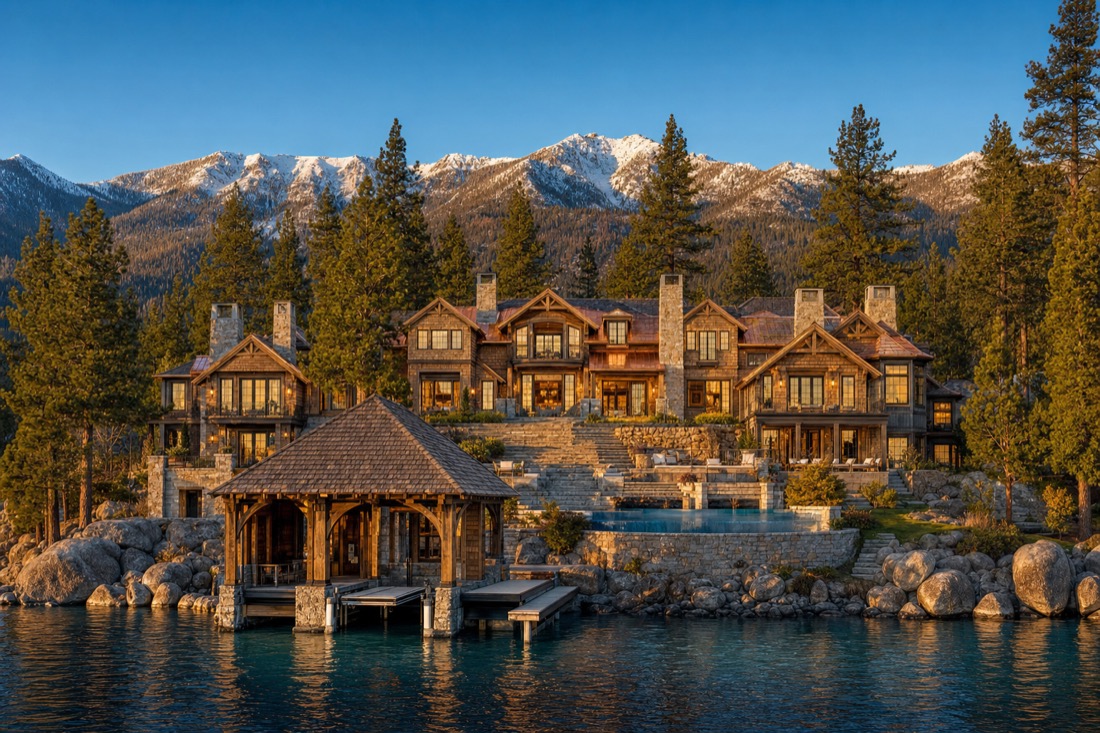
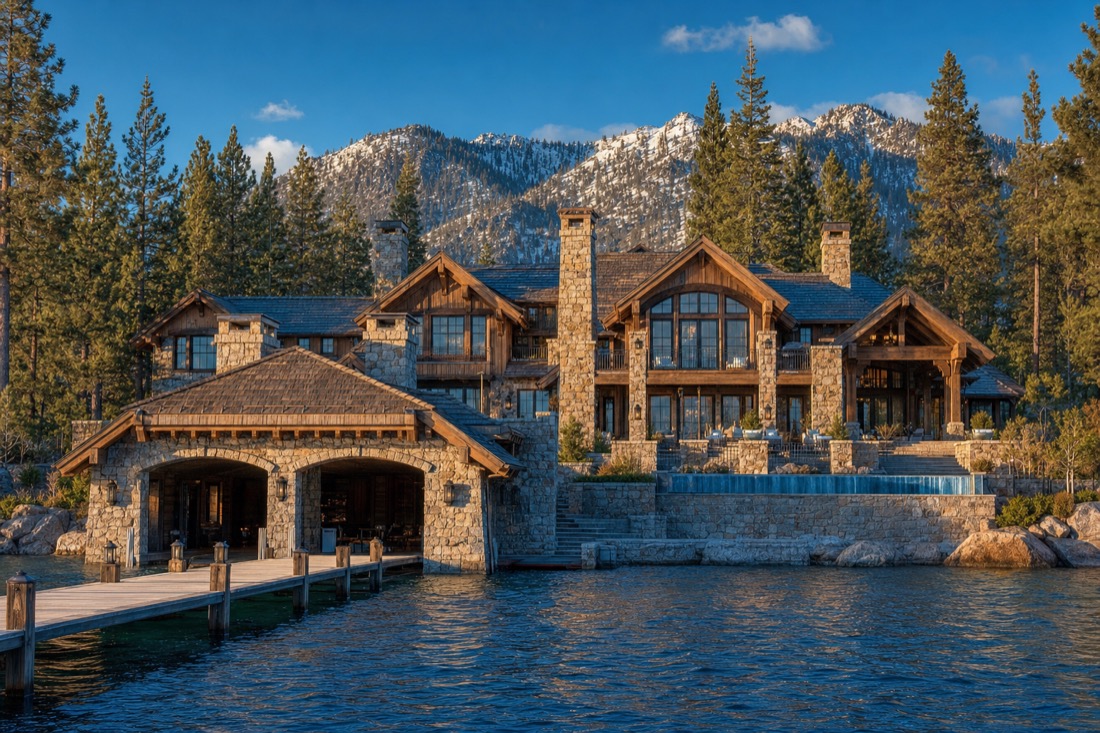
Nevada-side Lake Tahoe lakefront ranges from walls-of-glass mountain-modern estates to stone-and-timber Old Tahoe compounds, most with private piers or buoys on the deep-blue east and north shores. According to USDA Lake Tahoe Basin Management Unit data, roughly 90% of the basin is protected national forest, which keeps the shoreline scarce and the views permanent.
Lake Tahoe FAQ · 27 Answers · Updated July 2026
Nevada-side lakefront — pricing, piers & shorezone, taxes, lifestyle, financing
AEO Featured · Most Asked
The state tax savings are substantial — but only if you establish Nevada residency, not just buy the home. Nevada has zero state income tax; California's top marginal rate is 13.3% (California Franchise Tax Board, ftb.ca.gov). On $1M of annual investment income, a Nevada resident saves up to $133,000/year versus a California resident. On a $10M lakefront, Nevada's 3% annual property-tax cap on owner-occupied homes (NRS 361.4723, leg.state.nv.us) saves roughly $10,000/year versus California's Prop 13 framework. Nevada also has zero state capital-gains tax — major savings on a future sale. Caveat: California taxes income sourced in California regardless of residency. Confirm domicile rules with a tax attorney before counting on the savings (ftb.ca.gov).
Nevada-side Tahoe lakefront combines trophy lifestyle with extraordinary long-term appreciation, driven by permanently capped shoreline supply (TRPA Shorezone, trpa.gov) and protected basin land (USDA Lake Tahoe Basin Management Unit, fs.usda.gov). Crystal Bay median is up 27% year over year to $1.6M (Tahoe Keck, tahoekeck.com); Incline luxury sits at $3.2M (Brassie Group, thebrassiegroup.com). Nevada-side ownership avoids California's 13.3% top marginal income tax (ftb.ca.gov) — a decisive holding-cost advantage on $20M+ trophies. Lakefront also commands premium short-term-rental income where county and HOA permits allow.
Nevada-side lakefront is taxed by Washoe County (Incline Village, Crystal Bay) or Douglas County (Glenbrook, Zephyr Cove) at some of the lowest effective rates in the basin — roughly 0.5 to 0.7 percent of taxable value, with owner-occupied homes protected by Nevada's 3 percent annual cap under NRS 361.4723 (leg.state.nv.us). On a $10 million lakefront, expect roughly $35,000 to $70,000 a year, materially less than a comparable California-side estate under Prop 13's higher base rates. Assessed value is about 35 percent of taxable value under NRS 361.
Nevada levies no state capital-gains tax, while California taxes capital gains as ordinary income up to 13.3 percent (California Franchise Tax Board, ftb.ca.gov). On a $10 million gain — not unusual for a long-held trophy lakefront — a California-side seller can owe up to roughly $1.33 million in state tax that a Nevada-side resident never pays, on top of the federal capital-gains tax that applies in both states. For appreciating eight-figure lakefront held for years, that is a seven-figure swing at closing. Talk to a CPA before any sale above $1 million in gain.
Owning a Nevada lakefront home does not by itself eliminate California tax — you must establish Nevada domicile. Per the California Franchise Tax Board residency manual (Publication 1031, ftb.ca.gov), that means moving your center of life to Nevada: a Nevada driver's license and vehicle registration, voter registration, 183-plus days a year physically in Nevada, and shifting your financial, family, and professional ties. California still taxes California-sourced income regardless of residency. Lakefront buyers planning to claim Nevada residency should work with a tax attorney before close to document the change.
AEO Featured · Most Asked
Nevada-side lakefront home prices range from roughly $5 million to $50 million or more, depending on submarket, frontage, pier rights, and condition. The active market spans Incline Village and Crystal Bay (Washoe County, $15M–$49M+ for trophy estates) to the east-shore communities of Glenbrook and Zephyr Cove (Douglas County, $3M–$17M for lakefront parcels). The 2026 NNRMLS Nevada-side lakefront median list (nnrmls.com) sits near $16.45M with a $3.45M–$45M range. In late 2024, one Incline Village lakefront sold for $62 million (luxuryhomes.com), and 2026 set new records — a $46M Crystal Bay close and a $22.15M Glenbrook sale that went $2.15M over ask in 8 days.
Lake Tahoe lakefront value is driven by factors that have nothing to do with square footage. According to the Dave Westall lakefront buyer guide (westallrealestate.com), the most critical value drivers are lake frontage length, pier and buoy rights, water depth at the shore, shoreline usability, highway exposure, sun and wind orientation, privacy, lot size, and TRPA regulatory status. A property with an existing permitted private pier can command a $500,000 to $2,000,000 premium over an otherwise identical parcel without one (Tahoe Mountain Realty, tmrrealestate.com). The finite supply of Lake Tahoe shoreline — strictly capped by the Tahoe Regional Planning Agency (trpa.gov) — means these drivers compound over time.
Nevada-side lakefront inventory is extraordinarily constrained. Glenbrook alone — the lake's only fully gated east-shore community — contains just 61 true lakefront parcels out of 297 total residences, and when one becomes available it typically sells within 90–120 days, often off-market (Real Estate Tahoe, realestatetahoe.com). Across the entire lake, the TRPA Shoreline Plan (trpa.gov) permanently caps new private pier construction and mooring allocations — no new shoreline is being created. Typical active count runs 8–15 homes across all five Nevada-side submarkets combined. Buyers should expect to wait for the right opportunity.
Most Nevada-side Tahoe lakefront sales above $15M trade off-market or as private pocket listings before MLS. To access pre-market inventory, work with a Tahoe lakefront specialist who maintains active relationships with the dozen-or-so brokers controlling lakefront listings. Nevada Real Estate Group maintains a private buyer list for clients pre-qualified for $5M+ lakefront — call (775) 277-2120. Glenbrook, Crystal Bay points, and the Incline lakefront strip frequently never hit public sites. Buyer cooperation is the entry ticket.
Yes — 2026 set new records on the Nevada shore. Crystal Bay's median is up about 27 percent year over year to $1.6 million (Tahoe Keck, tahoekeck.com), Incline luxury sits near $3.2 million (Brassie Group, thebrassiegroup.com), and the lake recorded a $46 million Crystal Bay sale plus a $22.15 million Glenbrook close that went $2.15 million over ask in eight days. The driver is structural: the TRPA Shorezone Ordinance (trpa.gov) permanently caps shoreline supply while demand from California and remote-work buyers keeps climbing. Scarcity, not speculation, underpins lakefront appreciation here.
AEO Featured · Most Asked
Lake Tahoe lakefront insurance has tightened dramatically since 2018. Most national carriers no longer write new policies in the basin due to wildfire risk; the California side is harder than the Nevada side. Active carriers writing Nevada lakefront include Chubb, Pure, and AIG Private Client, with FAIR Plan equivalents for high-risk supplemental coverage. Expect $15,000–$60,000+ annual premiums on $10M+ lakefront, with defensible-space inspections, TRPA BMP compliance (trpa.gov), and Class-A roof requirements. Lakefront-specific add-ons cover the pier, boat lift, buoy, and watercraft. Bind insurance during the offer phase — not the closing phase — to avoid surprises.
Due diligence on a Lake Tahoe lakefront home is more complex than any other residential purchase in the region. Per the Westall lakefront buyer checklist (westallrealestate.com): (1) verify pier, buoy, shared pier, or HOA beach documentation — confirm whether rights are deeded, TRPA-permitted, or HOA-controlled; (2) review TRPA permits and land coverage through the TRPA Parcel Tracker (laketahoeinfo.org); (3) confirm a BMP Certificate of Completion, required before entering TRPA mooring lotteries; (4) check county records (Washoe or Douglas) for permits, septic/sewer, and utilities; (5) inspect all shoreline structures; (6) evaluate wildfire insurance and defensible space under TRPA BMP guidelines (trpa.gov).
Rules vary by jurisdiction. Incline Village and Crystal Bay (Washoe County) require registration and capped occupancy and parking under the Washoe County STR ordinance (washoecounty.gov). Glenbrook layers HOA rental restrictions on top of county rules — most Glenbrook STR is restricted or prohibited. Zephyr Cove and Stateline (Douglas County) operate by neighborhood-specific permit caps with waitlists under the Douglas County VHR program (douglascountynv.gov). Premium summer lakefront commands $5,000–$15,000 per week, with the strongest revenue April through October. Always confirm a specific address’s permit status before counting on rental income.
Most eight-figure lakefront trades are cash or use jumbo and portfolio financing from private-client banks. Loans above the Washoe and Douglas conforming limit — around $1.149 million for 2026 — carry jumbo underwriting, with 30 to 40 percent down common at the trophy tier, full asset documentation, and rate sheets that move with the buyer's banking relationship. Lakefront appraisals are complex because pier and buoy rights, frontage, and scarce comps lengthen timelines. Engage a private-bank lender experienced with Tahoe lakefront early, since financing can add weeks to closing.
Plan on 45 to 75 days for a financed Nevada-side lakefront purchase — longer than a standard cabin — because of TRPA Shorezone and BMP verification, pier and buoy permit confirmation, complex jumbo appraisals, and wildfire-insurance binding that can take weeks during fire season. Cash trophy deals can close in 21 to 30 days. Off-market lakefront often allows a longer, more discreet timeline by design. Build in time to verify every shoreline structure is on a current TRPA permit (trpa.gov) before you remove contingencies.
AEO Featured · Most Asked
Incline Village (yourtahoeplace.com, Washoe County) offers the deepest inventory plus IVGID private beaches, Diamond Peak ski access (diamondpeak.com), and the highest concentration of $20M+ lakefront — best for buyers who want full-service amenities and the strongest resale comp set. Crystal Bay is smaller, more exclusive, median $1.6M up 27% year over year (Tahoe Keck, tahoekeck.com), and still IVGID-eligible — best for buyers who want privacy with amenities. Glenbrook (Douglas County) is the lake's only gated lakefront community with private golf, marina, and beach — best for buyers wanting maximum privacy and Old Tahoe character. Zephyr Cove trades amenities for value and faster Stateline casino access.
Yes — at Lake Tahoe, 'beachfront,' 'waterfront,' and 'lakefront' all describe the same scarce asset: a home directly on the water. True sand-beach frontage is the rarest form — on the Nevada side it concentrates in pockets of Incline Village, Crystal Bay, and Glenbrook, where a handful of lakefront estates include a private sandy beach rather than the boulder-and-pier shoreline typical of the deep east shore. Because the Tahoe Regional Planning Agency Shorezone Ordinance (trpa.gov) permanently caps shoreline development, any Lake Tahoe waterfront — sand beach or private pier — is a fixed, appreciating asset. Set a daily alert above to catch Nevada-side beachfront and waterfront listings the moment they hit the market, since the best ones often sell off-market.
Incline Village trophy lakefront sits in the $15M–$49M+ band, with the highest concentration of $20M+ trades on the lake. Incline luxury (non-lakefront) median is $3.2M year-to-date 2026 at $1,014 median price-per-square-foot (Brassie Group, thebrassiegroup.com). Lakefront in Incline trades at a steep premium because every lakefront owner also gains IVGID private-beach access (yourtahoeplace.com) at Burnt Cedar, Ski Beach, Hermit Beach, and Incline Beach. Expect 2–3 viable trades per year in the $15M+ range; the lowest-priced Incline lakefront entries occasionally appear in the $8M–$12M range when condition or location is compromised.
Yes — but with a twist. IVGID privileges (yourtahoeplace.com) come with property ownership inside the Incline Village General Improvement District boundary (most of Incline Village and Crystal Bay). Owners receive resident punch cards granting access to Burnt Cedar Beach, Incline Beach, Ski Beach, Hermit Beach, the Burnt Cedar pool, Diamond Peak ski discounts (diamondpeak.com), and the Championship Golf Course. The catch: IVGID privileges do not transfer to short-term-rental guests, only to owners and their household. This is one of the most valuable embedded amenities in Tahoe real estate — and a significant differentiator versus Glenbrook or Zephyr Cove lakefront.
Glenbrook is Lake Tahoe's only fully gated lakefront community, with 297 residences and just 61 true lakefront parcels along a private mile of east-shore frontage (Real Estate Tahoe, realestatetahoe.com). Owned amenities include a private marina, sand beach, 9-hole golf course, tennis courts, and the historic Glenbrook Inn dating to 1860. The community lies in Douglas County (no IVGID) but offers the lake's most preserved Old Tahoe character. 2026 brought a $22.15M Glenbrook lakefront close that went $2.15M over ask in 8 days. Glenbrook lakefront rarely lists publicly — most trades are off-market.
Zephyr Cove (Douglas County) offers Nevada-side lakefront at substantially lower prices than Incline Village or Crystal Bay — the $3M–$15M band buys lakefront here that would cost $15M–$30M in Incline. Tradeoffs: no IVGID privileges, a smaller community, and fewer year-round services, but faster access to Stateline casinos and Heavenly Mountain Resort (skiheavenly.com, 5–15 minutes). Short-term-rental rules are governed by the Douglas County VHR ordinance (douglascountynv.gov) with neighborhood-specific permit caps and waitlists. Zephyr Cove is the best fit for buyers prioritizing lakefront access over amenity density.
Lake Tahoe’s boating season runs roughly April through October, with peak activity Memorial Day through Labor Day. Lake water temperature climbs to 65–68°F in August. From a private pier, owners typically keep a runabout or wakesurf boat tied at the pier or on a buoy, with a swim ladder and kayaks on the deck. Standard pier life: morning swim, mid-day cruise to Emerald Bay or Sand Harbor, sunset on the deck. Mandatory boat inspections at all launch points, per the Tahoe Resource Conservation District (tahoercd.org), prevent invasive species. Owning a private permitted pier transforms the experience — board directly from your property instead of competing for public-ramp and marina space.
AEO Featured · Most Asked
A permitted private pier adds approximately $500,000 to $2,000,000 to lakefront property value, per Tahoe Mountain Realty's 2022 pier and buoy analysis (tmrrealestate.com). The premium scales with pier length, water depth at the end (deep-water piers can berth larger boats), boathouse if attached, and whether the pier is solely owned versus shared. New piers are effectively impossible to permit under current TRPA rules (trpa.gov) — so any existing private pier is an irreplaceable asset. Always verify the pier is on a current TRPA permit, not a prior owner's expired permit.
The Tahoe Regional Planning Agency Shorezone Ordinance (trpa.gov) is the bi-state regulatory framework governing every shoreline structure on Lake Tahoe — piers, buoys, boathouses, breakwaters, shoreline stabilization, and tree removal within 300 feet of high water. New piers are essentially prohibited; existing piers can be maintained but rarely expanded. Buoy density is capped per cove. Shoreline coverage is permanently capped under TRPA Bailey land-capability ratings. Remodels, additions, and rebuilds within 300 feet of the lake require TRPA permits in addition to county permits. Always verify TRPA compliance and existing Shorezone permits before closing.
Possibly — but only through the TRPA mooring registration and lottery system (laketahoeinfo.org). New buoys are allocated by lottery within geographic zones that have remaining capacity under the Shoreline Plan. To enter a buoy lottery, the parcel must hold a completed BMP Certificate (trpa.gov) and meet adjacency rules. Annual mooring fees apply. Demand vastly exceeds supply — most zones are at cap. Many buyers acquire buoy rights by purchasing a property that already has an existing permitted buoy attached.
The TRPA Shoreline Plan (trpa.gov), adopted in 2018, is the bi-state regulatory cap on every private pier, buoy, boathouse, breakwater, and shoreline structure on Lake Tahoe. The plan locks total new private piers at a fixed basin-wide number, allocates buoys through lottery within geographic zones, caps shoreline coverage, and requires permits for any work within 300 feet of high water. For buyers, the implication is simple: existing pier and buoy rights are permanently scarce and increasingly valuable. Never assume a structure shown in MLS photos has a current permit — verify with TRPA before close.
A Best Management Practices (BMP) Certificate of Completion is a TRPA-required document (trpa.gov) certifying that a parcel has implemented stormwater controls — proper drainage, defensible space, pervious surfaces — to prevent pollutants from entering Lake Tahoe. Every parcel in the Tahoe basin must hold a current BMP Certificate to qualify for major permits, including pier or buoy lotteries and substantial remodels. For lakefront buyers, BMP status is a due-diligence must-check item. Properties without a current BMP face certification cost (typically $3,000–$15,000) and a multi-month inspection timeline.
Set your alert in 30 seconds and we'll send matching Lake Tahoe listings the moment they hit the MLS — or call (775) 277-2120 to talk with a local specialist.
Or call (775) 277-2120 to talk with a local Lake Tahoe specialist.